Small Apartment Home Office Ideas: 9 Setups Renters Swear By
The smartest small apartment home office ideas have nothing to do with square footage — they’re about claiming space you already own but never use. If you’re working from a 500-square-foot rental with no spare room, no dining nook to sacrifice, and a landlord who winces at drill holes, this guide was written for you. The truth most furniture ads skip: you don’t need a home office room. You need about 15 square feet, one smart piece of furniture, and a plan for making work disappear when the laptop closes.
Below you’ll find nine setups that real renters use every day — a closet that moonlights as an office, a desk that folds flat against the wall, a rolling cart that commutes from your closet to your dining table each morning. Every idea is deposit-safe, budget-conscious, and sized in actual inches so you can measure before you buy.
Grab a tape measure. By the end of this article, you’ll know exactly where your desk is going.
In This Article
- Why Small Apartment Home Office Ideas Matter When You Have No Space
- Turn a Closet Into a Cloffice
- Mount a Fold-Down Wall Desk
- Slide a Ladder Desk Into an Unused Corner
- Put a Console Desk Behind the Sofa
- Build a Rolling Cart Office That Tucks Away
- Go Vertical: Pegboards and No-Drill Wall Storage
- Give Your Nightstand a Second Job
- Zone Your Workspace With Light and a Rug
- Make Your Office Disappear at 5 PM
- Frequently Asked Questions
Why Small Apartment Home Office Ideas Matter When You Have No Space
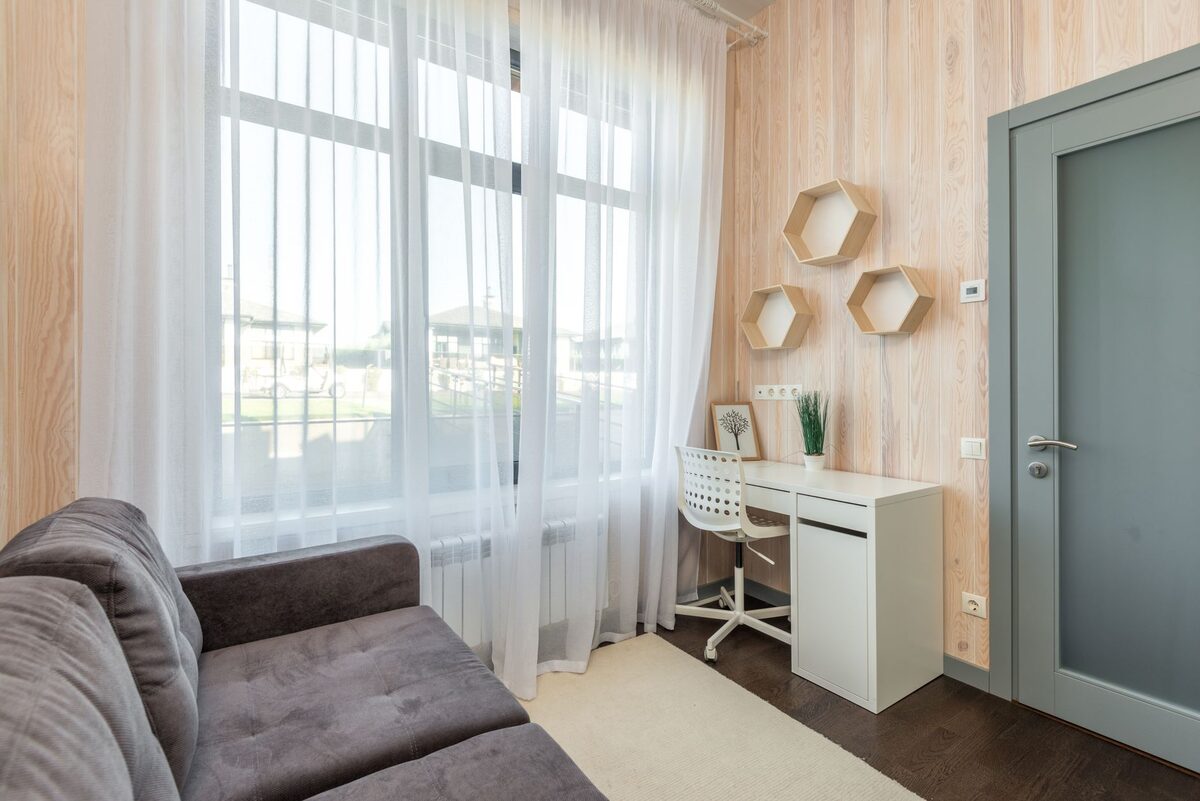
Working from the couch feels fine for a week. By month three, your lower back disagrees, your laptop lives on the coffee table like a permanent houseguest, and the line between “at work” and “at home” has quietly dissolved. That’s the real problem small apartment home office ideas solve — not just where to put a desk, but how to keep your one room from feeling like an office you happen to sleep in.
A dedicated workspace — even one that’s 30 inches wide — changes how your brain treats work. Sitting down at the same spot signals focus. Standing up and closing it down signals rest. When your workspace is the same cushion where you watch TV, neither signal ever fires, and both work and rest get worse.
Renters face two extra constraints that most home office advice ignores. First, you can’t renovate: no built-ins, no wall-to-wall shelving, and often no drilling beyond a few small holes. Second, you’ll probably move within a couple of years, so anything you buy should be freestanding, light enough to carry down three flights of stairs, and useful in whatever apartment comes next. Every setup below respects both rules.
One more mindset shift before the ideas: stop looking for empty floor space, because you don’t have any. Look instead for underused volume — the closet holding coats you never wear, the blank wall behind the sofa, the 40-inch stretch of corner between the window and the bookshelf. That’s where your office is hiding.
1. Turn a Closet Into a Cloffice
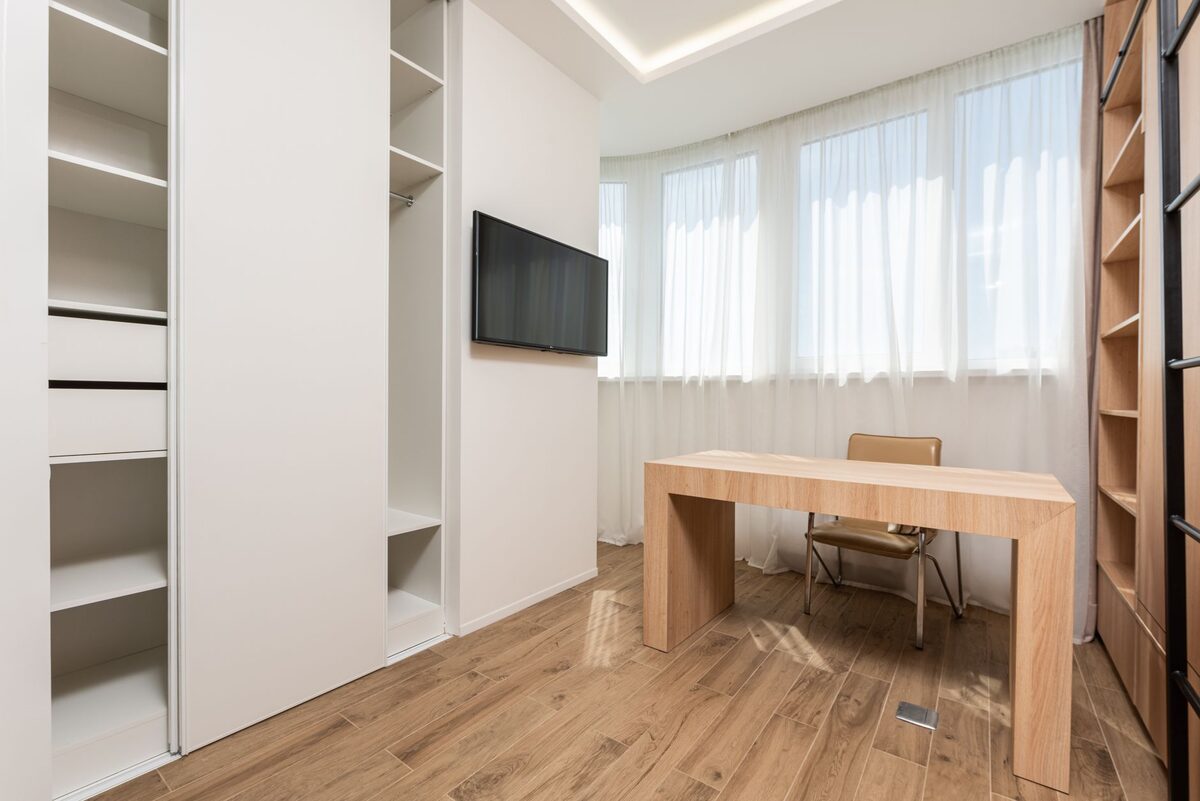
The closet office — the “cloffice” — is the closest a renter gets to a real spare room. A standard US reach-in closet runs about 24 inches deep and 4 to 6 feet wide, which is more generous than many store-bought desks. Empty it out (a slim rolling rack in the bedroom corner can absorb the wardrobe overflow), and you’ve got a workspace with a built-in superpower: doors that close.
The renter-friendly build skips wall mounting entirely. Set a freestanding narrow desk or a simple tabletop across two low filing cabinets inside the closet — the cabinets double as drawer storage and you never touch a wall. If your closet has a fixed shelf at desk height, even better: lay a cut-to-size board over it for a deeper surface and lift it out when you move.
Lighting makes or breaks a cloffice, because closets are the darkest spot in the apartment. Stick-on rechargeable LED puck lights under the shelf above your monitor give you shadow-free task light with zero wiring. Add a small cork square or dry-erase board on the inside of one door for notes, and run a slim power strip from the nearest outlet along the baseboard.
Before you commit a closet to office duty, make sure the clothes it held actually have somewhere to go — our guide on how to add storage to a studio apartment covers a dozen ways to absorb the overflow without buying a wardrobe. The payoff is worth the shuffle: at the end of the workday, you close two doors and your office ceases to exist. No other setup on this list draws a cleaner boundary.
2. Mount a Fold-Down Wall Desk
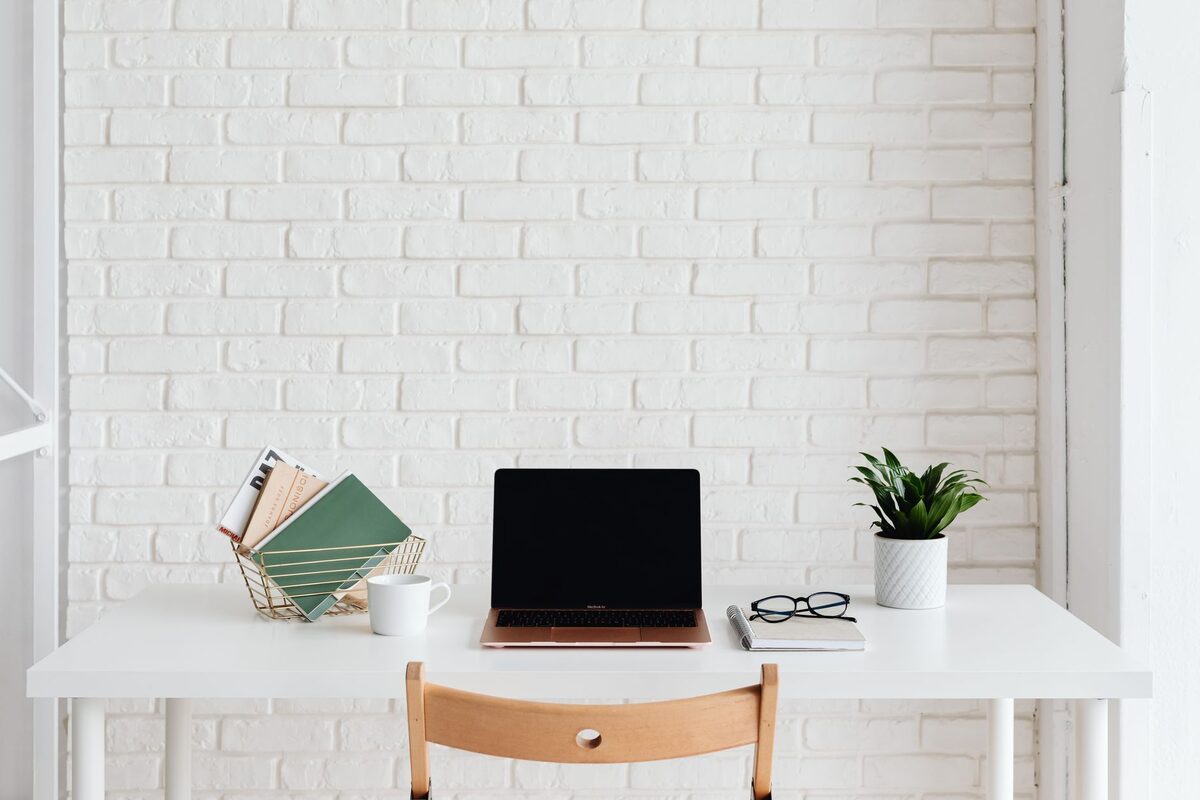
A fold-down wall desk is the space-saving champion of this entire list. Open, it gives you a full 36-by-20-inch work surface — enough for a laptop, a notebook, and a coffee mug. Folded, it hugs the wall at about five inches deep, shallower than most picture frames with shelving. In a studio where every square foot performs double duty, a desk that occupies zero floor space for 16 hours a day is hard to argue with.
The renter question, of course, is mounting. A fold-down desk needs to anchor into wall studs — this is not a Command-strip project, because the brackets carry real weight. The good news: two to four small screw holes are generally considered normal wear and tear in most US rentals, and they patch in five minutes with spackle when you move out. Send your landlord a quick message first; most say yes to a desk faster than they say yes to a TV mount.
Mount the surface at 29 to 30 inches from the floor — standard desk height — and check that your chair tucks fully underneath so the folded desk and chair share the same footprint. Pick a wall out of the kitchen’s splash zone and away from your bed’s sightline if you can; the fold-down format works best when closing it genuinely removes work from view.
Need Wall Mounted Fold-Down Desk, 36″ x 20″
- 36″ x 20″ full work surface
- Folds flat to ~5″ deep
- Heavy-duty 14-gauge steel brackets
- Fingertip release mechanism
* As an Amazon Associate, ApartmentNook earns from qualifying purchases at no extra cost to you.
3. Slide a Ladder Desk Into an Unused Corner
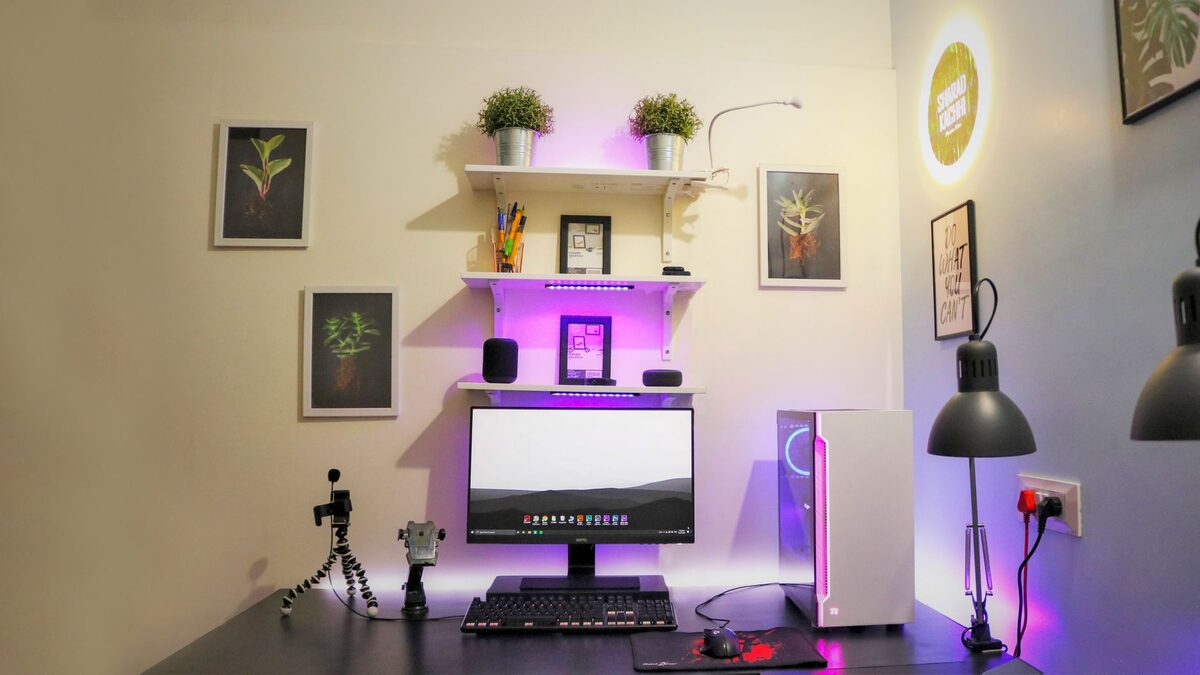
Walk your apartment right now and count the corners doing nothing. Most rentals have at least one — between the window and the bookshelf, beside the radiator, behind the bedroom door. A ladder desk is built for exactly that spot: it leans storage upward instead of spreading it outward, packing a desk plus two or three shelf tiers into a footprint about 43 inches wide and 19 inches deep.
The trapezoidal shape is the trick. Because the frame tapers as it rises, the desk feels open and airy rather than looming — a real advantage in a small room where a full bookcase-and-desk combo would read as a wall of furniture. Your monitor or laptop sits on the main surface, reference books and a plant go on the tier above, and the top shelf becomes display space that makes the workstation look intentional instead of improvised.
Two practical notes for renters. First, use the anti-tip strap that comes with most ladder desks — nearly all of them anchor with a single small screw, the same wear-and-tear category as a picture hook, and it matters if the desk leans rather than stands. Second, resist the urge to fill every shelf. Leave the top tier half-empty with one trailing pothos and the whole corner reads as décor, not office equipment.
DESIGNA 43″ Ladder Desk with Storage Shelves
- 43″ W corner-friendly footprint
- 2 shelf tiers above the desk
- Steel X-frame reinforcement
- Desktop holds monitor + laptop
* As an Amazon Associate, ApartmentNook earns from qualifying purchases at no extra cost to you.
4. Put a Console Desk Behind the Sofa
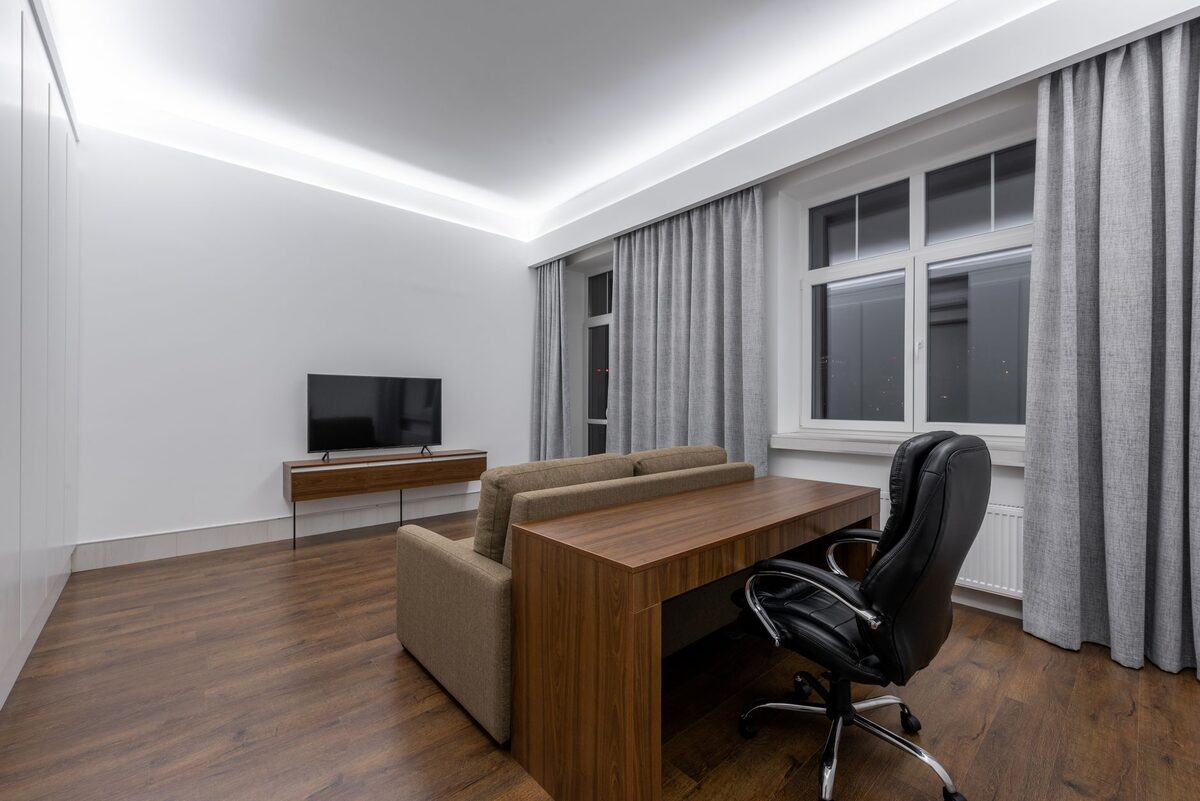
If your sofa sits against a wall, you’re wasting the most underrated desk location in apartment living. Float the sofa 18 to 20 inches forward and slide a narrow console table — 12 to 16 inches deep, sofa-height or a touch taller — into the gap behind it. From the front door, it reads as a styled sofa table with a lamp and a stack of books. From the chair tucked behind it, it’s a fully functional desk.
This setup shines in one-bedroom and studio layouts where the living area has to host everything. Because the console faces into the room, you work looking at your space rather than at a wall — a small change that makes long days feel far less like a cubicle. A low-back stool or armless chair disappears under the console when you’re done, so the “office” costs you almost nothing visually.
Cable management is the difference between chic and chaotic here. Run a slim power strip along the back edge of the console, secure cords with adhesive clips, and charge everything in one spot. When work ends, the laptop slides into a felt sleeve on the console’s lower shelf, and the lamp switches from task mode to ambient evening light. For more ways to make one room do several jobs, our small apartment living room ideas guide pairs perfectly with this setup.
5. Build a Rolling Cart Office That Tucks Away
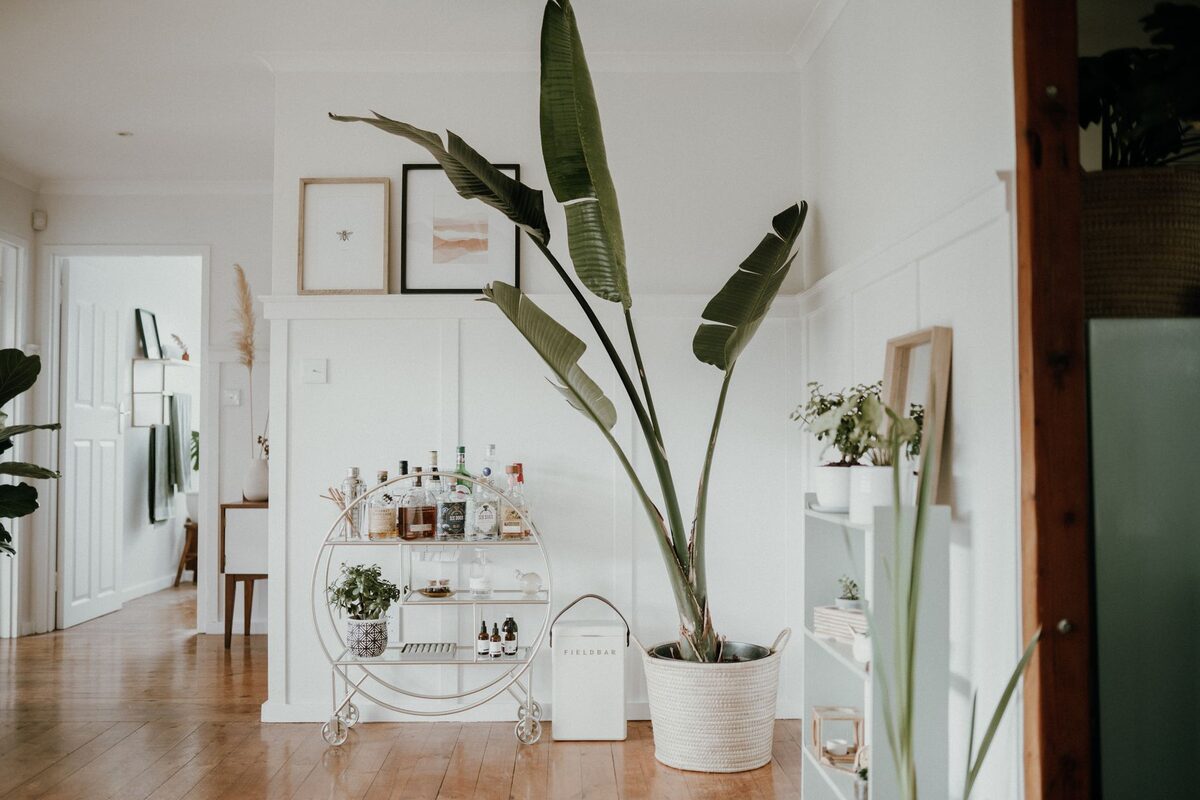
The rolling cart office is the renter’s answer to “I have literally nowhere to put a desk.” You don’t get a desk — you get a mobile headquarters. A three-tier steel cart, roughly 17 by 13 inches, holds your entire work life: laptop and charger on top, notebooks and files in the middle, printer paper and supplies on the bottom. Each morning it rolls to the dining table, the kitchen counter, or the window with the best light. Each evening it rolls into the closet or beside the fridge, and your apartment goes back to being a home.
The discipline is the feature. Because everything must fit on the cart, the cart becomes a natural limit on work clutter — no papers migrating to the coffee table, no charger colonizing the kitchen outlet. Renters have used IKEA’s famous utility carts this way for years, and the format works with any sturdy three-tier cart with locking casters.
Two upgrades make a cart office feel professional rather than improvised. First, add a bamboo or cut-board top across the upper tier to create a flat landing surface for a second screen or coffee. Second, keep a small zippered pouch on the middle tier for the fiddly stuff — dongles, earbuds, sticky notes — so the cart stays tidy enough to live in plain sight when guests come over.
Amazon Basics Multipurpose Rolling Cart & Desk Extender
- Works as cart or desk extender
- Multi-tier storage layout
- Rolling casters move anywhere
- Compact small-space footprint
* As an Amazon Associate, ApartmentNook earns from qualifying purchases at no extra cost to you.
6. Go Vertical: Pegboards and No-Drill Wall Storage
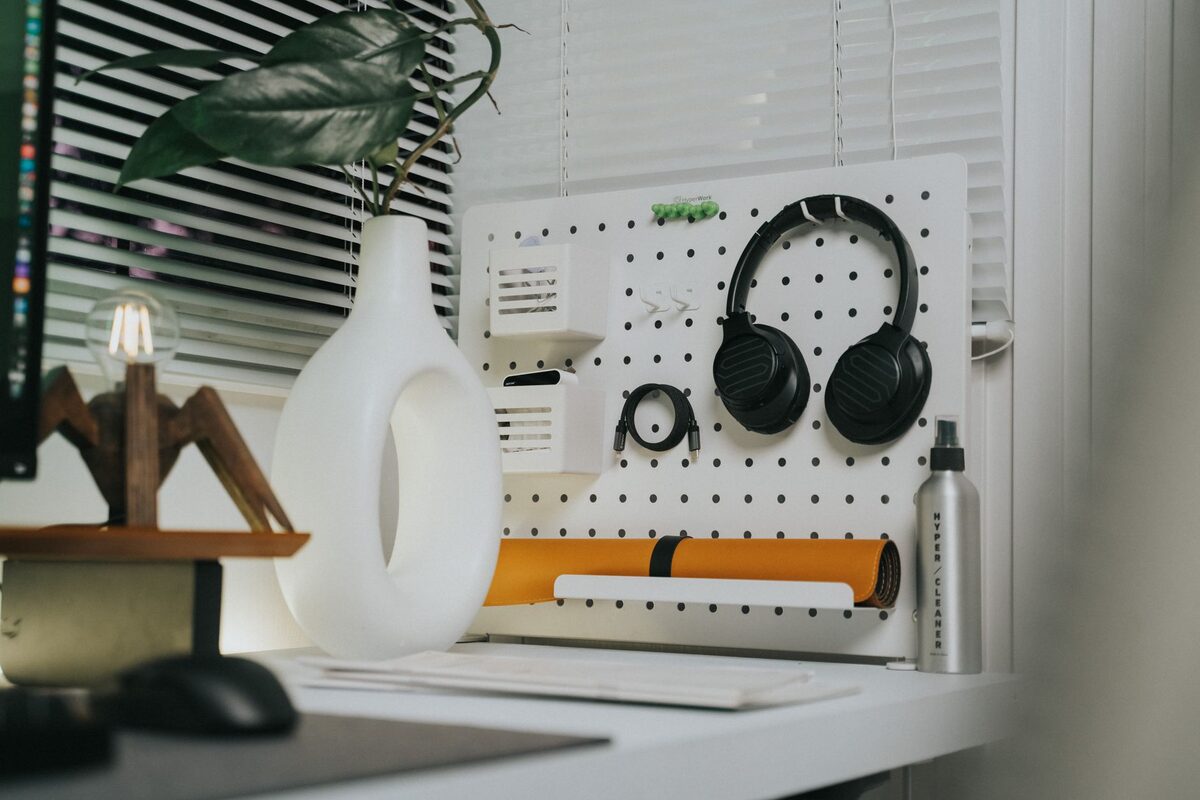
When your desk is 30 inches wide, the wall above it is your filing cabinet, your supply drawer, and your bulletin board — if you use it. Vertical storage is the single highest-leverage move in any tiny workspace, and you can do all of it without a drill.
Start with a clamp-on pegboard that grips the edge of your desk itself — zero wall contact, zero holes, zero landlord conversation. Hang a phone stand, pen cup, headphone hook, and small shelf from the panel, and you’ve moved every desktop object off your actual work surface. On the wall, heavy-duty adhesive strips handle lightweight racks, wire files, and cork tiles; just follow the weight rating on the package and press for the full count.
Think in zones as you build upward: eye level for the things you touch hourly (notes, calendar, headphones), above that for weekly items (files, reference books), and the very top for décor that keeps the wall from feeling like a supply closet. We’ve collected our favorite damage-free techniques in this roundup of renter-friendly decor ideas that need zero drilling, and if your workspace lives in a corner, these corner shelf ideas for small apartments squeeze storage out of the last unused inches.
KDD 7-in-1 Clamp-On Desk Pegboard
- Clamps to desk edge — no drilling
- Phone stand + pen holder included
- Hooks for headphones & cables
- Detachable, rearrangeable panels
* As an Amazon Associate, ApartmentNook earns from qualifying purchases at no extra cost to you.
7. Give Your Nightstand a Second Job
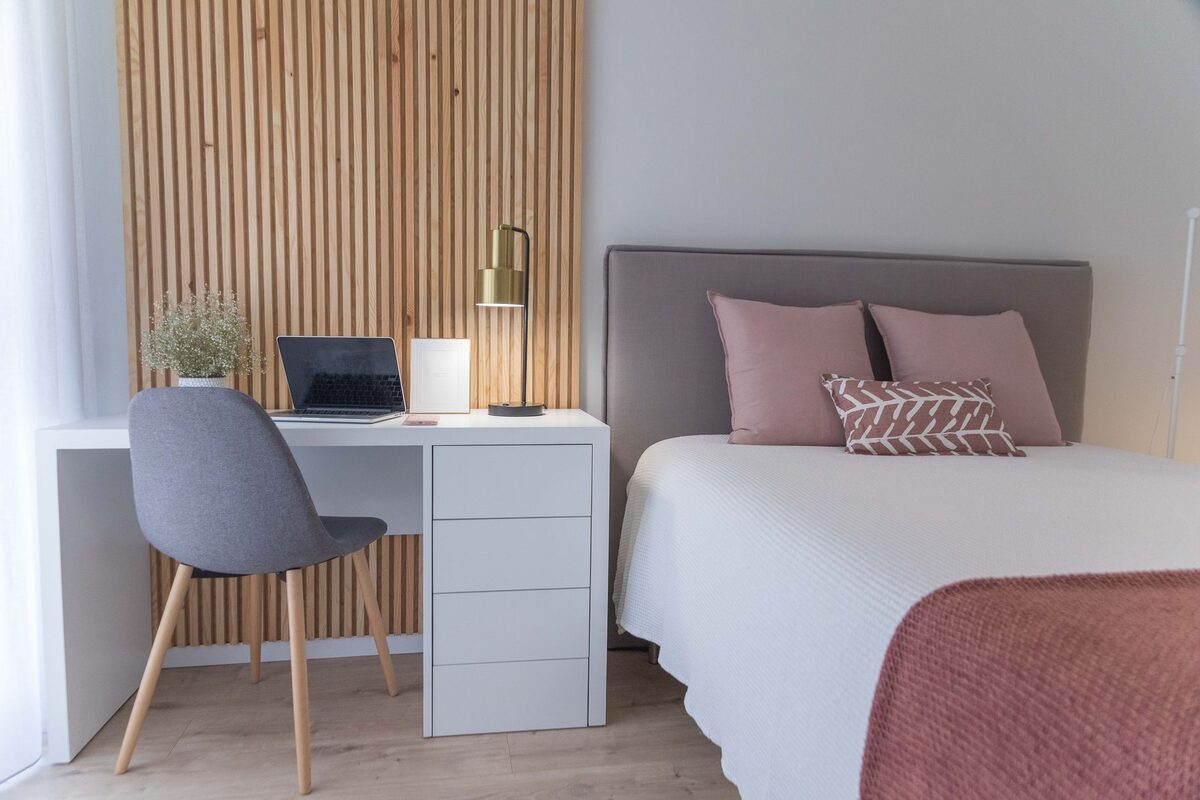
In a small bedroom, the nightstand occupies prime real estate and works about ten minutes a day. Replace it with a narrow writing desk — 30 to 36 inches wide, 18 to 20 inches deep — and that same spot becomes a workstation from nine to five and a nightstand after dark. Your lamp pulls double duty as task lighting and bedtime reading light, and the drawer that held charging cables now holds work supplies too.
The rule that makes this work: the desk must clear completely at the end of the day. A laptop left open beside your pillow is a recipe for one more email at 11 pm. Keep a felt caddy or a drawer dedicated to the shutdown — laptop, mouse, notebook all slide in — so the surface returns to water-glass-and-book duty every night.
Style it like bedroom furniture, not office equipment: a small ceramic lamp instead of an architect lamp, a linen-covered pinboard instead of a whiteboard, wood tones that match the bed frame. Done right, guests will never clock it as a desk. Pair this move with our tricks for making a small bedroom look bigger and the room will feel larger with the desk than it did without it.
8. Zone Your Workspace With Light and a Rug
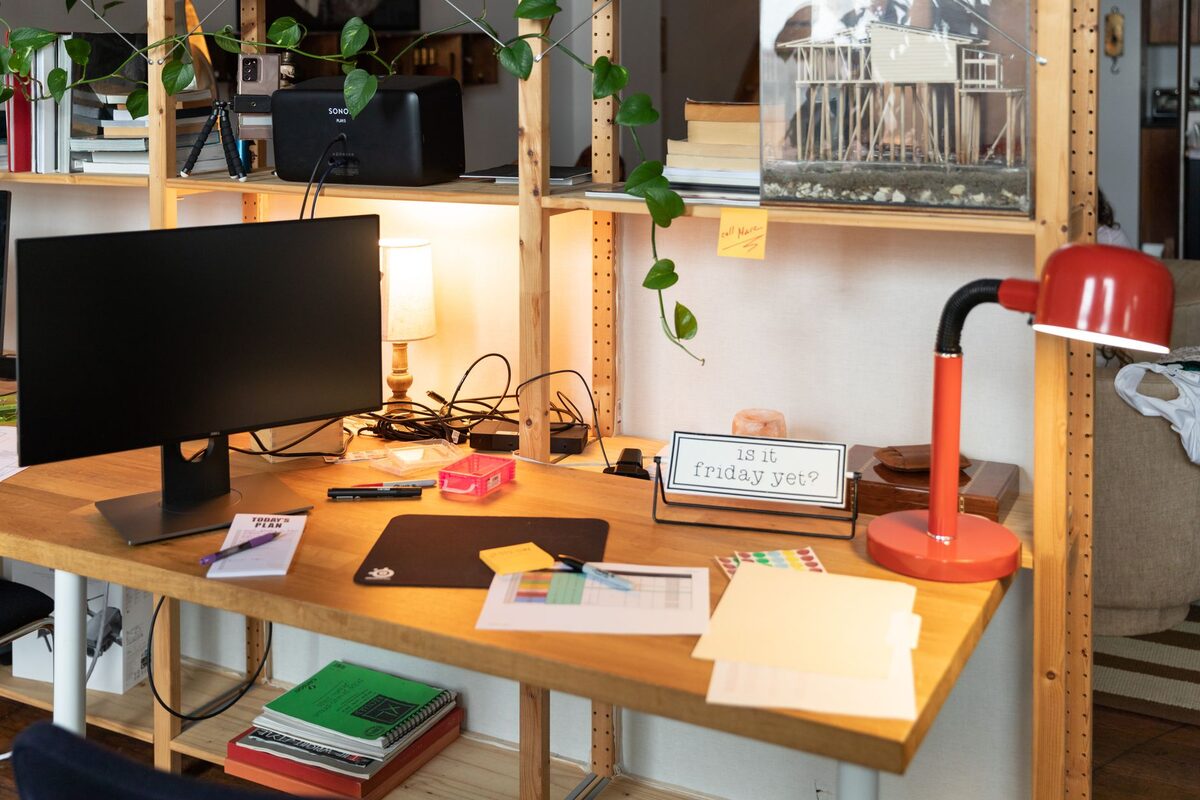
A workspace doesn’t need walls to feel separate — it needs edges. The cheapest edges in interior design are a rug and a pool of light. Slide a 2-by-3-foot rug under your desk chair and the workspace instantly gains a visible boundary; when you step off the rug, you’ve left the office. It sounds like a mind trick because it is one, and it works.
Lighting is the second edge. Give the desk its own dedicated task lamp — ideally one with adjustable color temperature, so you can run cool white light during focus hours and warm light as the day winds down. The Department of Energy notes that LED bulbs use a fraction of the energy of incandescents, so leaving a quality lamp on all day costs pennies. When the desk lamp is on, you’re at work; when only the floor lamps glow, you’re home.
Add one vertical element — a tall plant, an open shelf, even a leaning mirror — on the room-facing side of the desk and the zone gains a soft third wall. If you’re working with a true studio where bed, sofa, and desk share one open box, our guide to dividing a studio apartment into zones takes this idea from a corner to the whole floor plan.
9. Make Your Office Disappear at 5 PM
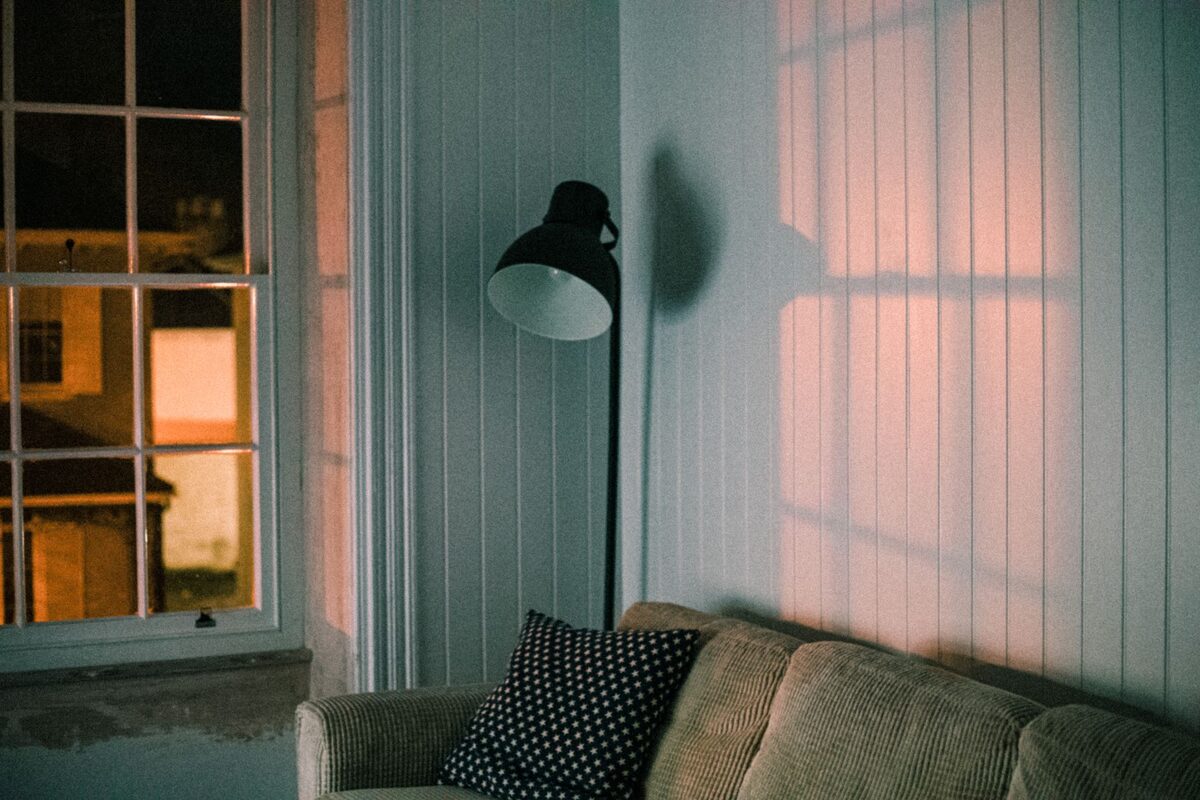
Here’s the part most small apartment home office ideas skip: the setup is only half the design. The other half is the teardown. In a large house, you close the office door. In a 480-square-foot rental, your office is in your kitchen, your bedroom, or your living room — so if work stays visible, work stays present, humming at you through dinner and movie night.
Build a two-minute shutdown ritual around whatever setup you chose. Fold-down desk: laptop in the drawer, surface folded flat. Cloffice: doors closed, done. Rolling cart: wheeled to its overnight parking spot. Console desk: laptop into the felt sleeve, stool tucked under. The physical action matters more than the method — your brain learns that the gesture means the workday has ended, the same way a commute once did.
Give every work object a home that isn’t visible from the sofa or the bed: a lidded basket for cables and chargers, a magazine file for papers, a drawer for the mouse and headset. The test is simple — stand in your relaxation spot at 7 pm and look around. If you can see work, keep hiding. Renters who nail this step report the same surprise: the apartment feels bigger, even though nothing got smaller except work’s footprint on their evening.
Small Apartment Home Office Ideas: Frequently Asked Questions
Where should I put a desk in a small apartment with no space?
Look for underused volume instead of open floor: a reach-in closet (about 24 inches deep — deeper than many desks), the wall behind a floated sofa, an empty corner that fits a 43-inch ladder desk, or the nightstand spot beside your bed. Walk the apartment with a tape measure and hunt for any stretch of wall at least 30 inches wide. Almost every rental has two or three candidates; the best one is usually near natural light, away from the kitchen splash zone, and out of your bed’s direct sightline so work doesn’t stare at you after hours.
Can I really use a closet as a home office?
Yes — the “cloffice” is one of the most effective small-space conversions there is. A standard reach-in closet gives you a surface area comparable to a store-bought desk, plus doors that hide everything at the end of the day. The renter-friendly version uses a freestanding narrow desk or a tabletop resting on two filing cabinets, so nothing attaches to the walls. Add rechargeable stick-on LED lights for task lighting, and relocate the displaced clothes to a slim rolling rack. Ventilation is the one real limit: leave the doors open while you work.
What’s the smallest desk size that’s still comfortable to work at?
For laptop-only work, a surface of about 31 by 16 inches is a comfortable floor, and dedicated minimalists manage on 24-inch-wide wall shelves. If you use an external monitor, aim for at least 20 inches of depth so the screen sits an arm’s length away. Height matters more than width: the surface should sit around 29 to 30 inches from the floor so your elbows rest at roughly 90 degrees. A too-small desk you sit at properly beats a big dining table that leaves you hunching sideways over a corner.
How do renters set up a home office without drilling holes?
Go freestanding and clamp-on. Ladder desks lean against the wall with a single small anti-tip screw (the same wear-and-tear category as a picture hook), rolling carts and console desks touch nothing at all, and clamp-on pegboards grip the desk edge instead of the wall. Heavy-duty adhesive strips handle lightweight wall organizers if you follow the weight ratings. The only setup on this list that truly needs screws is the fold-down wall desk — and two to four small, patchable holes is a conversation most landlords say yes to.
How do I keep work from taking over my studio apartment?
Design the teardown, not just the setup. Choose a format that can close, fold, roll away, or hide — then build a two-minute shutdown ritual around it: laptop into a drawer or felt sleeve, cables into a lidded basket, desk surface cleared. Zone the workspace with a small rug and a dedicated task lamp so “office” has visible edges, and keep every work object out of the sightline from your bed and sofa. When the physical signals of work disappear at the end of the day, the mental ones follow.
Final Thoughts on Small Apartment Home Office Ideas
The best small apartment home office ideas share one philosophy: when you have no space, you borrow it. The closet lends you its depth, the sofa lends you its back, the corner lends you its air rights — and every evening, you give the space back to your home. That’s the whole game in a small rental: not finding room for an office, but building one that knows when to leave.
Start with the setup that matches your lease and your temperament. Renters who crave a hard boundary should raid the closet first. Anyone allergic to commitment should start with a rolling cart — it costs less than a nice desk chair and works in every apartment you’ll ever rent. And if you’ve got one blank wall and a cooperative landlord, the fold-down desk remains the most space-per-dollar upgrade in small-space living. Measure tonight, pick one idea, and by next weekend your couch can go back to being just a couch.