Small Apartment Living Room Ideas That Work in Any Size Space
A small apartment living room doesn’t have to feel like a compromise. The problem isn’t the size of the room — it’s that most furniture, decor advice, and layout tips are written for houses with 400 square feet of living room alone. When your entire living room fits in someone else’s guest bedroom, you need a different approach entirely.
This guide covers the small apartment living room ideas that actually make a difference in compact spaces: how to choose furniture that earns its footprint, how to use light and mirrors without drilling a single hole, how to define zones in a single-room layout, and how to add personality without clutter. Everything here is renter-friendly — no permanent changes, no landlord headaches.
Whether you’re working with a true studio, a narrow shotgun layout, or a standard apartment living room that just feels too tight, there’s a version of this that works for your space.
Start With the Furniture Layout Before Buying Anything
The most common mistake in a small living room is buying furniture before figuring out the layout. A sofa that works perfectly in a 12×14 room can completely block traffic flow in a 10×12 room with the same number of pieces.
Start by measuring your room and sketching it on paper or using a free app like Magicplan or RoomSketcher. Mark the door swings, window positions, and any fixed elements like radiators or outlets. These aren’t just obstacles — they’re anchors that tell you where furniture can and can’t go.
In most small apartment living rooms, the sofa should float away from the wall rather than being pushed against it. This sounds counterintuitive, but pulling it 6 to 12 inches off the wall creates a sense of depth and makes the room feel more intentional. It also opens up space behind the sofa for a narrow console table — one of the most useful pieces in a compact room.
Keep traffic flow in mind at every step. You need at least 30 to 36 inches of clearance for a walkway and at least 18 inches between your sofa and the coffee table. If your current layout forces you to turn sideways to walk through the room, that’s a layout problem, not a size problem. Rearranging the furniture — before spending any money — is almost always the most impactful thing you can do.
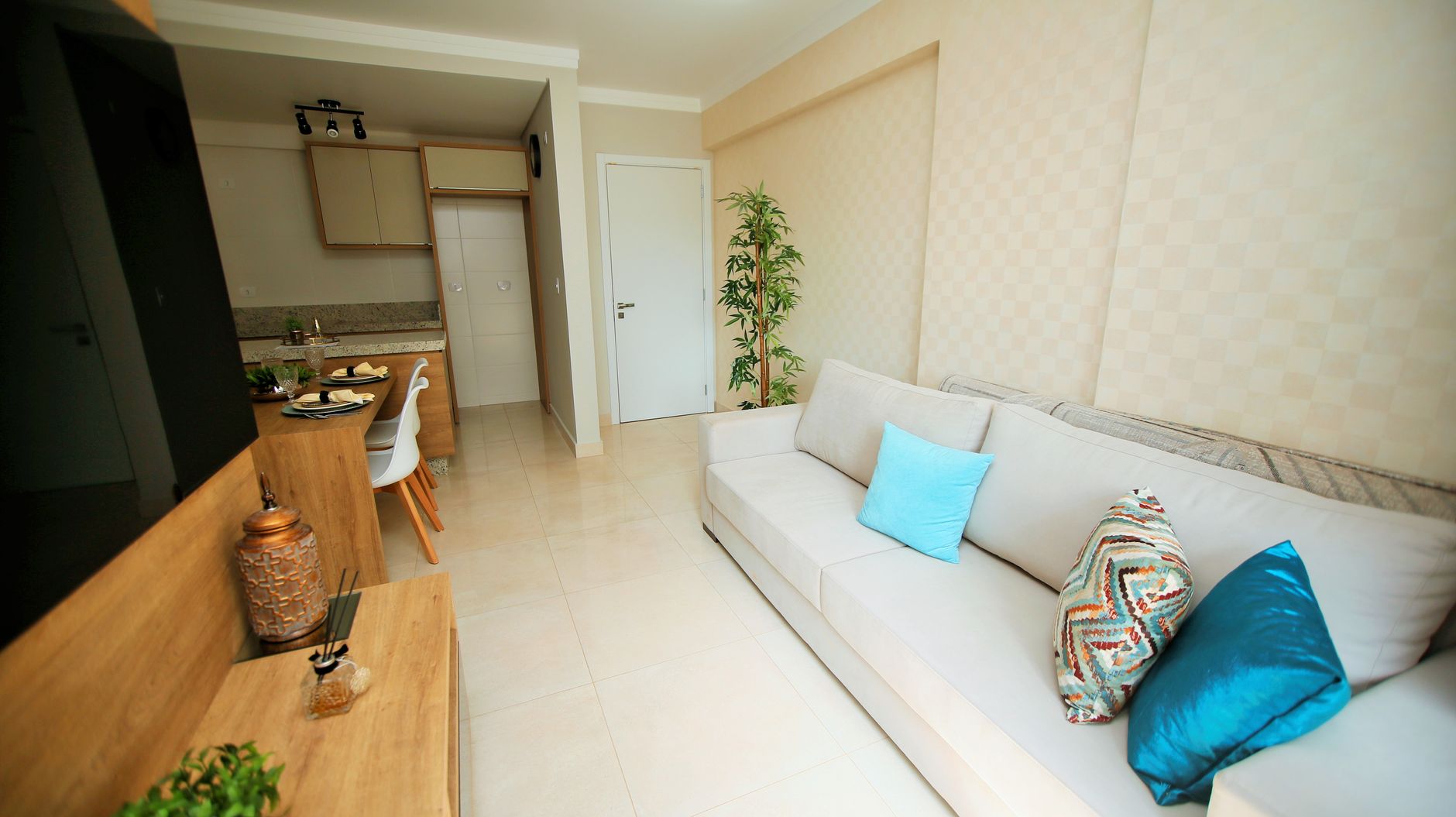
A few layout principles that consistently work in small apartments: push large furniture to the perimeter when you need open floor space, use a single focal point (TV, fireplace, or window) to anchor the room and face seating toward it, and avoid splitting the room with furniture placed at conflicting angles. For open-plan spaces, our studio apartment layout ideas guide covers more furniture placement strategies.
Choosing a Sofa That Fits Without Taking Over the Room
The sofa is almost always the largest piece in a living room, which means it has the most power to either open up or completely overwhelm a small space. Most standard sofas run 84 to 96 inches wide — far too large for the average apartment living room. The sweet spot for most compact layouts is between 68 and 78 inches, which gives you comfortable seating for two or three without eating the entire wall.
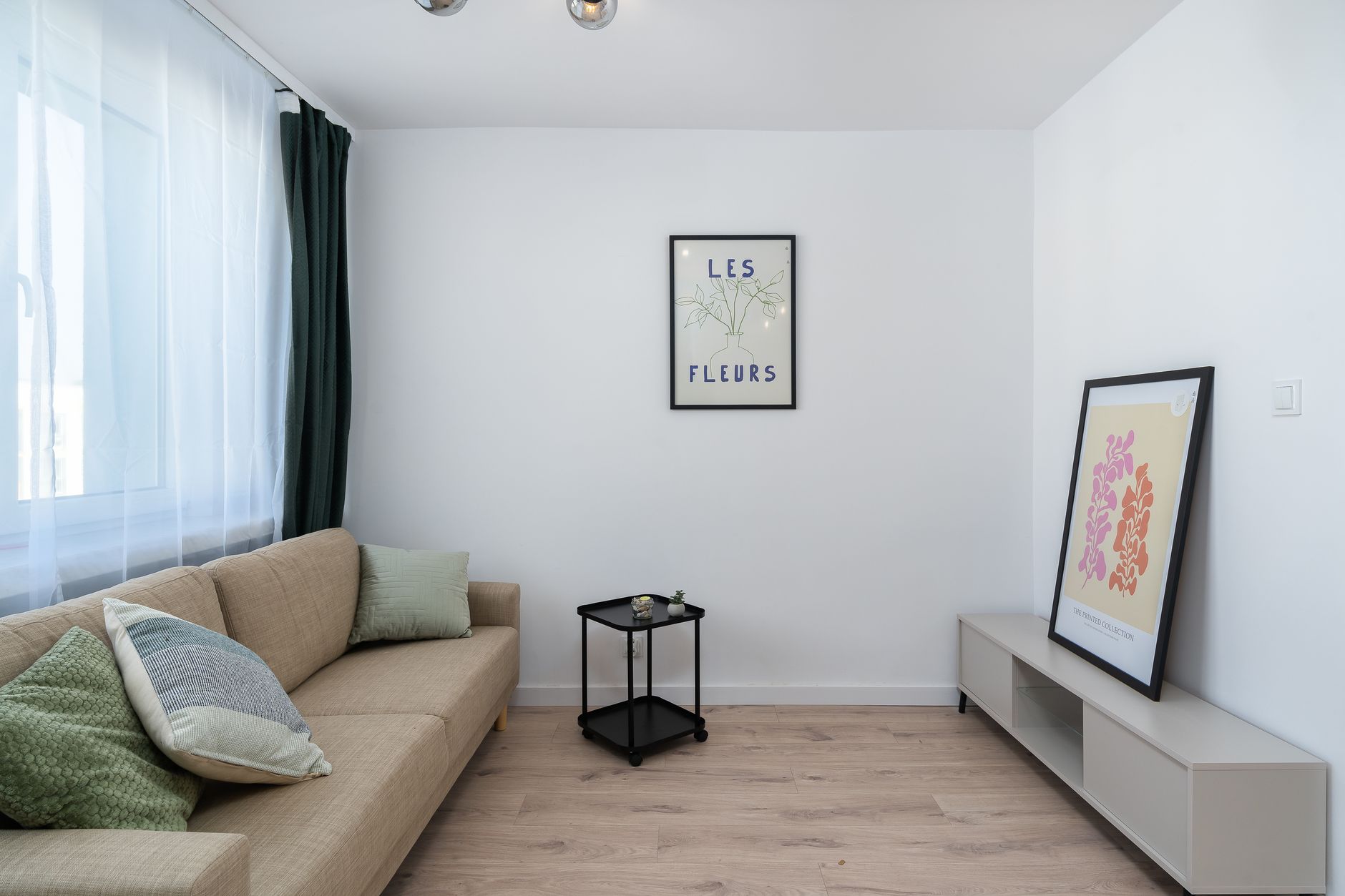
Leg height matters more than most people realize. A sofa with exposed legs that sit 6 to 8 inches off the floor creates visible floor space underneath, which visually lifts the piece and makes the room feel less crowded. Color and material play a role too. A sofa in a light neutral — warm white, cream, soft gray, natural linen — blends with the wall and recedes visually.
One option worth considering for very small spaces: a loveseat or a two-seater sofa paired with a single accent chair. This gives you similar seating capacity to a full sofa while distributing the visual weight more evenly around the room.
Coffee Tables and Alternatives That Free Up Floor Space
A traditional rectangular coffee table in front of a sofa is the default choice for most living rooms, but in a small apartment, it often takes up more floor space than it justifies.
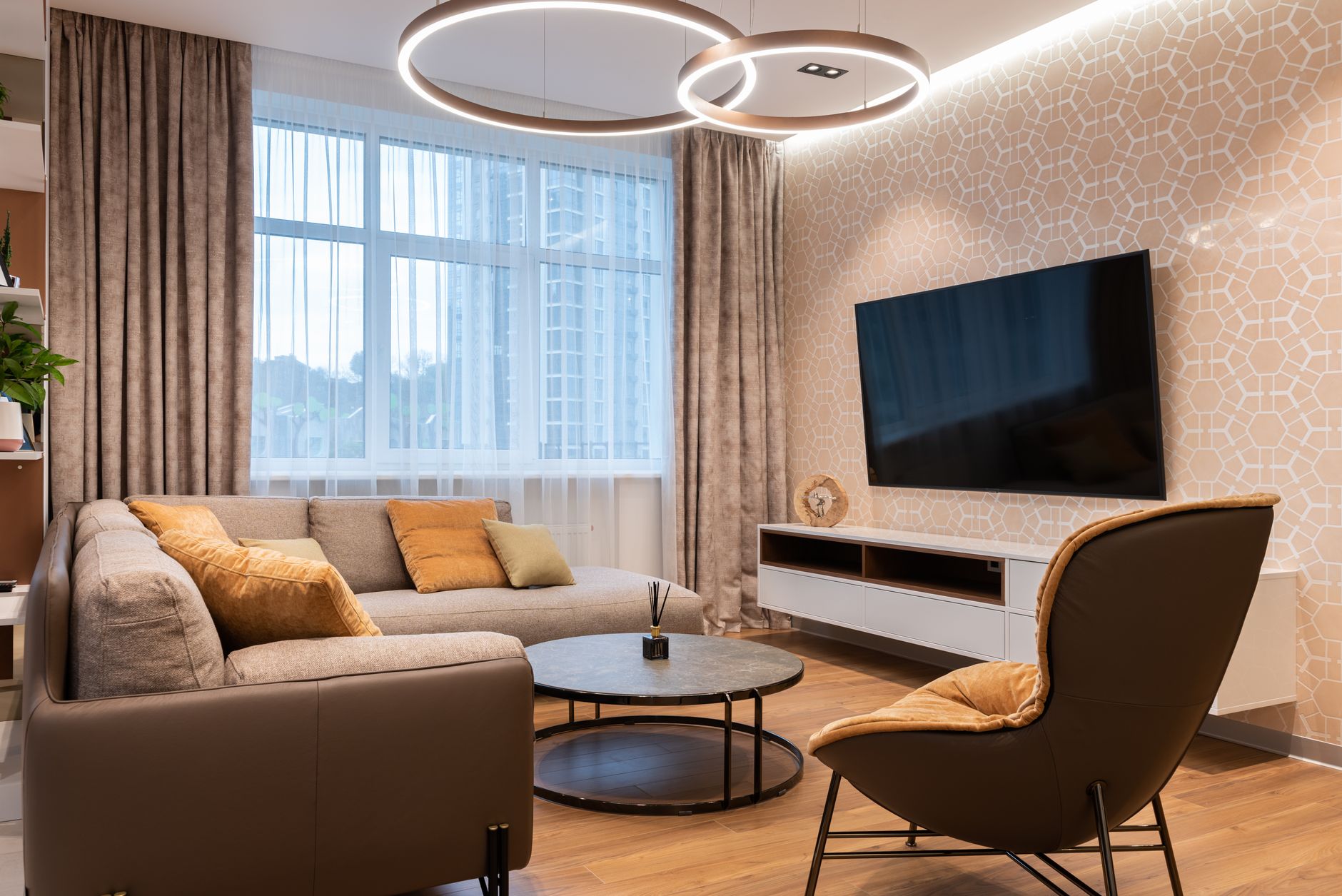
Round and oval coffee tables are a much better fit for compact layouts. A 24 to 30-inch round table in front of a small sofa gives you the same functionality without the corners cutting into walkways. Nesting tables are one of the most underused solutions in small apartment living rooms — a set that tucks together takes up almost no footprint when nested but expands when needed.
An ottoman with a tray top solves multiple problems at once — it functions as a coffee table when you need a surface, as extra seating when you have guests, and as a footrest the rest of the time. Storage ottomans add another layer of function for throw blankets, pillows, books, or anything else that tends to pile up.
Lighting That Makes a Small Room Feel Larger
Overhead lighting is almost always the default in apartment living rooms, and it’s almost always the worst option for making a small room feel good. A single overhead fixture floods the room with flat, even light that eliminates shadows, flattens surfaces, and makes the space feel like a waiting room rather than a living space.
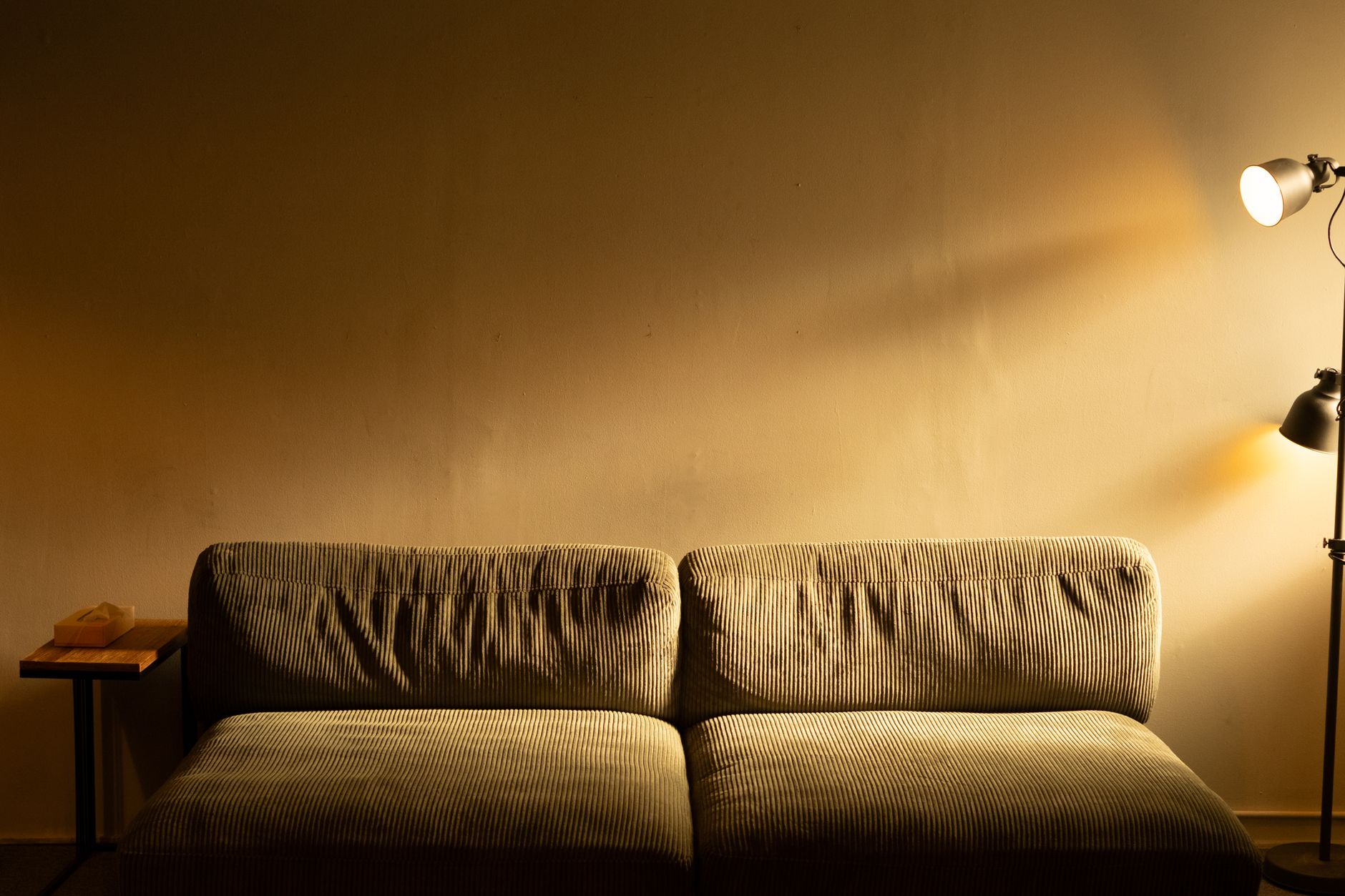
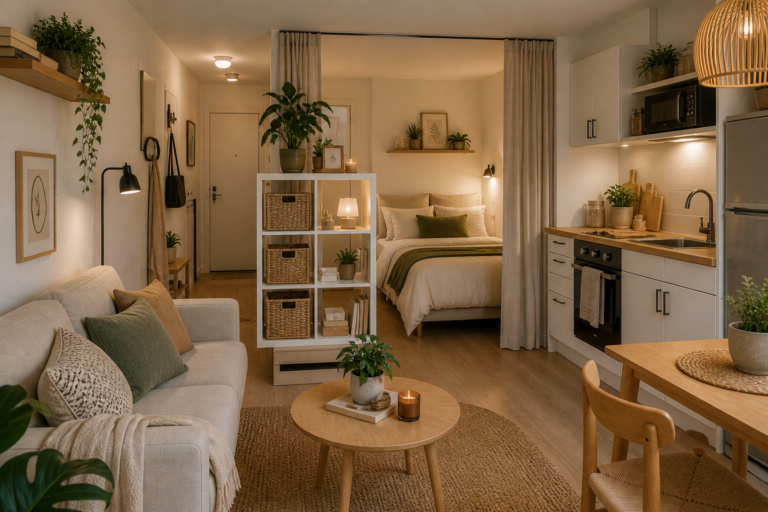
Layered lighting — multiple light sources at different heights — is what transforms a small room. A floor lamp in the corner behind the sofa is the single most impactful lighting addition you can make. Arc floor lamps that extend over the seating area are particularly good because they provide functional light directly where you need it while keeping the floor footprint minimal.
Plug-in pendant lights and wall sconces are excellent renter-friendly options that require no hardwiring. Swapping a builder-grade flush mount for a statement pendant or a rattan globe costs between $30 and $150 and changes the entire feel of the room. Layering light at three heights — floor, table, and ceiling — is the approach interior designers consistently recommend for small spaces. When you move, take it with you and put the original back — no damage, no lease violations.
How to Use Mirrors to Open Up a Small Living Room
Mirrors are one of the most effective tools in a small room and one of the most frequently misused. The common advice — put a mirror in a small room to make it look bigger — is true, but only if the mirror is placed correctly. A mirror that reflects a window or a lamp multiplies the light and depth in that specific direction.
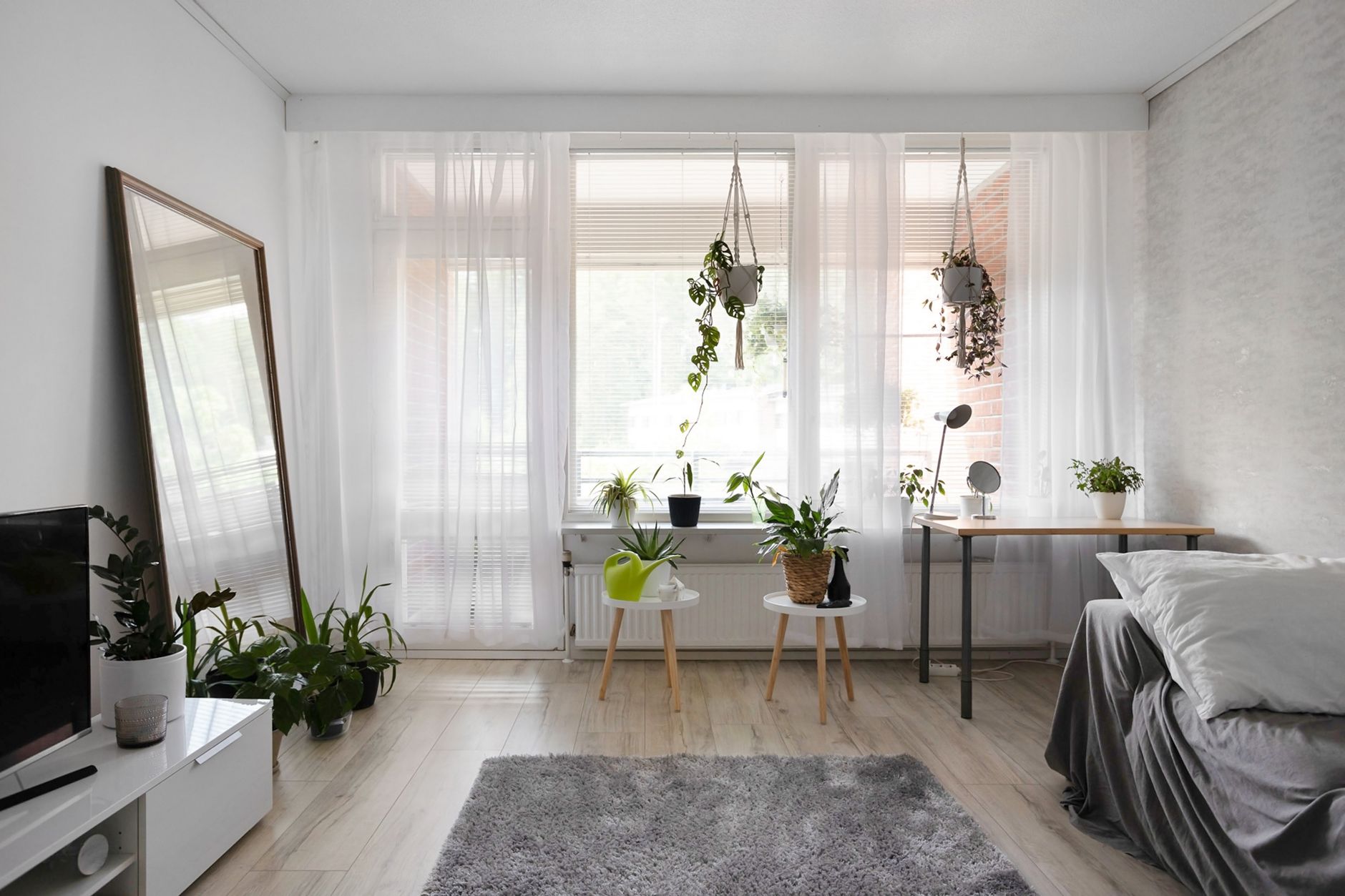
Large leaning mirrors are the most renter-friendly option because they require no mounting. A floor mirror leaning against a wall gives you the full visual effect — height, width, and light reflection — without a single nail. Look for frames in natural wood, matte black, or antique brass.
Oversized leaning mirrors (at least 60 to 65 inches tall) work particularly well because they reflect more of the room and create the illusion of a doorway or architectural feature. Position opposite or adjacent to a window to bounce natural light deep into the room.
Color Ideas for Renters Who Can’t Paint
Most renters are stuck with white or off-white walls, which sounds limiting but is actually one of the best bases for a small living room. White walls reflect light, don’t compete with furniture or art, and makes a room feel as large as possible.
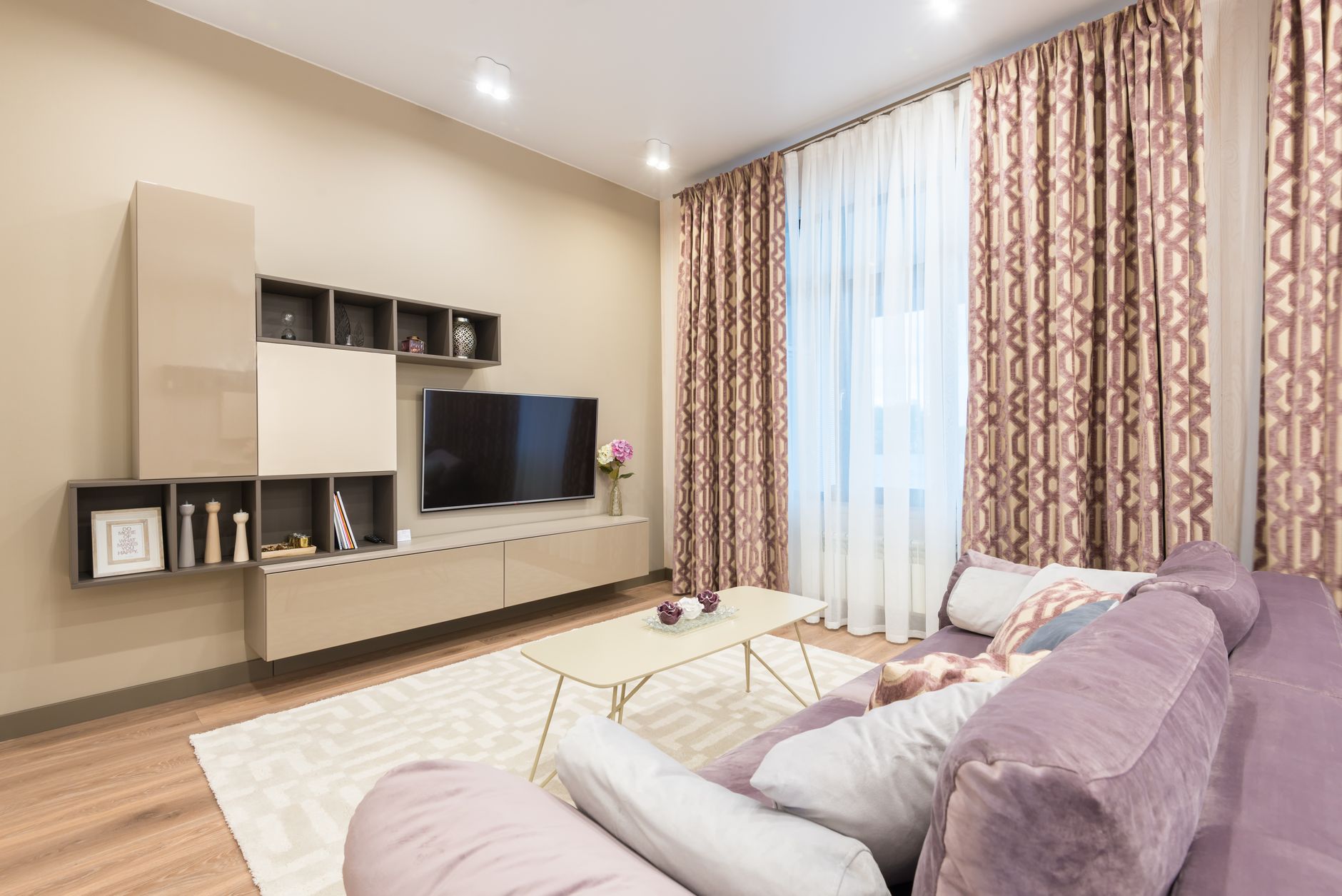
The fastest fix is introducing warmth through textiles and furniture rather than paint. A room with white walls, a warm linen sofa, a terracotta throw, a jute rug, and wood-toned furniture reads as designed and cohesive. Removable wallpaper has improved dramatically and is now a genuinely viable option for renters who want to add pattern to a feature wall.
Curtains hung at ceiling height — even if the window is only halfway up the wall — draw the eye upward and make ceilings feel higher. Wide curtains that extend 6 to 12 inches beyond the window frame on each side make the window look larger.
Vertical Space: Shelving and Storage That Goes Up, Not Out
In a small apartment living room, floor space is the most precious resource. Every piece of furniture that sits on the floor competes for the same limited square footage. The solution is to move storage, display, and organization off the floor and onto the walls — a strategy known as using vertical space.
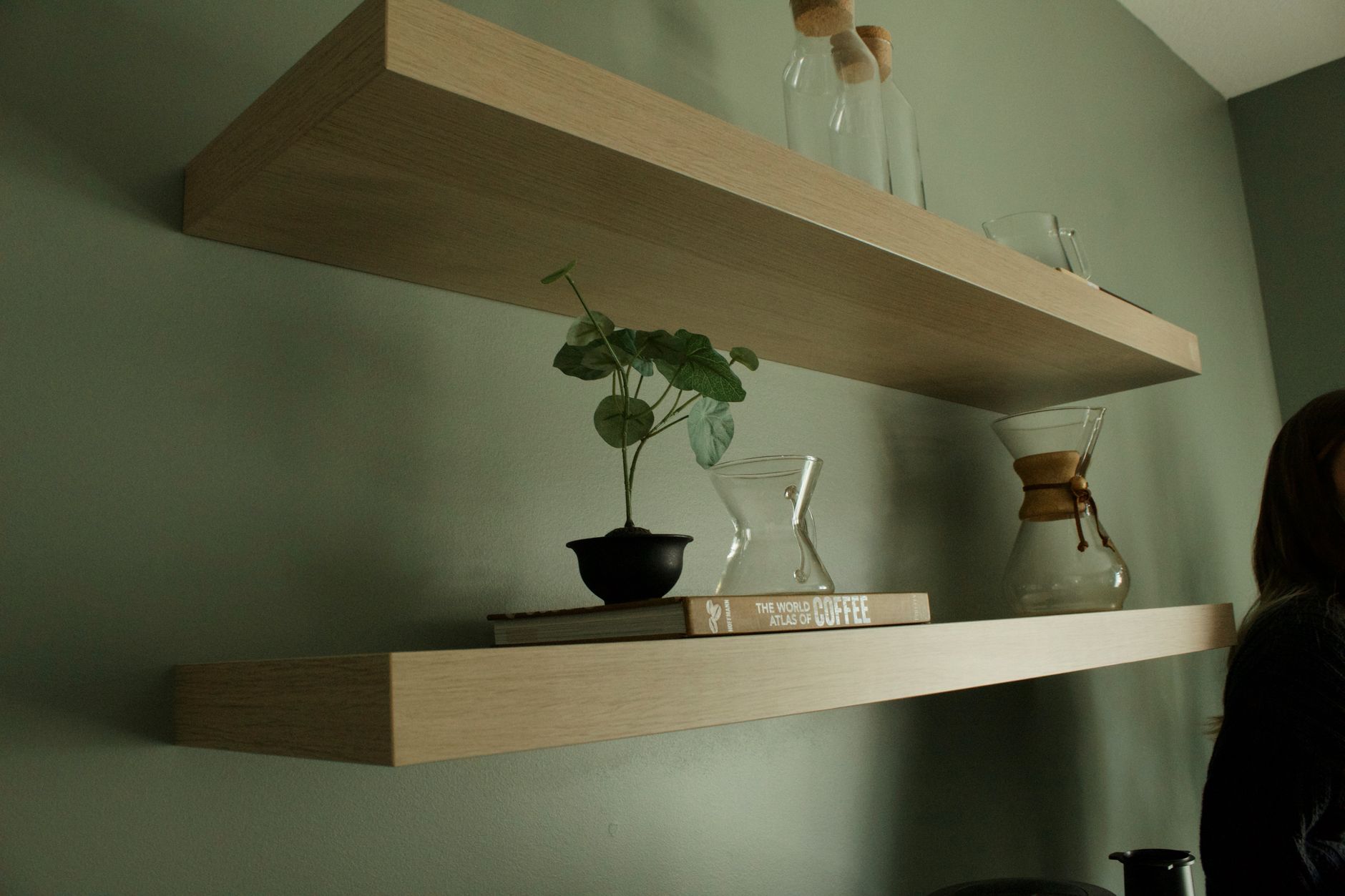
Floating shelves are the most versatile tool for this. A set of 3 to 4 shelves installed in a column on a blank wall can hold books, plants, baskets, and decor objects without taking up any floor space. Media units and TV stands deserve special attention — a floating TV unit mounted to the wall keeps the floor clear beneath it and makes the room feel more open.
Baskets and bins on upper shelves solve the storage problem while contributing to the aesthetic. The rule for open shelving: items at eye level should be decorative, items at arm level can be practical-but-attractive, and items above eye level can be purely functional storage behind baskets or boxes.
Rugs That Define Zones Without Cutting the Room in Half
A rug in a small living room does two things: it defines the seating area as a distinct zone within the room, and it anchors the furniture so the whole arrangement looks cohesive. Both effects depend almost entirely on getting the rug size right — which is where most people go wrong.
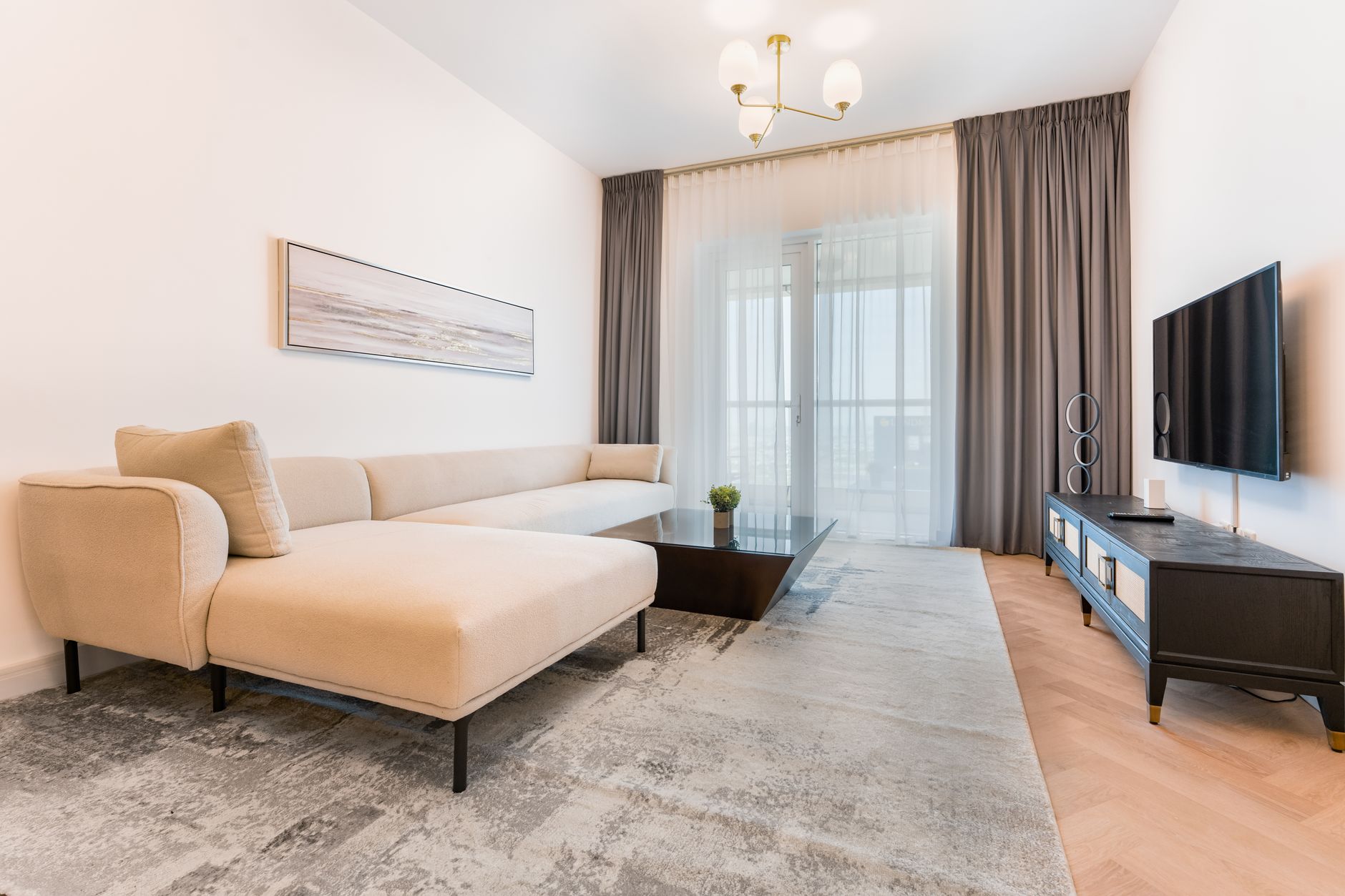
The most common mistake is buying a rug that’s too small. A 5×7 rug under a standard sofa leaves the front legs hanging off the edge. The minimum for most apartment living rooms is a 6×9, and an 8×10 is often the right size even in rooms that feel tight. A rug that reaches under all the furniture creates a single unified zone and makes the room feel bigger, not smaller.
For small apartments, low-pile rugs in solid colors, simple geometric patterns, or subtle textures work better than large-scale prints. A solid or near-solid rug in warm oat, tan, soft sage, or terracotta reads as grounded and calm while still adding texture to the floor.
Plants That Work in Low-Light Apartment Living Rooms
Plants are one of the fastest ways to make an apartment living room feel alive, but most apartment living rooms don’t get the direct sunlight that most plants need. Many apartment dwellers end up with yellowing leaves, leggy growth, or plants that die slowly over a few months.
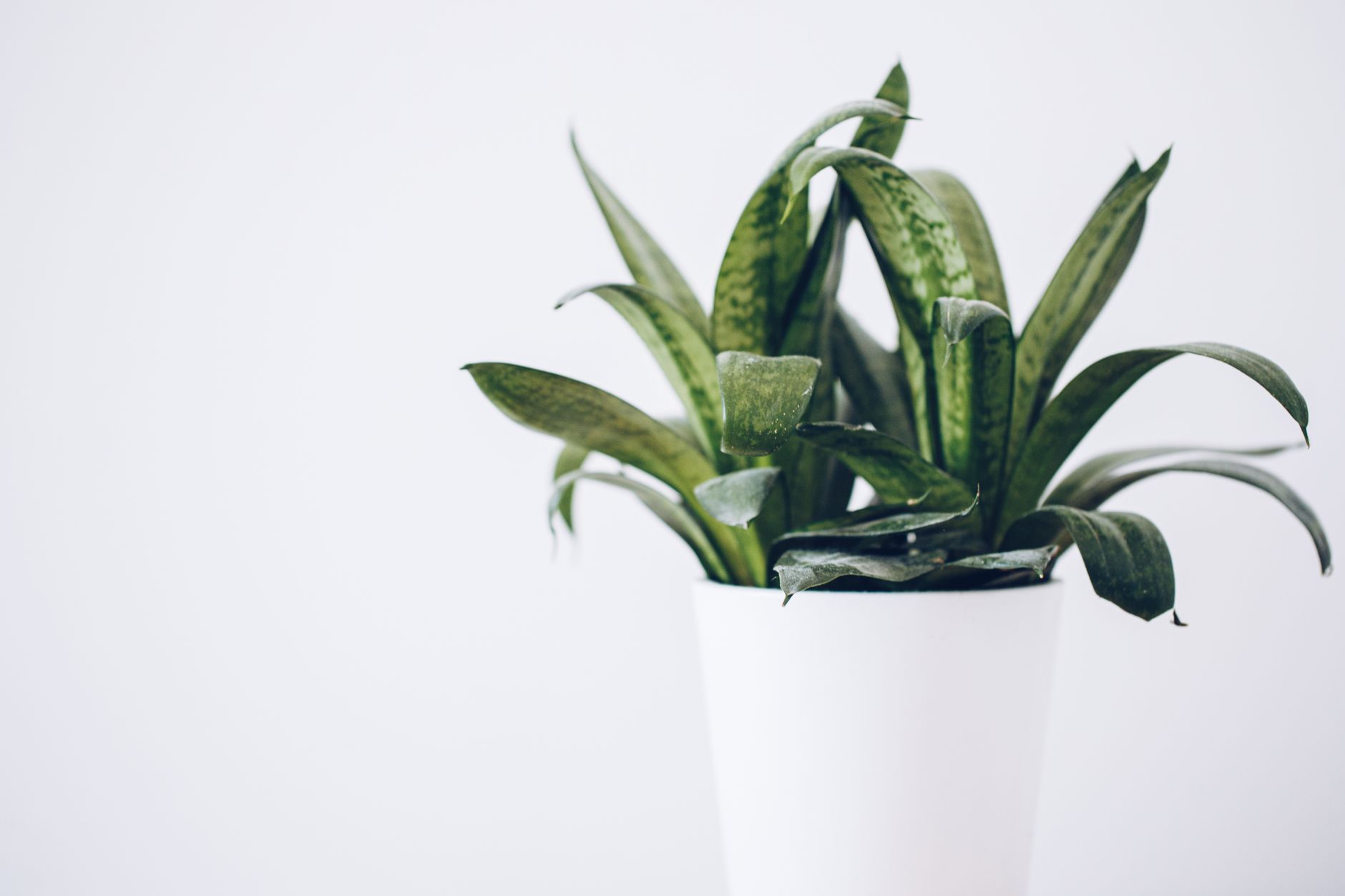
The solution is choosing plants genuinely adapted to low light. Pothos is the most reliable option — it grows aggressively in conditions that would kill most other plants, tolerates irregular watering, and comes in multiple varieties. Snake plants (Dracaena) are similarly indestructible and offer a tall, architectural silhouette that suits modern rooms well. Both are listed among the top low-light indoor plants recommended by horticulturalists for exactly this reason.
Placement matters. A single large plant — a tall pothos trained up a moss pole or a snake plant in a 10-inch pot — has more visual impact than a collection of small plants scattered around the room. One statement plant in a good-looking pot reads as a design decision; a shelf crowded with small plants in mismatched plastic nursery pots reads as a hobby rather than decor.
Storage Solutions That Double as Decor
Storage is the perpetual challenge in small apartment living rooms. Most practical solutions — plastic bins, wire shelving, extra furniture — create visual clutter. The answer is choosing storage pieces that look good even when they’re doing a functional job. Our guide on how to add storage to a small apartment goes deeper on this.
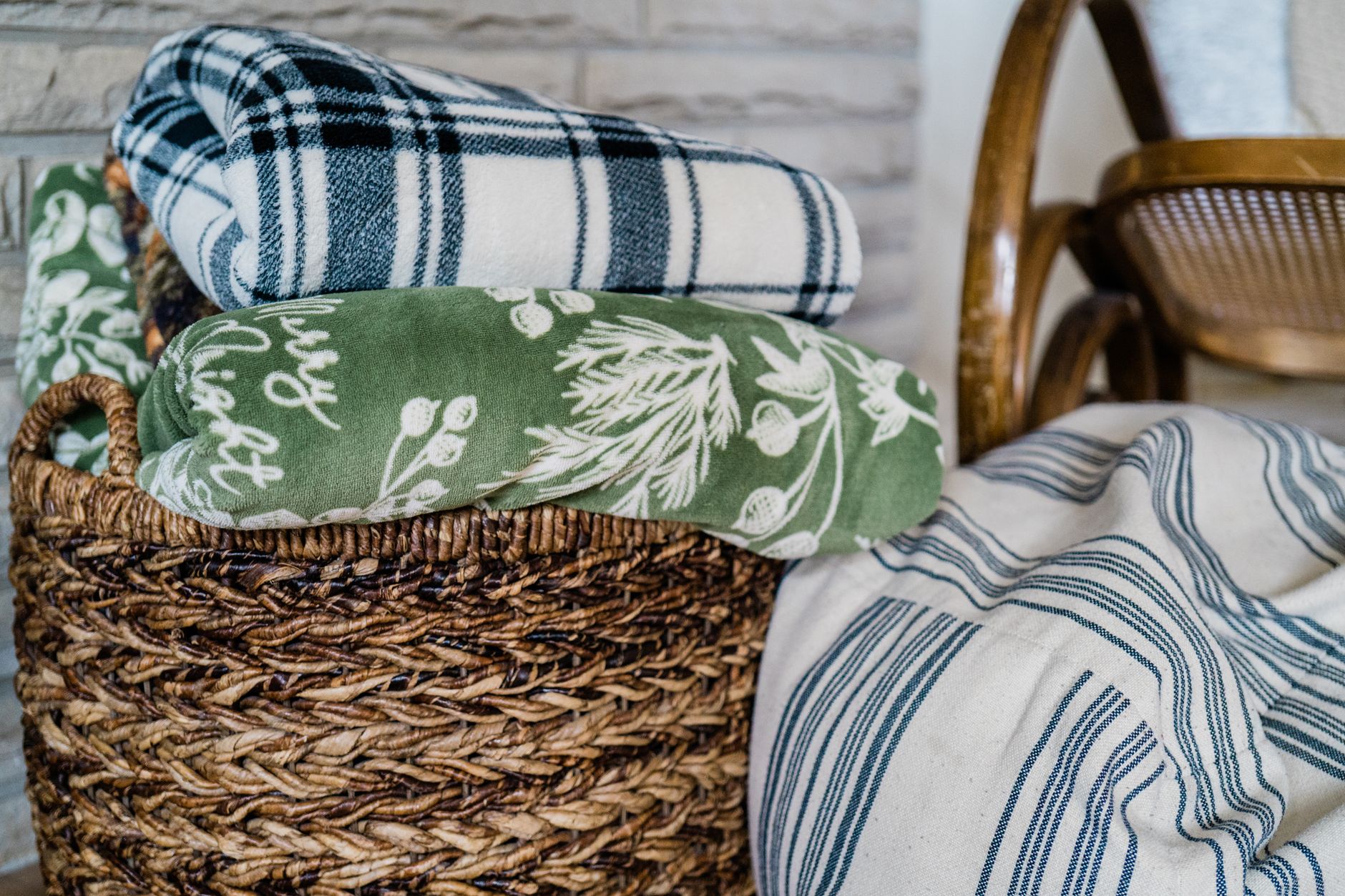
The trunk or blanket chest is one of the most useful pieces in a small living room. Positioned at the foot of the sofa or against a wall, it stores throw blankets, extra pillows, and board games inside while functioning as a surface or bench on the outside. Decorative baskets on shelves handle the small-item chaos: remotes, cables, magazines, candles.
A console table behind the sofa earns its square footage in multiple ways. The surface functions as a display shelf, a charging station, and a lamp stand. Because console tables are typically only 10 to 14 inches deep, they fit in the gap between the sofa and the wall without protruding into the room.
How to Make Your Small Apartment Living Room Feel Like a Place You Want to Be
All the practical advice in the world only gets you so far. A room can follow every design principle and still feel sterile. These small apartment living room ideas give you a foundation, but the final layer is what makes the space feel like yours — the specific objects, textures, smells, and arrangements that reflect how you actually live.
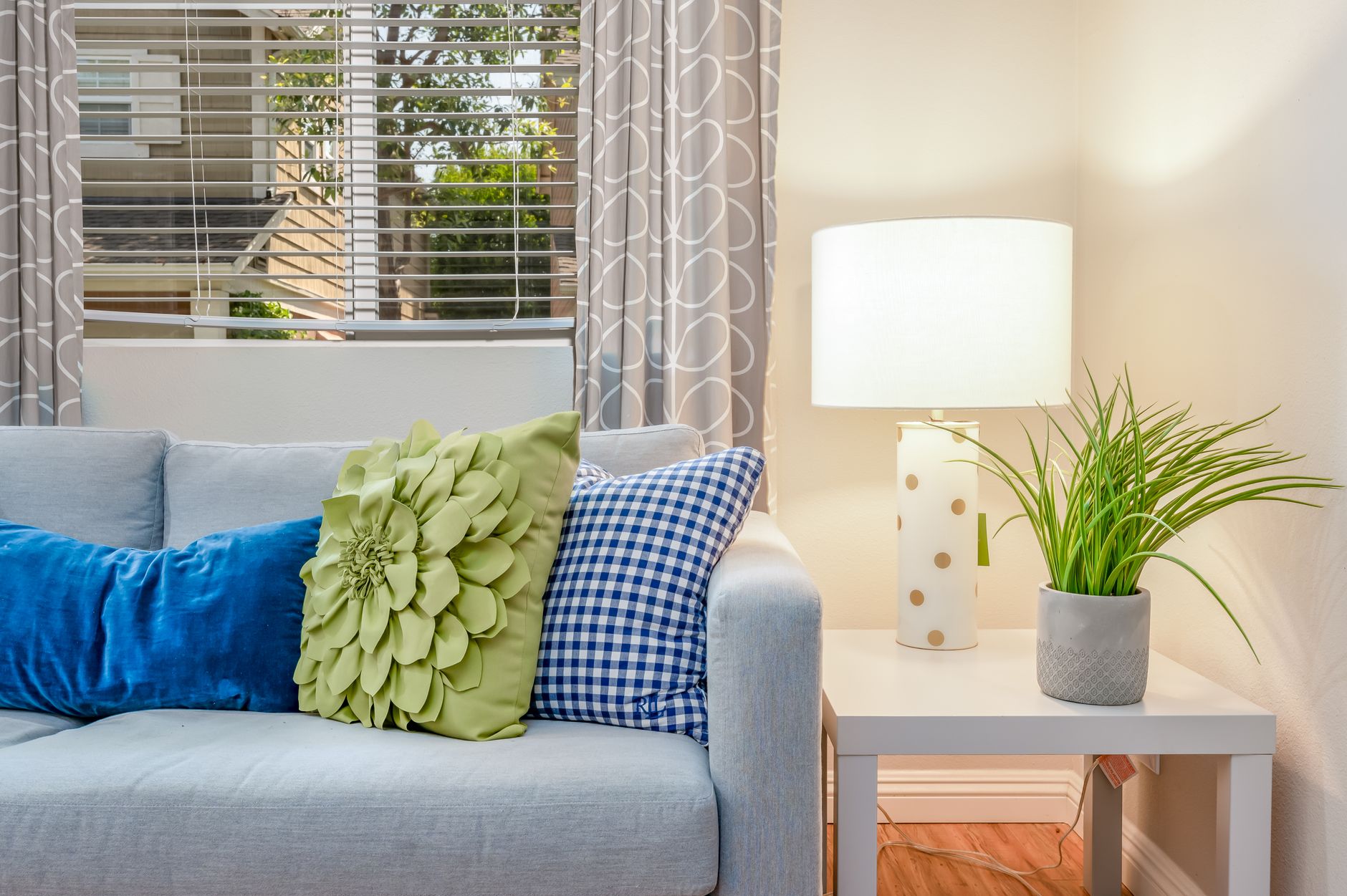
Throw pillows and blankets are the lowest-commitment way to introduce color, texture, and personality. In a small space, less is more — two or three pillows in complementary colors look curated, while six pillows in five different patterns look chaotic. Candles and scent are underrated design tools that add warmth and human scale in a way that no lamp can replicate.
Art and wall decor anchor the aesthetic of the whole room. In small living rooms, one large piece of art (at least 24×30 inches) above the sofa has more impact than a gallery wall of small pieces. The final thing that separates a designed room from a furnished one is editing — small spaces can’t hide excess, and a regular habit of removing clutter keeps everything looking put together over time.
Frequently Asked Questions
What size rug should I use for a small apartment living room?
Most small apartment living rooms need at least a 6×9 rug, and 8×10 is often the better fit. The rug should be large enough for at least the front legs of the sofa and all legs of the coffee table to sit on it. A rug that’s too small makes the room feel more fragmented, not more spacious.
How do I make a small living room look bigger?
The most effective changes are: adding a large mirror opposite a window, layering warm lighting at multiple heights, choosing furniture with exposed legs, using a rug that fully anchors the seating arrangement, and keeping surfaces edited and clear of clutter.
What type of sofa is best for a small apartment?
A compact sofa between 68 and 78 inches wide with exposed legs, a low-to-medium back height, and slim arms. Light neutral upholstery in warm white, cream, or natural linen makes the piece feel lighter visually. Avoid sectionals unless the room is specifically shaped to accommodate one without blocking walkways. If a corner couch is on your list, our guide to the best sectional sofas for small living rooms compares five renter-tested picks.
Can I decorate a small apartment living room without damaging the walls?
Yes. Leaning mirrors require no mounting, removable wallpaper leaves no residue, Command strips hold lightweight frames, plug-in pendant lights need only a ceiling hook, and freestanding bookcases require no wall anchors. Small wall anchor holes patch easily before move-out.
What plants are best for an apartment living room with low light?
Pothos, snake plants (Dracaena trifasciata), ZZ plants, and peace lilies all thrive in the low-light conditions typical of apartment living rooms. They’re also forgiving of irregular watering schedules, making them ideal for renters.