
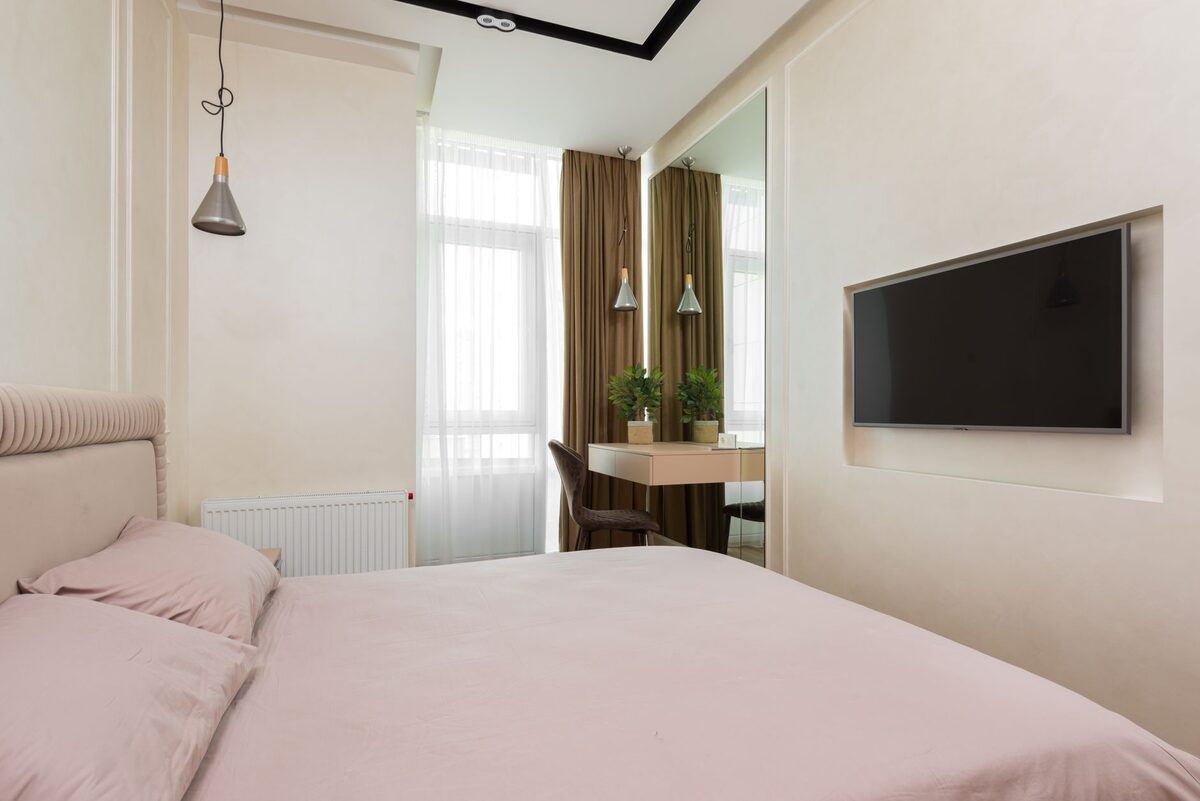
12 Proven Ways to Make a Small Bedroom Look Bigger
If you want to know how to make a small bedroom look bigger, you’re already ahead of most renters who just pile more stuff into a cramped space and wonder why it never improves. The good news: you don’t need to knock down walls, hire a designer, or spend a fortune. The 12 tricks below use light, color, furniture placement, and a few smart swaps to visually expand any tiny bedroom — most of them are completely renter-approved and work even in the smallest apartment. Whether you’re working with a 10×10 box or a room that barely fits a full bed, these strategies will change how your space feels from the moment you walk in. Start from the top and work through them one by one — the first two alone can transform a room.
Why Small Bedrooms Feel Cramped — and How to Make Them Look Bigger
Most small bedrooms don’t feel cramped because they lack square footage. They feel cramped because of visual weight — dark colors absorbing light, heavy furniture sitting flat on the floor, clutter breaking up sightlines, and curtains hanging too low. Your eye stops and starts a dozen times the moment you walk in, and your brain reads all those visual interruptions as “boxed in.” The strategies below work by doing the opposite: giving your eye a clear, unbroken path through the space.
The best part is that most of these changes cost little to nothing. A repositioned mirror costs $0. Swapping bulky nightstands for floating ones costs under $40. Raising your curtain rod a few inches takes 20 minutes and a screwdriver. Start with what you already have before buying anything new, and you’ll be surprised how much a few intentional moves can do. For even more inspiration, see our roundup of cozy tiny bedroom ideas that make the most of every inch.
1–2. Start With the Right Paint Colors and Finishes
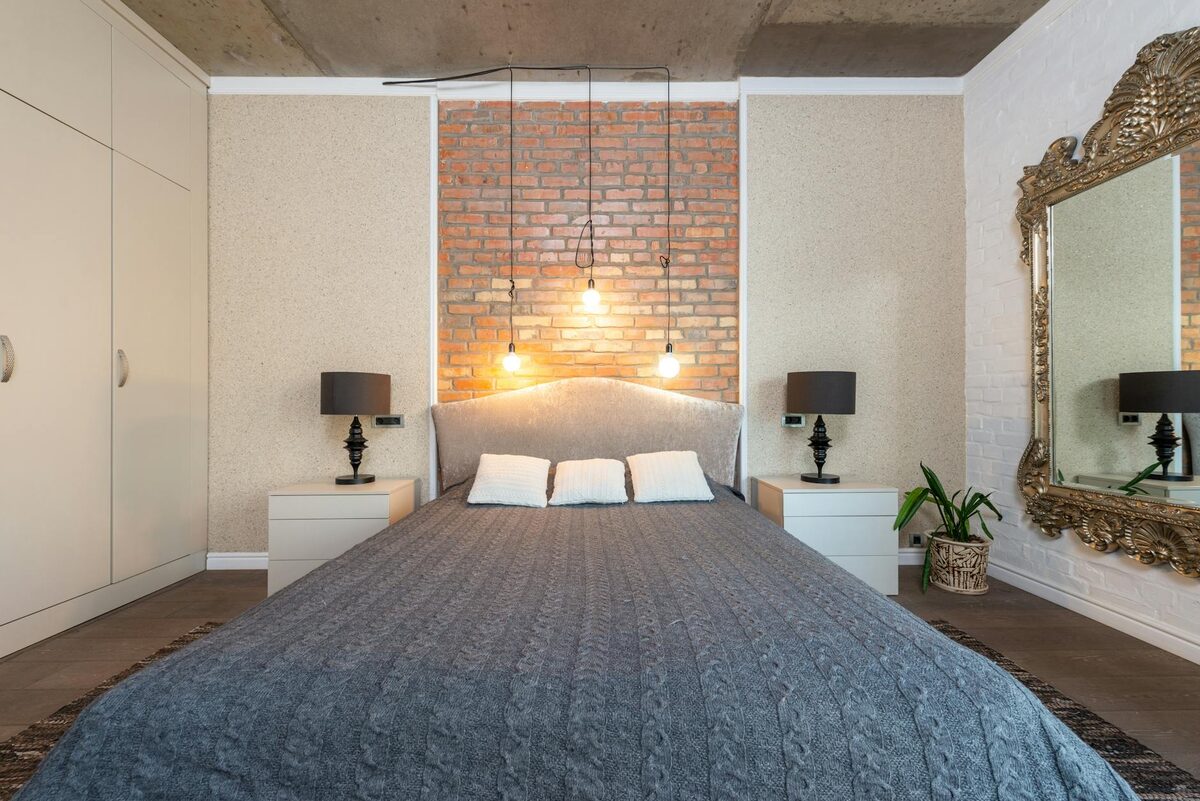
Paint is the highest-leverage change you can make in any room, and a small bedroom is no exception. Light, cool-neutral colors — warm white, soft cream, pale sage, or dusty blue — reflect more light than they absorb. Darker shades do the opposite: they swallow light and pull the walls inward. Even a mid-tone gray can make a small bedroom feel noticeably smaller.
The most effective approach is going monochromatic: paint your walls, ceiling, and trim the same light color. When your eye doesn’t stop at a ceiling line or door trim, the room reads as taller and more continuous. This single trick can make a standard 8-foot ceiling feel like it’s 9 or 10 feet. For renters who can’t paint, removable peel-and-stick wallpaper with subtle vertical stripes creates the same height illusion without touching anything permanently. Paint sheen matters too — a satin or eggshell finish reflects slightly more light than flat matte, adding brightness especially in rooms with limited natural light.
3–4. Use Mirrors Strategically to Double Your Light
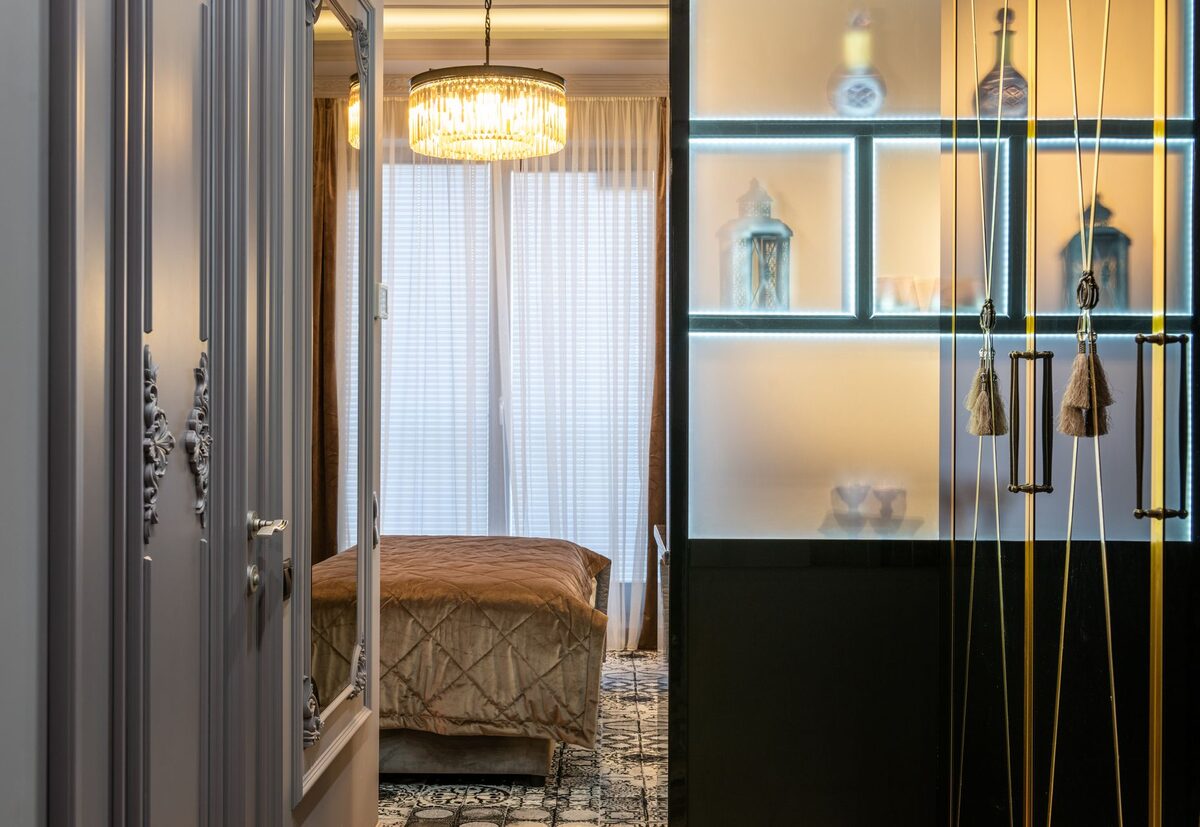
A well-placed mirror is one of the oldest tricks in interior design, and it works every single time. The key word is “placed” — a mirror hung randomly on an interior wall isn’t doing much. To make a small bedroom look bigger with mirrors, position them so they reflect either a window or a direct light source. A large leaned floor mirror angled toward the window bounces natural light deep into the room, making the space feel both larger and brighter.
For tight bedrooms with awkward corners, a full-length leaner mirror fills dead space without requiring any mounting hardware — perfect for renters. Place it adjacent to your window rather than directly across from it; that angle captures and redirects the most light. A second smaller mirror at a different angle can create the illusion of depth, like a second room opening behind the first. You don’t need expensive decorative mirrors; a simple $30–$60 leaner from a home goods store does the job just as well.
5–7. Choose Furniture That Doesn’t Fight the Floor
The single biggest furniture mistake in small bedrooms is choosing pieces that sit heavy on the floor. A platform bed with a thick solid base, a chunky dresser with no legs, a nightstand that goes all the way to the floor — every one of these hides visible floor space and makes the room feel denser than it is. The fix: choose furniture with visible legs. When you can see the floor under a bed frame or beside a nightstand, the eye registers more open space and the brain reads the room as larger.
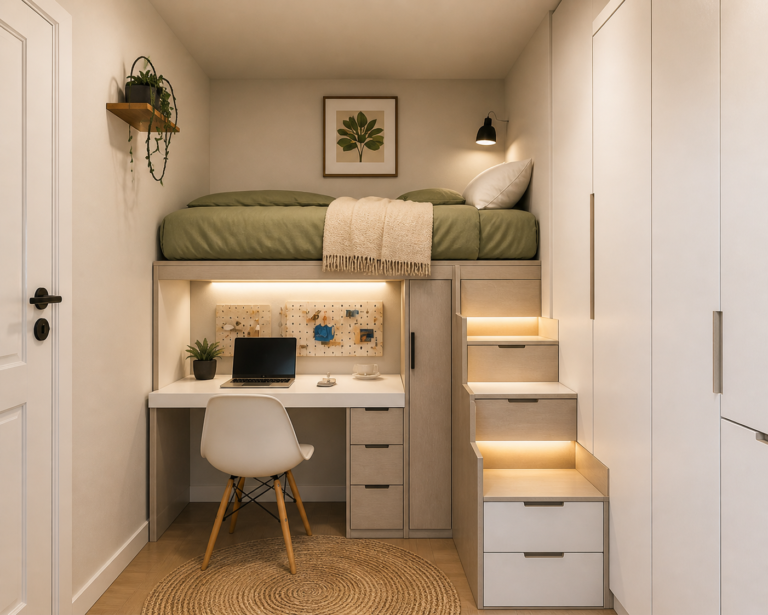
For the bed itself, a slim metal frame or a wood frame with tapered legs keeps the profile open. Pair it with floating nightstands mounted to the wall instead of freestanding tables — this frees up floor space on both sides of the bed. A bed with built-in storage drawers underneath is ideal if you need extra room for linens or out-of-season clothing, since it eliminates the need for a separate bulky dresser.
The other key rule: fewer pieces. Every item you add competes for floor space and visual attention. A bedroom truly only needs a bed, one storage solution, and lighting. Before adding a vanity, a bench, or a reading chair, ask whether the room can breathe without it. For clever multi-purpose furniture ideas that work perfectly in small apartment bedrooms, our guide to IKEA small space hacks is worth bookmarking — it covers storage beds, floating desks, and wall-mounted pieces that reclaim serious floor space.
8–9. Hang Curtains High and Layer Your Lighting
Your curtain rod placement is quietly making your room look smaller. Most people install it right above the window frame — which is the worst position for a small room. Instead, mount your curtain rod as close to the ceiling as possible and let the curtains fall all the way to the floor. This draws the eye from ceiling to floor in one unbroken vertical sweep, making your room feel significantly taller. Use lightweight, sheer or linen-blend curtains in a light neutral — heavy drapes in dark colors undo all the work. For renters who can’t drill into walls, removable curtain rod brackets using Command adhesive strips are a lease-safe solution; see our full list of renter-friendly decor ideas that need zero drilling for more options like these.
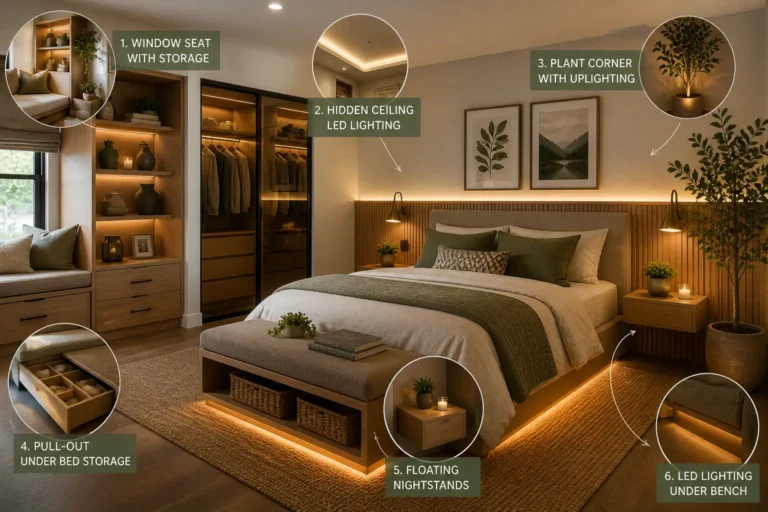
Lighting follows the same logic. A single overhead bulb creates harsh shadows that flatten the room and make it feel boxy. Layer three sources instead: ambient (a ceiling fixture or floor torchiere), task (a table or reading lamp), and accent (warm LED strip lights behind a headboard or along a shelf). A torchiere lamp aimed at the ceiling bounces indirect light across the entire room, softening shadows and creating a sense of volume. Warm bulbs in the 2700K–3000K range feel cozier and more spacious than cool white. Good layered lighting can make a 10×10 bedroom feel nearly twice as open after dark, even without any other changes. According to the U.S. Department of Energy, LED bulbs also use 75% less energy than incandescent, so layering your lighting costs less to run than a single old overhead bulb.
10–12. Use Vertical Space, Smart Rugs, and Layout Tricks
In a small bedroom, the floor is prime real estate. The more floor you can see, the bigger the room feels — which means your storage and decor should go vertical, not horizontal. Tall floating shelves mounted high on the wall draw the eye upward and add meaningful storage without claiming a single square foot of floor. A tall narrow bookshelf in a corner does the same, and gives you a natural landing spot for books, plants, and a small lamp.
Area rugs have one job in a small bedroom: anchoring the space without chopping it up. A rug that’s too small — like a 2×3 accent rug beside the bed — actually makes the room look smaller by fragmenting the floor. Go larger than feels intuitive. A 5×8 rug tucked under the front two-thirds of the bed grounds the entire sleeping zone and makes the floor feel expansive. Choose light colors and low-pile natural fibers like jute, wool, or cotton boucle, which reflect more light than dark or shaggy options.
Finally, rethink your layout. Most people push the bed into a corner to “save space,” but centering the bed on the longest wall with equal nightstand space on both sides creates symmetry that reads as more spacious. If the room is very narrow, placing the bed against one wall and keeping the opposite wall completely clear gives you one strong walkway that opens the room up. Remove anything from the floor that doesn’t belong there — a clear floor more than almost anything else is what transforms a cramped small bedroom into a room that breathes.
Frequently Asked Questions
What color makes a small bedroom look bigger?
Light, neutral colors work best — warm white, soft cream, pale sage green, and dusty blue all reflect light and push walls visually outward. For the biggest impact, paint your walls, ceiling, and trim the same light shade. This monochromatic approach eliminates visual breaks that make a room feel smaller, and it works even in rooms with very little natural light.
Does a mirror actually make a small bedroom look bigger?
Yes — when placed correctly. A large mirror positioned adjacent to a window or opposite a light source reflects both light and the room back at you, creating the illusion of depth and making the space feel significantly more open. A full-length leaner mirror is the most renter-friendly option since it requires no wall mounting at all.
What is the best bed frame for a small bedroom?
Look for a bed frame with visible legs — this keeps the floor visible and the room feeling open. Slim metal frames or wooden frames with tapered legs in a light finish work well. Avoid solid platform bases that go all the way to the floor. A storage bed with drawers underneath is ideal if you need extra room for bedding or out-of-season items without adding a separate dresser.
Should you use a rug in a small bedroom?
Yes, but size matters enormously. A rug that’s too small fragments the floor and makes the room look smaller. Go with at least a 5×8 and tuck it under the front legs of the bed to anchor the space. Choose a light color and a low-pile texture to keep the floor looking open and bright rather than heavy and busy.
How do I make a 10×10 bedroom look bigger?
In a 10×10 bedroom, every decision matters. Start with a light monochromatic paint color, hang curtains from ceiling to floor, and choose a bed frame with legs rather than a solid base. Add a floor mirror adjacent to the window, use floating nightstands to free up floor space, and keep just one tall storage piece rather than several short ones. Remove everything from the floor that doesn’t need to be there — clear floor space is the fastest way to make a small room feel larger.
Final Thoughts on How to Make a Small Bedroom Look Bigger
Knowing how to make a small bedroom look bigger comes down to one principle: reduce visual weight and increase visual flow. These proven tips on how to make a small bedroom look bigger work whether you rent or own, and most cost under $100. Light paint, strategic mirrors, furniture with legs, ceiling-height curtains, layered lighting, a properly sized rug, and a clear floor — none of these changes require structural work, and most cost less than $100 total. Start with the highest-impact moves first: your paint color (or a removable wallpaper alternative if you rent), your mirror placement, and your curtain rod height. Build from there. A few intentional changes can turn even the tightest bedroom into a space that feels calm, open, and genuinely comfortable to live in. Bookmark this guide on how to make a small bedroom look bigger and revisit it as your space evolves.
You Might Also Like
- 27 Cozy and Simple Tiny Bedroom Ideas That Make the Most of Every Inch
- 25 Renter-Friendly Decor Ideas That Need Zero Drilling
- 27 Genius IKEA Small Space Hacks You’ll Wish You Tried Sooner
Great content! Keep up the good work!