7 Best Room Dividers for Studio Apartments (Renter Picks)
The best room dividers for studio apartments do something almost magical: they turn one open box into a home with a bedroom, a living room, and maybe even a little office—without a single hole in the wall. If you rent a studio, you already know the challenge. Your bed, your couch, your desk, and your kitchen all share the same four walls, and by 9 p.m. the whole place can feel like one big, cluttered afterthought. A good divider fixes that. It gives your bed a sense of privacy, hides the dishes from your date, and quietly tells your brain “this corner is for sleeping, that one is for work.” The right pick can carve out zones, add storage, and even double as décor. In this guide, you will find seven renter-friendly room dividers—folding screens, curtains, bookshelves, and more—chosen specifically for small studio layouts and deposit-safe living.
In This Article
- Why the Right Room Divider Matters in a Studio
- How to Choose a Room Divider for Your Studio
- Best Folding Screen Divider
- Best No-Drill Tension Curtain Divider
- Best Bookshelf Divider (Double Duty)
- Best Shoji Screen for Soft Light
- Best Curtain Panel for Full Privacy
- Renter-Friendly Setup Tips (No Drill)
- Frequently Asked Questions
- Final Thoughts
Why the Right Room Divider Matters in a Studio
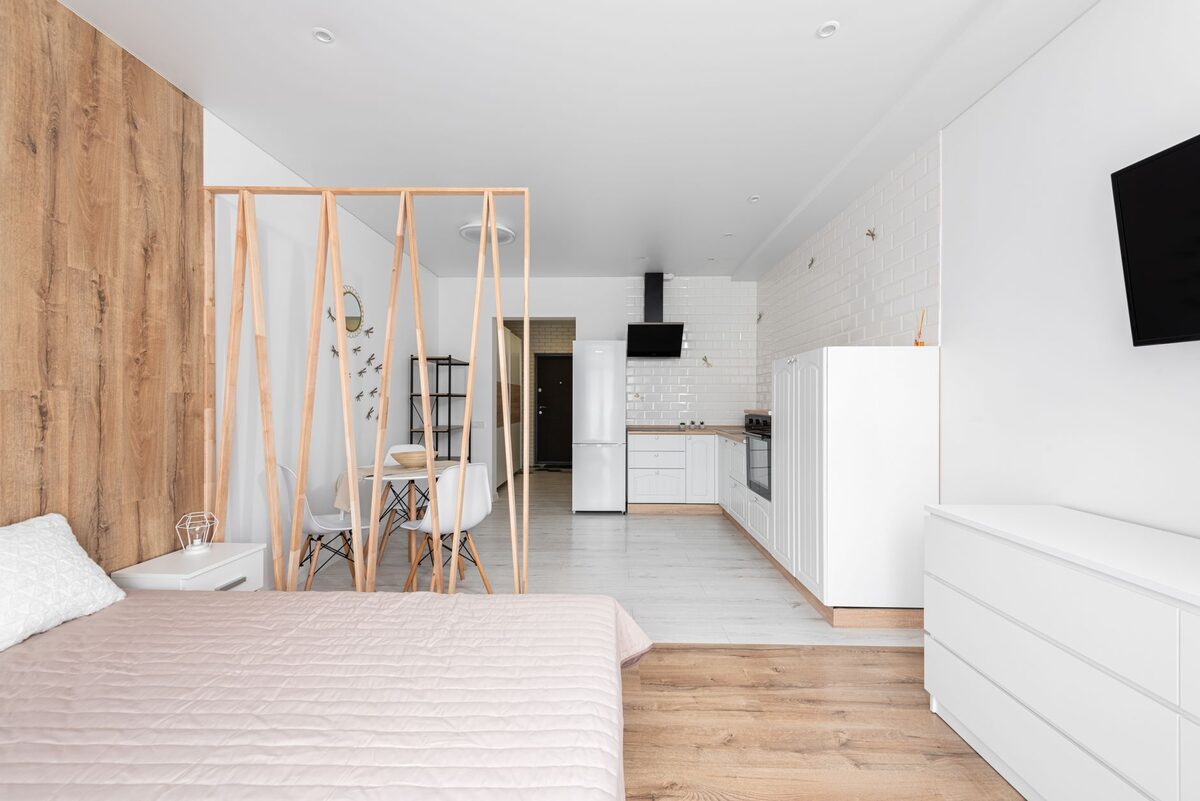
A studio apartment asks a lot of a single room. That same 400 to 600 square feet has to be your bedroom, your lounge, your dining spot, and often your work-from-home office too. Without any separation, everything blurs together. You end up eating dinner three feet from an unmade bed, taking video calls with your laundry pile in frame, and never quite feeling like you have left “work mode” to relax. The best room dividers for studio apartments solve this by creating visual and psychological boundaries—so each activity gets its own little corner, even when the walls do not exist.
There is real logic behind why this helps. Your brain builds habits around location cues. When your bed is tucked behind a screen and your desk sits in its own defined zone, you fall asleep faster and focus better, because each space signals a single purpose. A divider also does wonders for guests: no one wants to sit on the couch staring at where you sleep. Even a lightweight partition instantly makes a studio feel more like a proper one-bedroom. Before you commit to a look, it helps to think about how you already want to divide your studio apartment into zones, because the divider you choose should follow that layout, not fight it.
Just as important for renters: the right divider protects your security deposit. Permanent walls are off the table in almost every lease, but freestanding screens, tension-mounted curtains, and shelving units leave zero damage behind. You get the function of a wall with none of the drilling, patching, or repainting when you move out. That is the sweet spot every pick in this guide aims for.
How to Choose a Room Divider for Your Studio
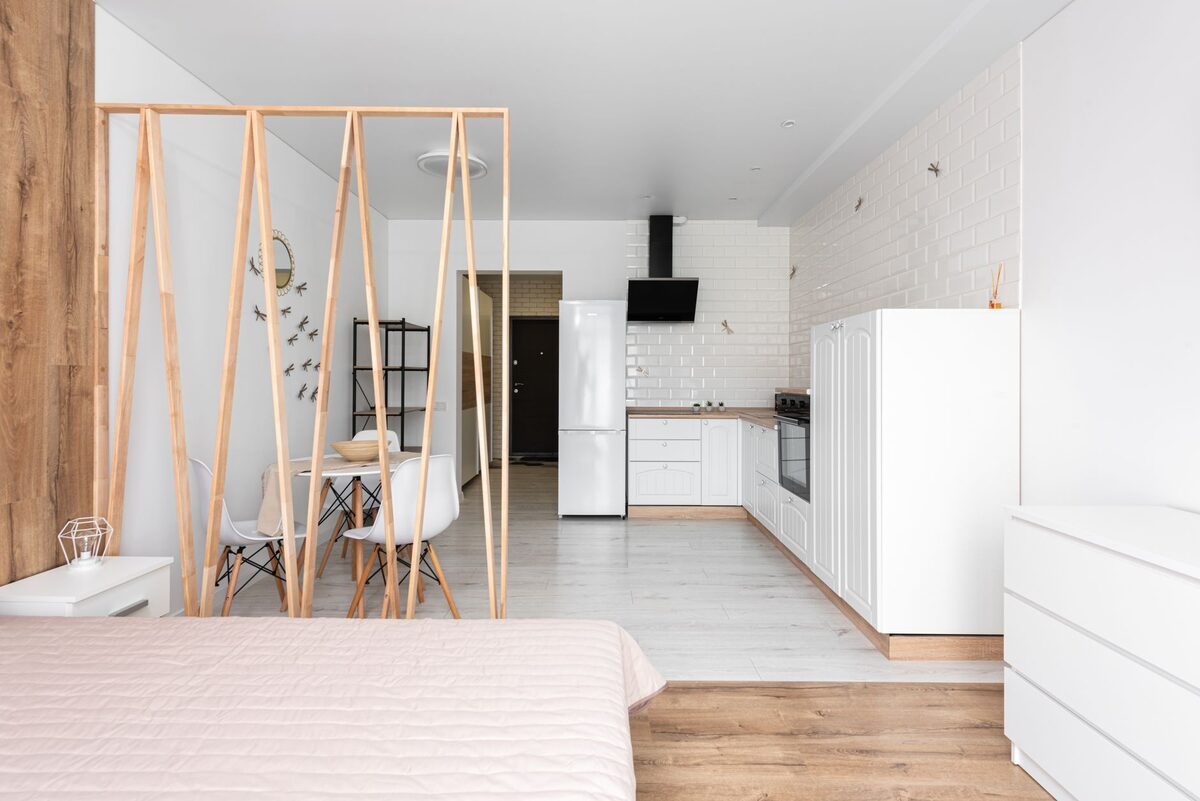
Before you add anything to your cart, run through five quick questions. First, how much privacy do you actually need? A solid folding screen or blackout curtain fully blocks the view, while an open bookshelf or beaded strand only suggests a boundary. If you share the studio with a roommate or partner, lean solid. If you live alone and just want to break up sightlines, an open divider keeps the space feeling airy.
Second, think about light. Studios often have just one or two windows, and a heavy divider can turn the far side of the room into a cave. Translucent shoji panels, mesh-woven screens, and open shelving all let daylight travel across the whole apartment. Third, consider whether you want your divider to earn its keep. A bookcase or cube unit doubles as storage, which matters enormously when you are also trying to add storage to a studio apartment that never has enough closets.
Fourth, measure your ceiling height and floor space. Most freestanding screens stand about six feet tall; tension rods can reach eight to ten feet for a floor-to-ceiling curtain. Sketch where the divider will sit so you do not block a radiator, a window, or a walking path. Finally, factor in flexibility. Folding screens and rolling racks move in seconds when you host or rearrange, while a mounted curtain track stays put. The best room dividers for studio apartments match your daily rhythm—so choose the format that fits how often you like to change things up.
Best Folding Screen Divider: The Flexible All-Rounder
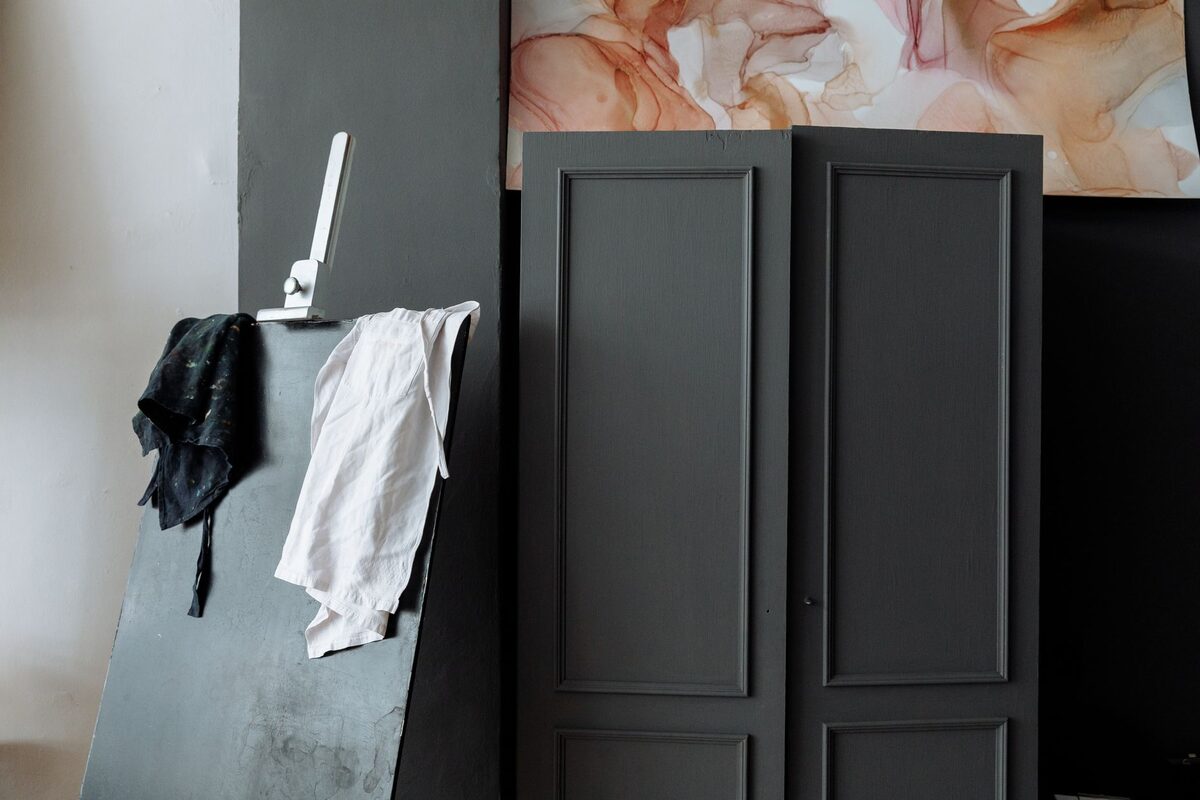
If you want one divider that does almost everything well, start with a folding screen. It is the most renter-friendly option on the market: it needs zero installation, stands up on its own, folds flat for storage, and moves to a new spot in seconds. A mesh hand-woven panel screen, like the Sorbus four-panel design, gives you a genuine visual break between your bed and the rest of the studio while the open weave still lets a little light and air pass through. That balance is exactly what a cramped studio needs—separation without a claustrophobic wall of solid wood.
The double-hinged panels are the clever part. Because each hinge folds both directions, you can zig-zag the screen into an L-shape to wrap a corner, run it straight to block a sightline, or curve it gently around a reading chair. At roughly six feet tall, it stands high enough to hide a bed from a seated guest but low enough to keep the ceiling feeling open. When friends come over and you want the full floor back, you simply fold it and tuck it beside the couch. For a piece that pulls this much weight, it is remarkably light to carry.
Sorbus 4-Panel Mesh Woven Folding Room Divider (6 ft. Tall)
- Double-hinged panels fold both ways
- No tools or drilling required
- Open weave lets light through
- Folds flat for easy storage
* As an Amazon Associate, ApartmentNook earns from qualifying purchases at no extra cost to you.
Best No-Drill Tension Curtain Divider: The Invisible Wall
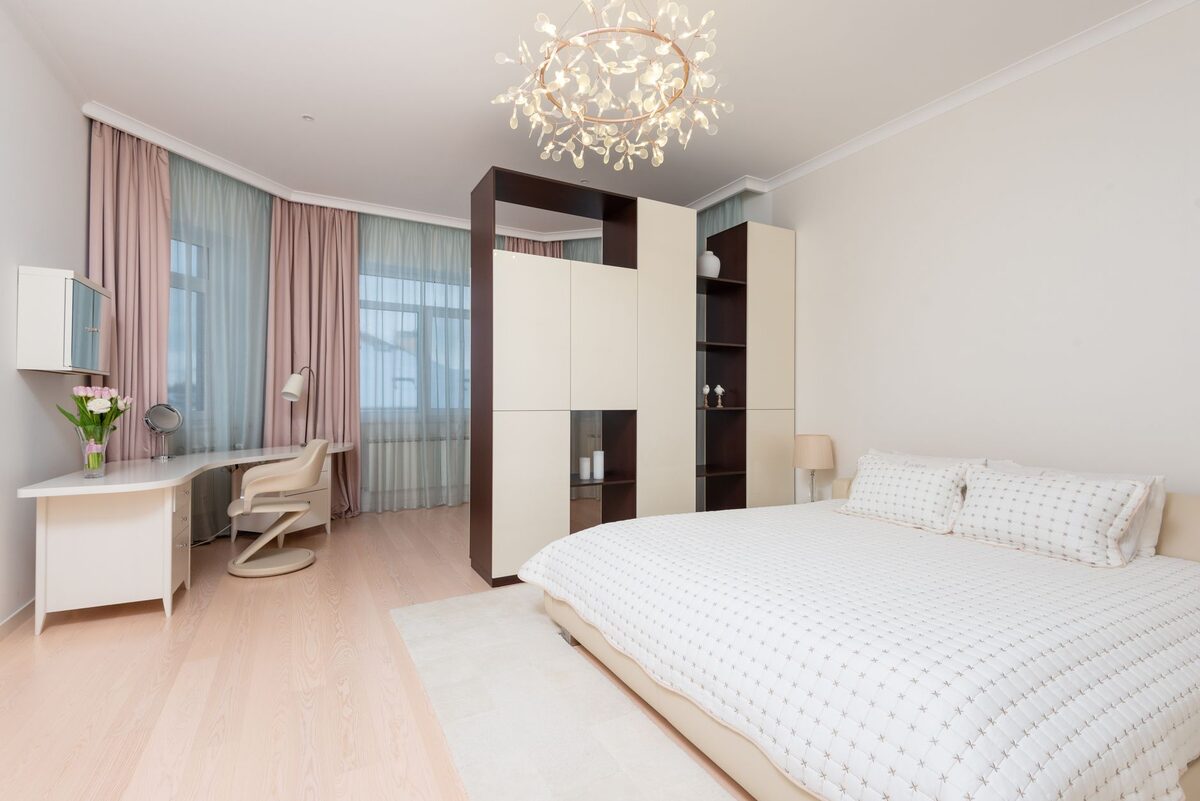
When you want a true floor-to-ceiling separation—the kind that turns a studio into a convincing one-bedroom—a tension curtain rod is your best friend. It wedges between your floor and ceiling (or between two walls) using spring pressure alone, so there is no drilling, no anchors, and no patchwork when you leave. Hang a set of soft curtain panels from it and you can pull a complete privacy wall across your bed at night, then slide it open in the morning to reclaim the full room. For renters whose leases forbid any wall modification, this is the divider that feels almost like cheating.
A heavy-duty, rust-resistant rod like the NICETOWN room divider tension rod is built for this job specifically, extending far wider than a standard shower rod and gripping hard enough to hold weighty drapes without sagging. Pair it with blackout curtains and you get a bonus: your sleeping zone stays dark for better rest even when the rest of the studio is lit. The whole setup installs in about ten minutes with nothing but your hands, and it comes down just as fast. It is one of the most quietly transformative renter hacks there is—no wonder floor-to-ceiling curtains keep showing up in the smartest small-space layouts.
NICETOWN Room Divider Tension Curtain Rod (Extra-Wide, Rust-Resistant)
- Spring tension — no drilling
- Holds heavy blackout drapes
- Rust-resistant steel finish
- Installs in about 10 minutes
* As an Amazon Associate, ApartmentNook earns from qualifying purchases at no extra cost to you.
Best Bookshelf Divider: Storage and Separation in One
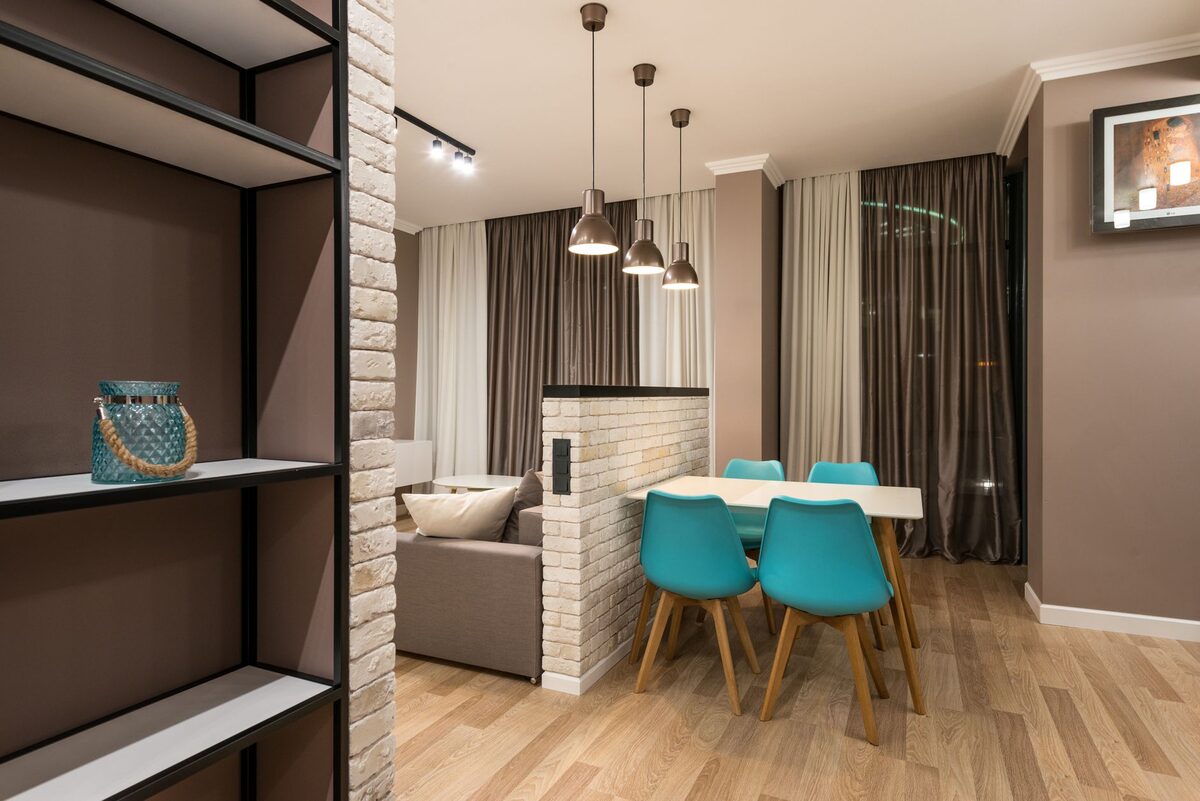
Here is the pick that works twice as hard as anything else on this list. An open-back cube bookshelf splits your studio into zones and gives you shelves for books, plants, baskets, and everything else a closet-starved apartment cannot hold. Because the back is open, light flows straight through the cubes, so your space never feels boxed in. It is the classic small-space move for good reason: you are not just buying a divider, you are buying an entire storage wall that happens to stand in the middle of the room.
A six-cube organizer is the ideal size for most studios—tall enough to signal a real boundary, short enough to keep the ceiling open. Style it with the designer “rule of thirds”: fill roughly one-third of the cubes with books, one-third with decorative objects like a ceramic vase or a trailing pothos, and leave one-third empty so the eye has room to breathe. Face the prettier styling toward your living zone and use the back cubes for practical storage on the bedroom side. The original inspiration here is IKEA’s iconic Kallax shelving series, but plenty of Amazon cube organizers deliver the same divider-plus-storage combo for less. If shelving is your thing, our guide to floating shelves for small apartments pairs perfectly with this approach.
6-Cube Open Storage Organizer & Bookshelf Room Divider
- Open back lets light pass through
- Doubles as real storage
- Tool-light modular assembly
- Ideal mid-height for studios
* As an Amazon Associate, ApartmentNook earns from qualifying purchases at no extra cost to you.
Best Shoji Screen: Soft Light and Quiet Style
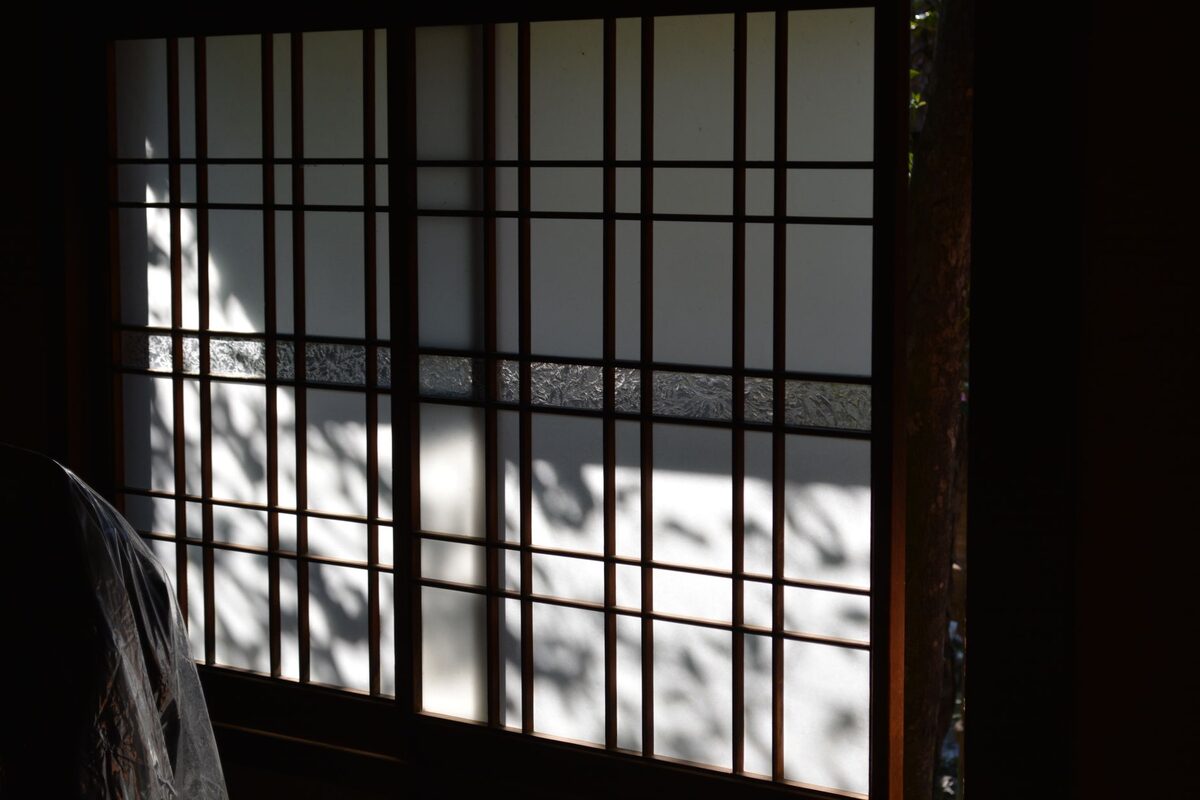
If you love the idea of a divider that glows softly instead of blocking every ray of light, a shoji screen deserves a spot on your shortlist. Built from a lightweight wood grid and translucent rice-paper-style panels, the traditional Japanese shoji filters daylight into a warm, diffused wash. In a dim studio, that means you can separate your sleeping area from your living space without sending the far corner into darkness. It is one of the most elegant options among the best room dividers for studio apartments, and it leans especially well into minimalist, japandi, and neutral aesthetics.
A four-panel folding shoji screen stands freely, folds away when you need the floor, and weighs almost nothing, so rearranging is effortless. The clean wood frame reads as intentional design rather than a temporary fix, which is a big deal when your whole home lives in one room and every object is on display. Position it where morning light hits and watch it turn an ordinary corner into the prettiest part of your apartment. If soft, moody lighting is your goal, it also pairs beautifully with the tricks in our guide to decorating a dark apartment with little natural light.
4-Panel Folding Shoji Screen Room Divider (Translucent Panels)
- Translucent panels diffuse light
- Lightweight, freestanding frame
- Folds flat when not in use
- Japandi & minimalist friendly
* As an Amazon Associate, ApartmentNook earns from qualifying purchases at no extra cost to you.
Best Curtain Panel: Full Privacy on a Budget
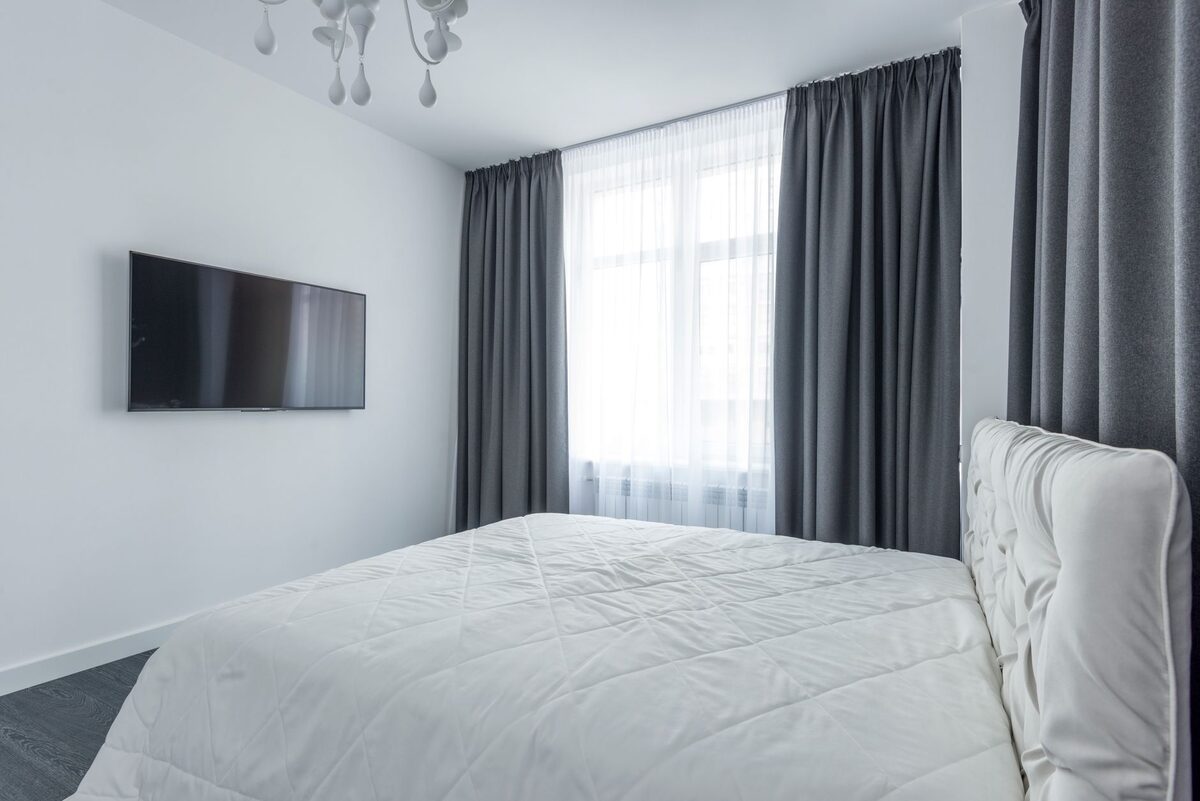
Sometimes you want the softest, coziest boundary possible—fabric that sways a little, tucks away when you want it open, and costs less than almost any other option. A dedicated room divider curtain panel delivers exactly that. Hung from the tension rod covered earlier, a wide blackout panel gives you total privacy for your bed, muffles a bit of sound, and adds a layer of warmth and texture that hard screens simply cannot. When you draw it closed at night, your studio genuinely feels like it has a separate bedroom.
Panels like the NICETOWN room divider curtain come extra-wide and floor-length specifically to span an open studio, and the blackout weave doubles as insulation—handy for keeping your sleep zone cooler in summer and warmer in winter. Choose a color from a calm, renter-friendly palette (think cream, warm white, soft terracotta, or sage) so the fabric reads as intentional décor rather than a stopgap. Because it is just fabric, it is the easiest divider to swap when your style changes, and it stores in a drawer between uses. For more ways to soften a rental without tools, browse our roundup of renter-friendly decor ideas that need zero drilling.
NICETOWN Extra-Wide Blackout Room Divider Curtain Panel
- Extra-wide, floor-length coverage
- Blackout weave adds insulation
- Softens sound and adds warmth
- Stores flat in a drawer
* As an Amazon Associate, ApartmentNook earns from qualifying purchases at no extra cost to you.
Renter-Friendly Setup Tips (No Drill Required)
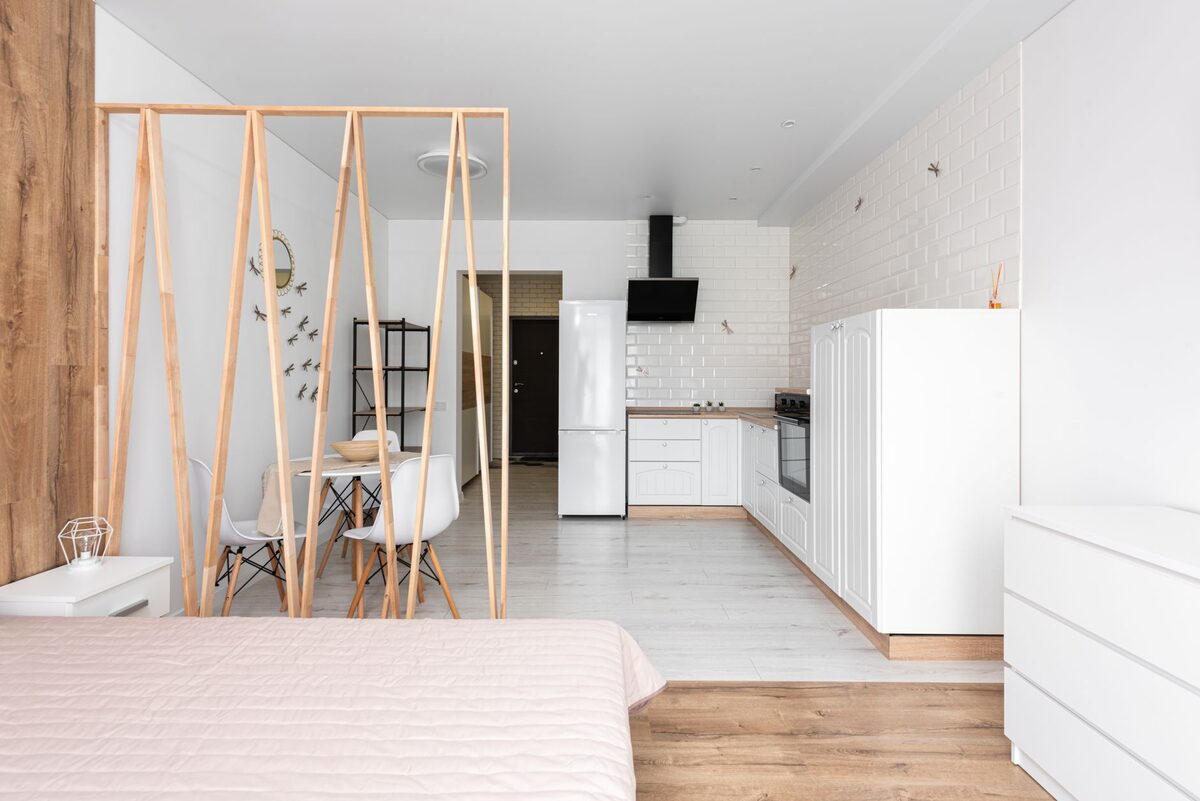
Once you have chosen your divider, a few setup tricks make it look built-in instead of improvised. Start with placement: align your divider with an existing line in the room, like the edge of a rug, the side of your bed, or a change in the flooring. When a divider follows a line your eye already sees, the whole zone reads as deliberate. Anchor each side of a folding screen with something heavy and low—a plant on a stand, a basket, a small ottoman—so it feels rooted rather than floating in the middle of the floor.
For tension-rod curtains, push the rod as high as your ceiling allows and let the panels just kiss the floor; that floor-to-ceiling sweep makes ceilings look taller and hides the fact that there is no real wall behind the fabric. Use a rug on each side of the divider to reinforce the two separate zones underfoot—one texture for the sleeping side, another for the living side. Lighting seals the illusion: give each zone its own lamp so you can light your reading nook without flooding the bed, and vice versa. These small moves are the difference between a studio that feels chopped up and one that feels thoughtfully designed, and they build naturally on smart studio apartment layout ideas that actually work.
Finally, protect your deposit by keeping everything freestanding or tension-mounted. Skip adhesive hooks on freshly painted walls, and if you do use any removable hardware, test it on a hidden spot first and remove it slowly when you move out. Every divider in this guide is designed to leave your studio exactly as you found it.
Quick Comparison: Matching the Divider to Your Studio
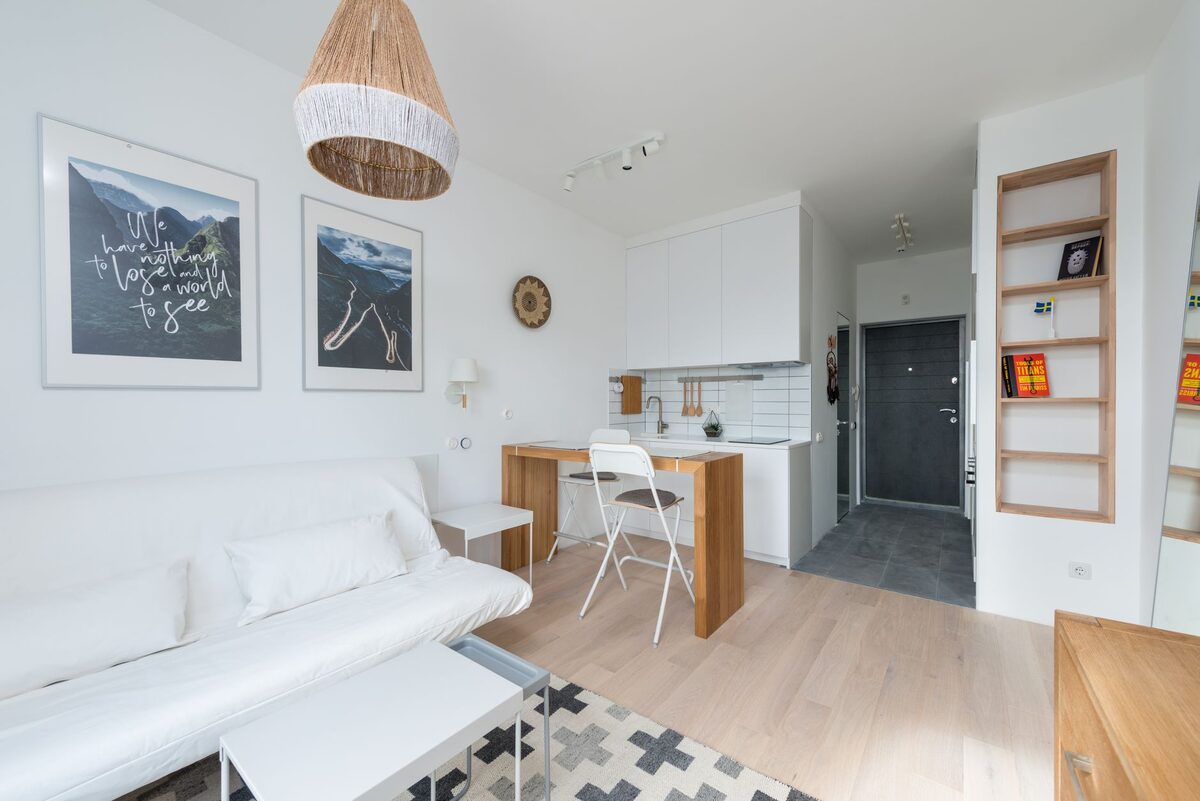
With five strong contenders, how do you actually pick? Think of it as matching a divider to your single biggest need. If flexibility rules your life—you rearrange often, host friends, or want to reclaim the floor for yoga—the folding screen and the shoji panel are your winners, because both fold away in seconds. If storage keeps you up at night, the cube bookshelf is the obvious answer: it is the only option here that hands you shelves while it divides the room. And if privacy is non-negotiable—a partner on a different schedule, a bed you would rather guests never see—the tension rod paired with a blackout curtain panel builds the closest thing to a real bedroom wall.
Budget is the final tiebreaker. Curtain panels are the cheapest way to divide a room, followed by tension rods, folding screens, shoji screens, and cube shelving at the top. The good news is that none of these are expensive relative to the value they add, and you can even combine them—a bookshelf on the living side and a curtain around the bed, for example. The best room dividers for studio apartments are the ones you will actually use every day, so let your real routine, not just the look, guide the final call. When in doubt, start with the most flexible option and add a second divider later as your needs become clearer.
Frequently Asked Questions
What is the best room divider for a small studio apartment?
For most renters, a freestanding folding screen is the best all-around room divider for a studio apartment because it needs no installation, moves in seconds, and stores flat when you want the floor back. If storage is your priority, an open-back cube bookshelf wins by doubling as a divider and a shelving wall. If you want a true floor-to-ceiling bedroom, a no-drill tension rod with blackout curtains gives you the most complete separation. The best pick depends on whether you value flexibility, storage, or full privacy most—there is no single winner for every studio, only the right match for your layout and lifestyle.
How do I divide a studio apartment without drilling holes?
You have several drill-free options. Freestanding folding screens and shoji panels stand on their own with zero hardware. A tension curtain rod wedges between your floor and ceiling using spring pressure, so you can hang a full privacy curtain without a single hole. Bookshelves and cube organizers simply sit on the floor and separate zones by their footprint. Even a rolling clothing rack or a cluster of tall plants can suggest a boundary. Because none of these attach to the walls, they are completely deposit-safe and leave your rental exactly as you found it when you move out.
Will a room divider make my studio feel smaller?
Not if you choose wisely. Open dividers—mesh screens, shoji panels, and open-back shelving—actually make a studio feel larger and more organized because they add structure while still letting light and sightlines travel across the room. Solid, floor-to-ceiling dividers block more view, so use them only where you truly want privacy, like around the bed. A good rule of thumb: keep dividers at or below about six feet where you can, let light pass through wherever possible, and never wall off your only window. Done right, a divider makes a studio feel like a bigger, more intentional home, not a cramped one.
How tall should a studio apartment room divider be?
Most freestanding room dividers stand about six feet tall, which is the sweet spot for a studio: high enough to hide a bed from a seated guest, low enough to keep the ceiling feeling open. If you want complete floor-to-ceiling privacy, a tension rod with curtains can reach eight to ten feet to match a tall ceiling. For an open bookshelf divider, aim for roughly waist-to-chest height up to about six feet so you still get storage and separation without boxing in the space. Always measure your ceiling first and leave a few inches of clearance for freestanding pieces.
Are room dividers worth it for renters?
Absolutely. For renters, a room divider is one of the highest-impact, lowest-commitment upgrades you can make. It gives a studio the function of a one-bedroom—separate sleeping, living, and working zones—without any permanent changes, and it moves with you to your next apartment. Most quality dividers cost far less than a month of the rent premium a true one-bedroom would charge, so they pay for themselves fast. Add in the storage a bookshelf divider provides or the better sleep a blackout curtain delivers, and the value is easy to justify. For small-space living, they are one of the smartest purchases you can make.
Final Thoughts on the Best Room Dividers for Studio Apartments
The best room dividers for studio apartments all share one quality: they give you the feeling of separate rooms without the permanence of real walls. Whether you go with a flexible folding screen, a no-drill tension curtain, a double-duty cube bookshelf, a glowing shoji panel, or a cozy blackout curtain, you are carving your open studio into zones that finally make sense—a place to sleep, a place to relax, and a place to work, each with its own quiet identity. Start with the question that matters most to you (privacy, storage, light, or flexibility), pick the divider that answers it, and layer in a rug and a lamp to seal the effect. Your studio has always had the potential to feel like a real home. The right divider is often the single piece that unlocks it—no drill, no damage, and no landlord approval required.