12 Cozy Reading Nook Ideas That Transform Any Small Apartment Corner
Cozy reading nook ideas for small apartments don’t require a bay window, a sunroom, or even a dedicated room — just a chair, a light, and a corner you’re willing to claim. If you’re a renter with limited square footage, you already have everything you need to carve out a quiet spot that feels completely separate from the rest of your space. The key is knowing how to layer the right pieces in the right order, which is exactly what this guide walks you through.
Whether you have a 400-square-foot studio or a cramped one-bedroom, these 12 reading nook ideas will show you how to create a spot you’ll actually use — without drilling into walls, spending a fortune, or sacrificing floor space you can’t afford to lose.
In This Article
- Why Every Small Apartment Deserves a Reading Nook
- How to Choose the Right Reading Nook Chair for a Small Space
- How to Use Any Corner to Build a Cozy Reading Nook
- Reading Nook Lighting That Sets the Perfect Mood
- Floating Shelves That Double as Your Mini Library
- How to Create a Reading Nook in a Studio Apartment
- Cozy Throws, Pillows, and Rugs That Complete Your Reading Nook
- Window Reading Nook Ideas for Small Apartments
- Reading Nook Ideas on a Budget Under $150
- Frequently Asked Questions About Reading Nooks for Small Apartments
- Final Thoughts on Cozy Reading Nook Ideas
Why Every Small Apartment Deserves a Reading Nook
Most small apartment decorating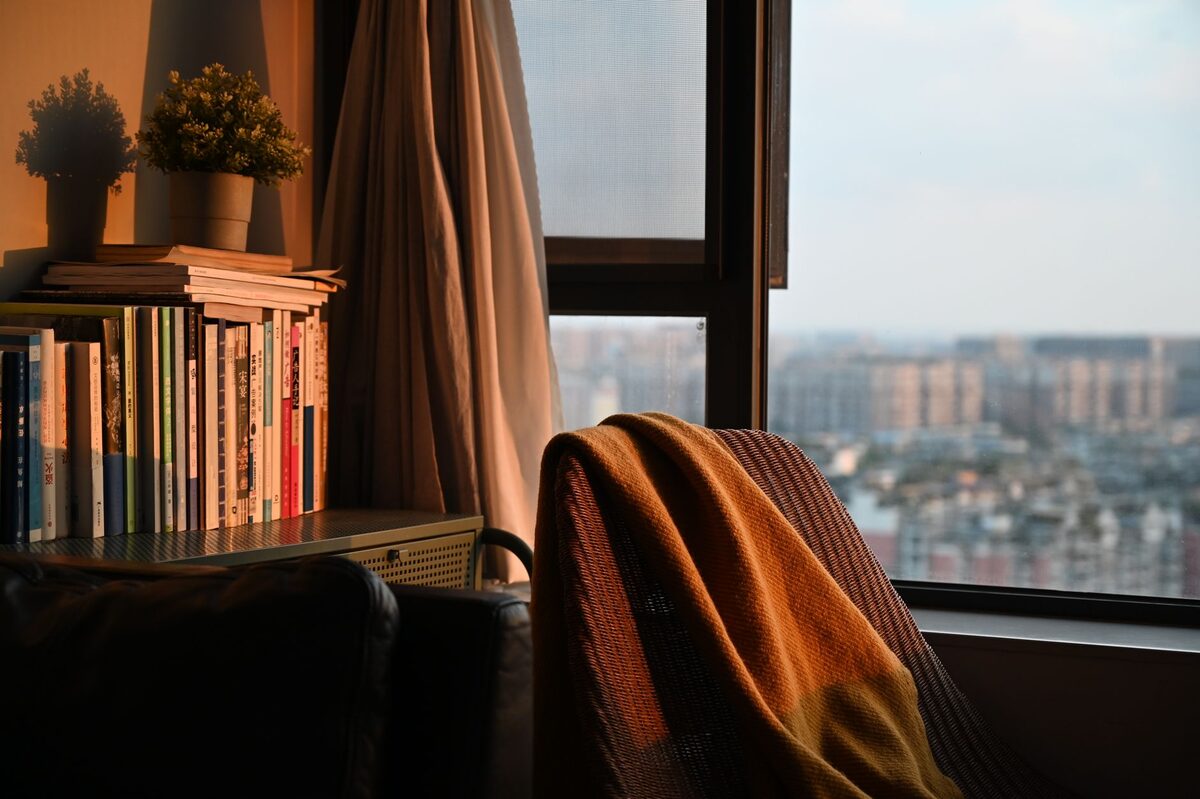
Psychologically, having a dedicated reading spot signals to your brain that it’s time to wind down. This is especially useful in studio apartments where your sleeping, working, and relaxing all happen within the same visual field. Research from environmental psychology consistently shows that distinct zones within a space reduce cognitive overload and help you mentally transition between activities. Your reading nook doesn’t need to be elaborate to accomplish this — even a single armchair with a floor lamp creates enough of a visual break to feel intentional.
For renters, the appeal goes even further. A reading nook is one of the few home transformations that requires zero permanent changes, zero landlord approval, and zero damage to walls. You can build a genuinely beautiful reading corner using furniture and accessories you already own or can pick up affordably, then take every piece with you when you move. It’s the rare upgrade that improves your daily life without touching a single nail.
Beyond the practical, there’s something deeply satisfying about having a corner that belongs to you and your books. In a small apartment where every inch is shared with work, cooking, and sleep, a reading nook is a quiet act of self-care. Even 20 minutes curled up in a well-lit, comfortable chair can feel restorative in a way that scrolling on the couch simply doesn’t.
How to Choose the Right Reading Nook Chair for a Small Space
The chair is the heart
Look for a footprint under 30 inches wide. Most barrel chairs, slipper chairs, and mid-century accent chairs fall in the 26–30 inch width range, which is enough seat surface to be genuinely comfortable while leaving breathing room around them. A 30-inch chair in a corner needs about 36 inches of clear floor space in front of it, which is very manageable even in a small bedroom or living room corner.
Choose tapered legs over solid bases. A chair with slim, tapered wooden legs visually lifts off the floor, making the room feel less crowded. Solid-base chairs and bucket seats with skirted bottoms cut the visual line and make a small space feel heavier. This is a styling trick interior designers use constantly in compact apartments — the more floor you can see, the bigger the room feels.
Prioritize back support alongside comfort. Reading chairs that look cozy but offer zero lumbar support will have you abandoning your nook within two weeks. Look for chairs with a slightly reclined back angle (around 15–20 degrees from vertical) and arms that rest at elbow height when you’re seated. If you’re buying a papasan-style chair, pair it with a firm cushion rather than an overly soft one — the deep sink of a too-soft papasan destroys posture quickly.
Fabric matters for daily use. In an apartment reading nook you’ll use every day, choose a performance fabric or tightly woven upholstery that holds up to regular contact. Velvet looks beautiful but pills quickly on high-use seating. Linen and boucle are apartment-friendly favorites that hold their shape while still looking elevated.
A mid-century modern accent chair in a neutral like beige, cream, or warm gray is the most versatile investment — it works in a living room corner, a bedroom nook, or a studio reading zone without clashing with your existing palette.
COLAMY Mid-Century Modern Upholstered Accent Chair — Fabric Armchair for Reading Nook & Small Spaces
- Slim tapered legs keep the visual footprint light
- Gently tilted back angle built for long reading sessions
- Soft padded armrests at the perfect elbow height
- Available in neutral beige — works in any apartment palette
* As an Amazon Associate, ApartmentNook earns from qualifying purchases at no extra cost to you.
How to Use Any Corner to Build a Cozy Reading Nook
Corners are the most underused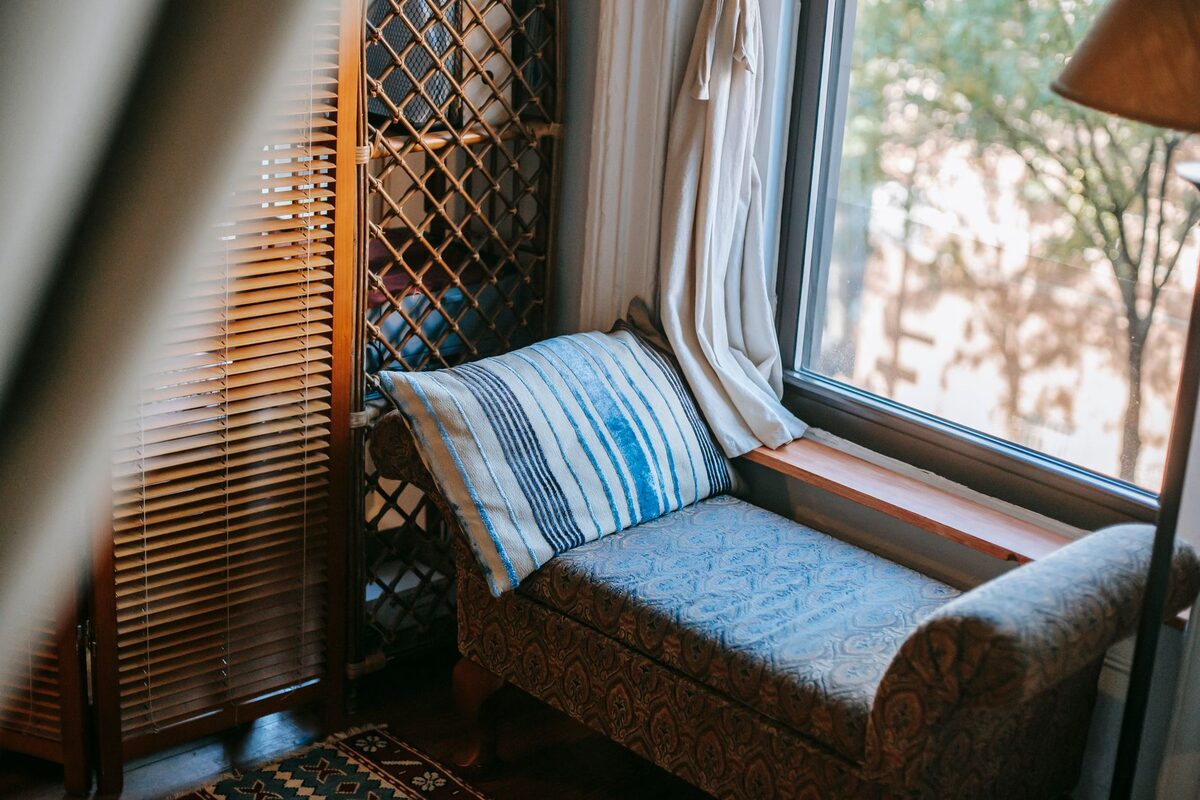
Start with the diagonal chair placement. Instead of pushing your reading chair flush against one wall, try angling it 45 degrees into the corner. This creates a natural enclosure — the two walls behind you act as a built-in backdrop — while keeping the chair accessible from all sides. Diagonal placement also breaks the boxy, furniture-against-walls arrangement that makes small apartments feel like waiting rooms.
Use a small area rug to define the zone. A 4×6 rug anchored beneath your reading chair and side table is one of the fastest ways to signal “this corner is a thing.” It doesn’t need to be expensive — a simple jute or low-pile rug in a warm neutral works beautifully. The rug creates a visual boundary that separates your reading nook from the rest of the room without any physical divider.
Layer a floor lamp behind the chair, not in front. Most people position a reading lamp to the side or in front of their chair, which creates glare and shadows. Place your floor lamp directly behind and slightly to one side of the chair so the light falls over your shoulder onto the page. This is how professional reading rooms and libraries do it, and it makes reading noticeably more comfortable.
Add vertical height with floating shelves or a ladder shelf. A corner that goes straight up feels intentional in a way that a corner with just a chair doesn’t. Hang two or three wall-mounted corner shelves at staggered heights above the chair to store your current reads, a candle, a small plant, and a ceramic mug. If drilling is off the table, a slim freestanding floating shelf alternative like a leaning ladder shelf achieves the same vertical impact without touching the wall.
Curtains can fake a reading nook enclosure. If your corner is near a window, hang a tension rod between the wall and the window frame, then drape a sheer curtain from it. This creates a soft, semi-enclosed canopy effect that makes even an open-plan studio feel like there’s a dedicated nook within it. The curtain filters light beautifully during the day and makes the corner feel cozy and private at night.
The goal isn’t to build a literal room-within-a-room. Even three elements — chair, light, and a small surface for your book and tea — are enough to create a corner that feels purposefully different from the rest of your apartment.
Reading Nook Lighting That Sets the Perfect Mood
Lighting is the single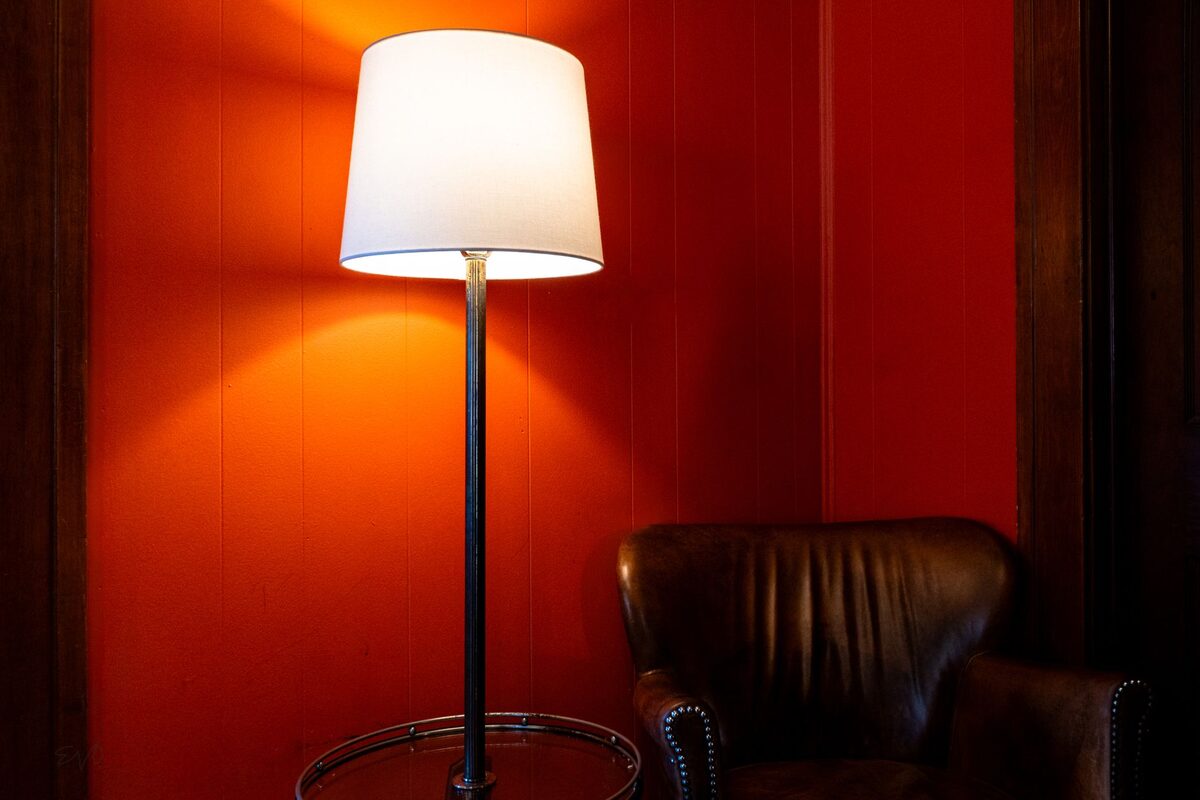
A floor lamp is the apartment renter’s best friend. Unlike ceiling fixtures and wall sconces (which require drilling or an electrician), a floor lamp plugs straight into any outlet and can be repositioned whenever you want. For reading nooks specifically, look for a lamp that offers at least two brightness levels and a warm color temperature in the 2700–3000K range. Harsh, blue-toned daylight bulbs are tiring for extended reading — warm white light is easier on your eyes and makes your nook feel genuinely cozy rather than just well-lit.
Position your floor lamp at shoulder height behind the chair. A lamp that’s too short creates upward glare; one that’s too tall puts the light source above your natural reading angle. The ideal height for a reading nook lamp is around 58–65 inches from the floor, with the shade positioned to direct light over your shoulder and onto the page at a slight downward angle.
Layer your lighting with string lights or a small table lamp. A floor lamp handles your task lighting — the bright, directed light you need to actually see the words on the page. String lights or a small accent lamp handle your ambient lighting, the background glow that makes the corner feel warm and inviting even when you’re not actively reading. Drape string lights along the wall above your chair, or place a small table lamp on your reading nook side table set to its lowest setting. The combination of task light plus ambient glow is what gives professional reading corners their magazine-worthy depth.
Consider a lamp with a built-in dimmer. Reading in the evening vs. reading on a gray afternoon calls for completely different light levels. A lamp with a dimmer or multiple brightness modes gives you this flexibility without needing two separate lamps. Many excellent floor lamps in the $30–$60 range now include 3-color-temperature settings and stepless dimming via a simple touch or foot switch.
Ambimall Tall Floor Lamp — 3 Color Temperatures, Adjustable Linen Shade, 9W Bulb Included
- 3 color modes: warm / neutral / cool white
- Stepless touch dimmer — find your exact brightness level
- Adjustable linen shade directs light over your shoulder
- Slim profile fits in any apartment corner or beside a chair
* As an Amazon Associate, ApartmentNook earns from qualifying purchases at no extra cost to you.
Floating Shelves That Double as Your Mini Library
A reading nook without books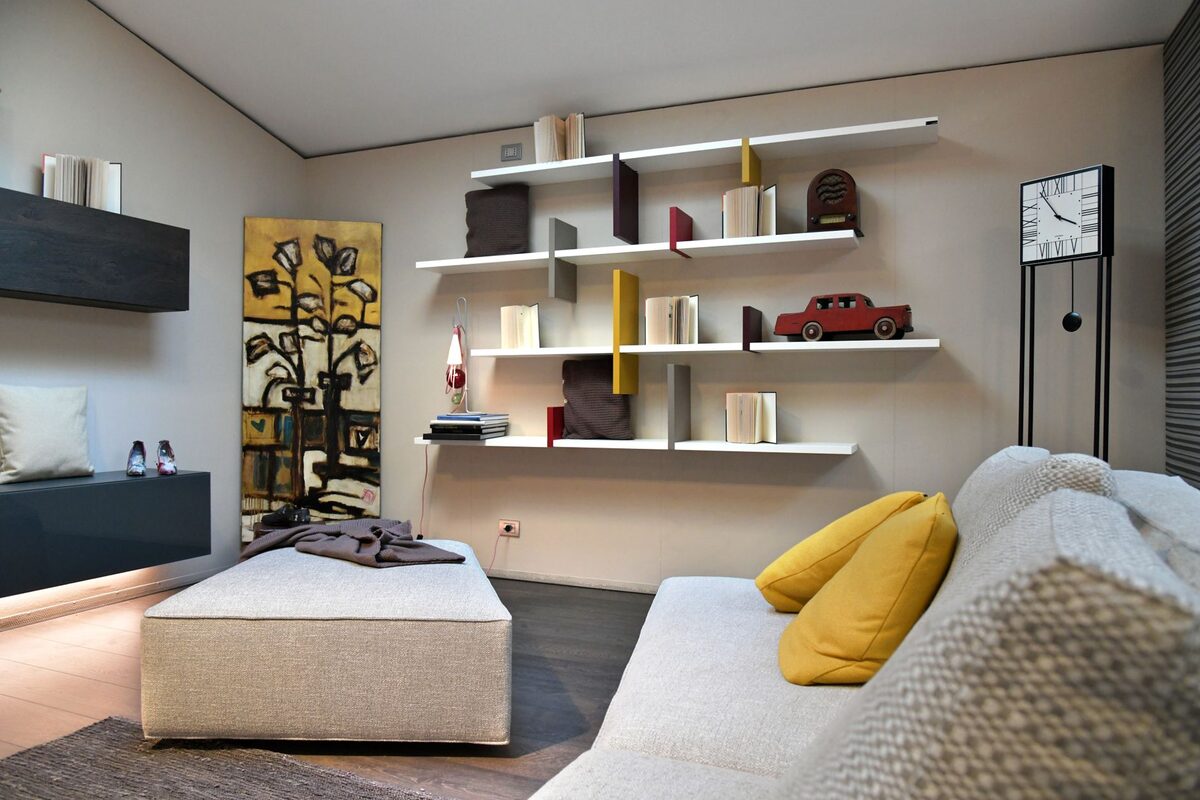
Corner floating shelves are ideal for reading nooks. Unlike standard floating shelves that run along a single wall, corner shelves occupy the two walls meeting at a 90-degree angle, using space that typically goes to waste. A set of three to five corner shelves stacked vertically gives you substantial book storage in a footprint of less than one square foot. They’re perfect for holding your current read, a small plant, a candle, and a ceramic mug — everything that makes a reading corner feel lived-in and curated.
Style your shelves with intention. The most common shelving mistake in reading nooks is cramming every shelf to capacity. Leave at least one shelf with breathing room — a trailing pothos, a single candle, or a framed photo — between your book stacks. This “breathing room” shelf is what makes the whole arrangement feel styled rather than cluttered. Vary book orientations too: some spines facing out, some stacked horizontally with a small object on top, some turned backward for a clean tonal look.
Renter-friendly installation options. If your lease prohibits wall anchors, you still have options. Freestanding corner shelf units take up a tiny footprint and provide the same vertical storage without touching a wall. A slim ladder shelf placed at an angle in the corner achieves a similar effect. For lightweight decorative shelves (items under 5 lbs), adhesive-mounted floating shelves are genuinely reliable as long as the wall surface is smooth, clean, and properly prepped with rubbing alcohol before installation. Our guide on renter-friendly decor ideas that need zero drilling has a full breakdown of adhesive mounting techniques that actually hold.
Bring in natural elements. A trailing pothos or small snake plant on one of your reading nook shelves does more for the atmosphere than any candle or throw pillow. Plants add humidity to dry apartments, filter air, and soften the visual hardness of shelves full of books and objects. They also grow and change over time, which makes your reading corner feel alive in a way that static decorating never does.
VASAGLE 5-Tier Floating Corner Bookshelf — Plant Shelf for Bedroom, Living Room & Home Office (Cloud White)
- 5 tiers of vertical storage — holds books, plants, and décor
- Takes up less than 1 sq ft of floor space in any corner
- Cloud white finish pairs with any apartment color palette
- Each shelf holds up to 13.2 lbs — genuinely useful capacity
* As an Amazon Associate, ApartmentNook earns from qualifying purchases at no extra cost to you.
How to Create a Reading Nook in a Studio Apartment
A studio apartment reading nook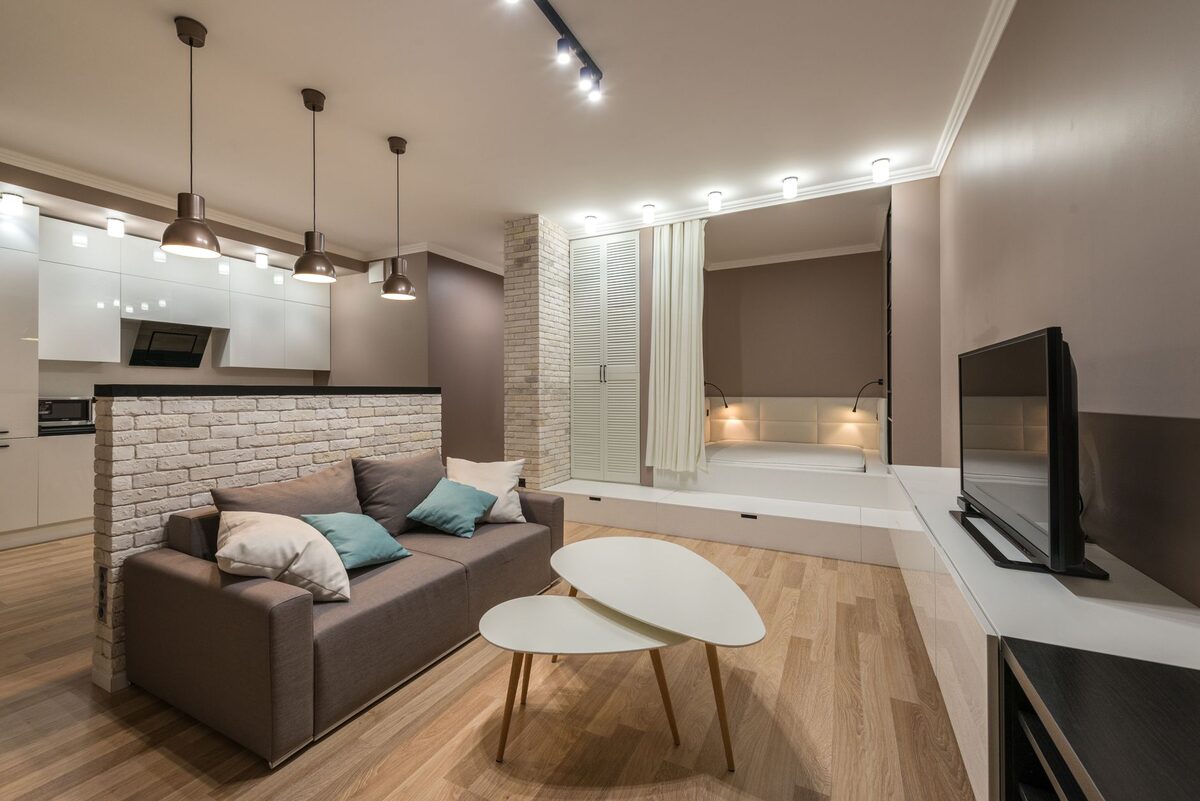
Zone with light, not walls. In a studio apartment, your reading nook’s floor lamp should be on a timer or a smart plug so it turns on every evening at the same time. This creates a lighting ritual that your brain starts to associate with reading — even before you sit down, the warm glow in that corner signals “this is the reading zone.” It’s a small psychological trick that makes the nook feel more separate from the rest of the studio than any rug or shelf arrangement can.
Place the reading nook away from your sleeping area. In a studio, the most important spatial decision is keeping your sleep zone visually distinct from everything else. This is already covered in our guide on how to decorate a studio apartment on a budget, but the principle applies here too: your reading nook should be positioned so that when you’re sitting in it, you’re not staring directly at your bed. Even a 90-degree difference in orientation can create enough visual separation to feel like you’re in a different part of the apartment.
Use your reading nook to anchor a zone boundary. A chair plus a floor lamp plus a small rug can act as a zone divider between your living area and another function — say, your desk or your kitchen. Instead of buying a bookcase room divider (which takes up significant floor space), your reading nook setup itself becomes the soft boundary between two zones. This makes the studio feel multi-room without any actual room divisions.
Keep the palette consistent with the rest of the studio. In a one-room apartment, a reading nook in a wildly different color scheme will feel like a decorating accident rather than an intentional design choice. Choose nook elements — chair color, rug, throw — that echo two or three colors already present in your studio. If your main color palette is cream, warm wood, and sage, your reading nook should use all three in some proportion. This is how small apartments look intentionally designed rather than collected.
The beauty of a studio reading nook is that it forces you to be intentional with every piece you choose. There’s no room for “that might work” decisions — every element has to earn its square footage. The result is almost always a nook that’s more beautiful than what you’d create if you had a whole room to fill.
Cozy Throws, Pillows, and Rugs That Complete Your Reading Nook
Textiles are what separate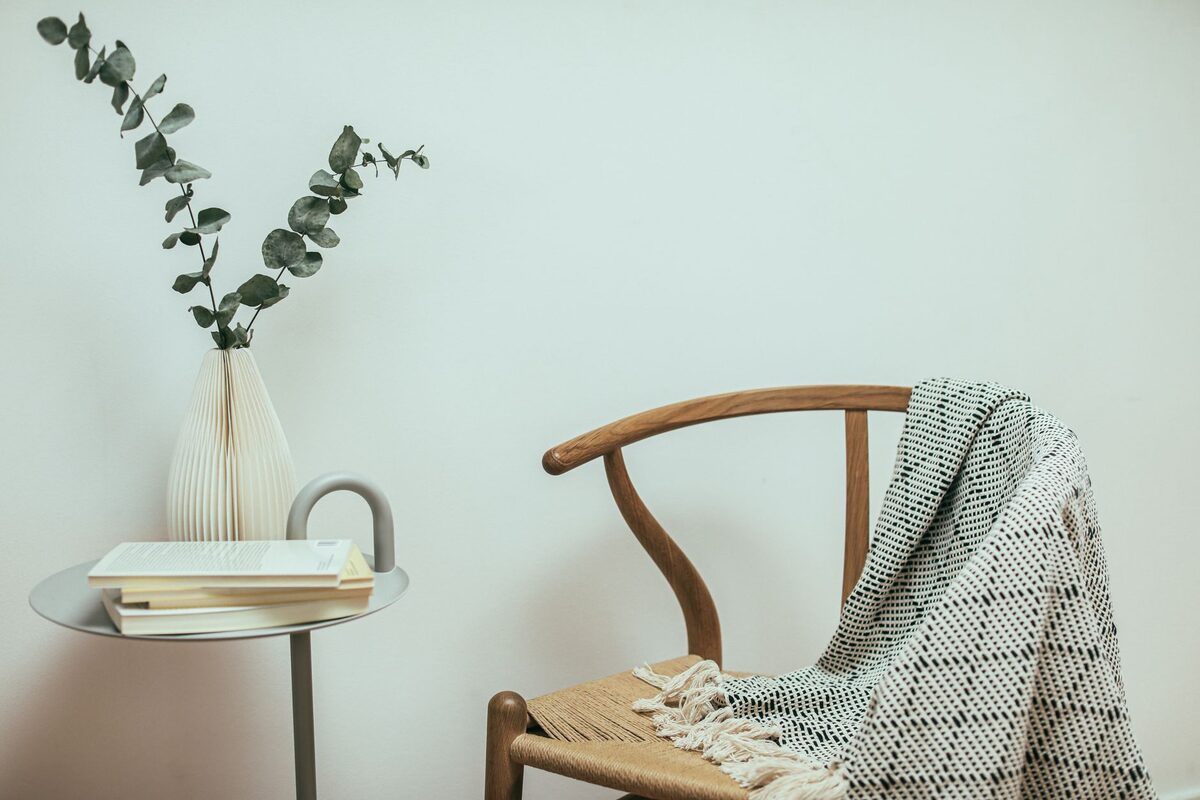
Start with a throw blanket and one lumbar pillow. A chunky knit or waffle-weave throw draped over the arm of your reading chair invites you to wrap up. It also adds visual texture that makes the corner feel warm and lived-in. Pair it with a single lumbar pillow placed against the chair back — not four decorative pillows that you’d have to remove before sitting down, just one practical pillow that supports your lower back while reading.
Choose a rug that’s slightly larger than you think you need. The most common reading nook rug mistake is going too small. A rug that only fits under the front legs of the chair doesn’t define a zone — it just looks like a rug under a chair. Go for at least a 4×6 rug, positioned so all four legs of the chair rest on it and there’s rug visible in front of and on both sides. This anchors the chair and creates a clear visual boundary for your nook.
Low pile or flat weave for apartment reading nooks. Plush high-pile rugs feel luxurious underfoot but they’re harder to clean, flatten over time under furniture legs, and can make a small space feel visually heavy. A jute rug, a flat-weave cotton rug, or a low-pile wool rug in a warm neutral achieves the same grounding effect while keeping the space feeling airy. Natural fiber rugs also age well — they look just as good at year three as they do at day one.
Add a small pouf or footrest. Reading with your feet up is more comfortable than reading with your feet flat on the floor, and a small pouf or ottoman in front of your chair gives you that option without adding permanent furniture. Poufs take up about a 15×15 inch footprint — small enough to tuck under the chair when not in use. Look for a leather or woven cotton pouf in a warm neutral that works with your rug and throw for a cohesive layered look.
The textile layering principle for reading nooks is simple: warm tones on the walls (via art or string lights), warm tones on the chair (via throw and pillow), and warm tones underfoot (via rug). When you stack these three layers, the corner reads as a cohesive zone rather than a collection of separate items.
Window Reading Nook Ideas for Small Apartments
If you have a window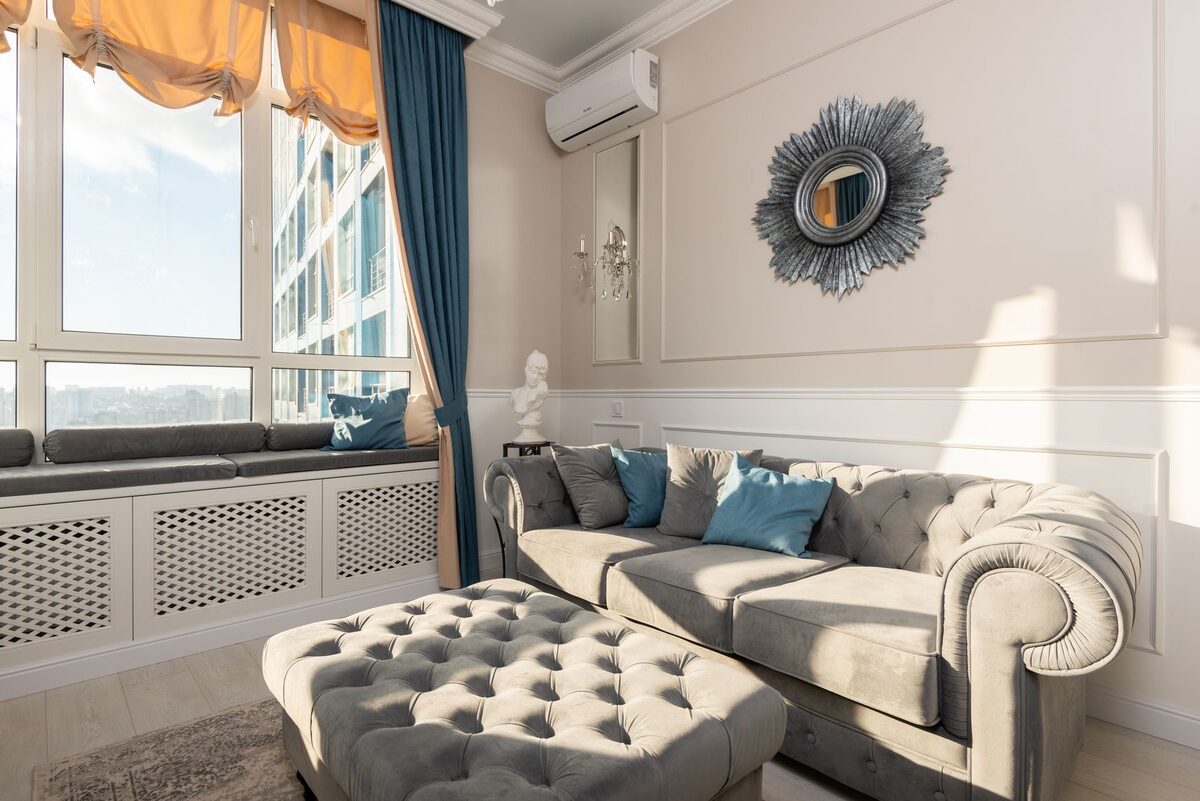
Angle the chair 45 degrees toward the window. Sitting directly in front of a window puts the light source behind you, which creates glare and silhouette rather than useful reading light. Angle your chair so the window is at your side, with light falling across the page at a shallow angle. This is the optimal position for natural reading light in any season. On bright days, a sheer curtain diffuses direct sunlight without blocking it — this is actually better for reading than unfiltered direct sun, which creates harsh contrasts on the page.
Use window ledges as reading nook shelving. A deep windowsill is an underused surface in most apartments. If your window ledge is 6 inches or deeper, it can hold a small plant, a candle, or a few favorite books. Position these low enough that they don’t block light. This integrates the window into your nook’s visual story and makes the space feel intentional from multiple angles.
Hang curtains high and wide to maximize the light zone. Even in a rental, you can rehang curtains (or add a second rod if the window has no existing hardware) to make a window feel bigger and the reading nook feel grander. Hang your curtain rod as close to the ceiling as possible, and extend it 6–10 inches past the window frame on each side. This lets you push the curtains fully clear of the glass when reading, flooding the nook with as much natural light as possible. For renter-friendly options, tension rods mounted within the window frame work for lighter-weight sheers.
Add a small side table between chair and window. A narrow side table or C-shaped table positioned between your reading chair and the window gives you a surface for your tea, your current book, and a small plant without blocking any floor space. C-shaped tables are particularly useful because they slide over the arm of the chair, keeping your drink within reach without a table footprint next to the chair at all.
Natural light makes reading easier on your eyes than any artificial lighting solution — according to resources on vision health from the National Eye Institute, adequate lighting that reduces contrast and glare is key to comfortable reading. A window reading nook achieves this naturally during daylight hours, making it the healthiest and most sustainable long-term reading setup for apartment renters.
Reading Nook Ideas on a Budget Under $150
You don’t need to spend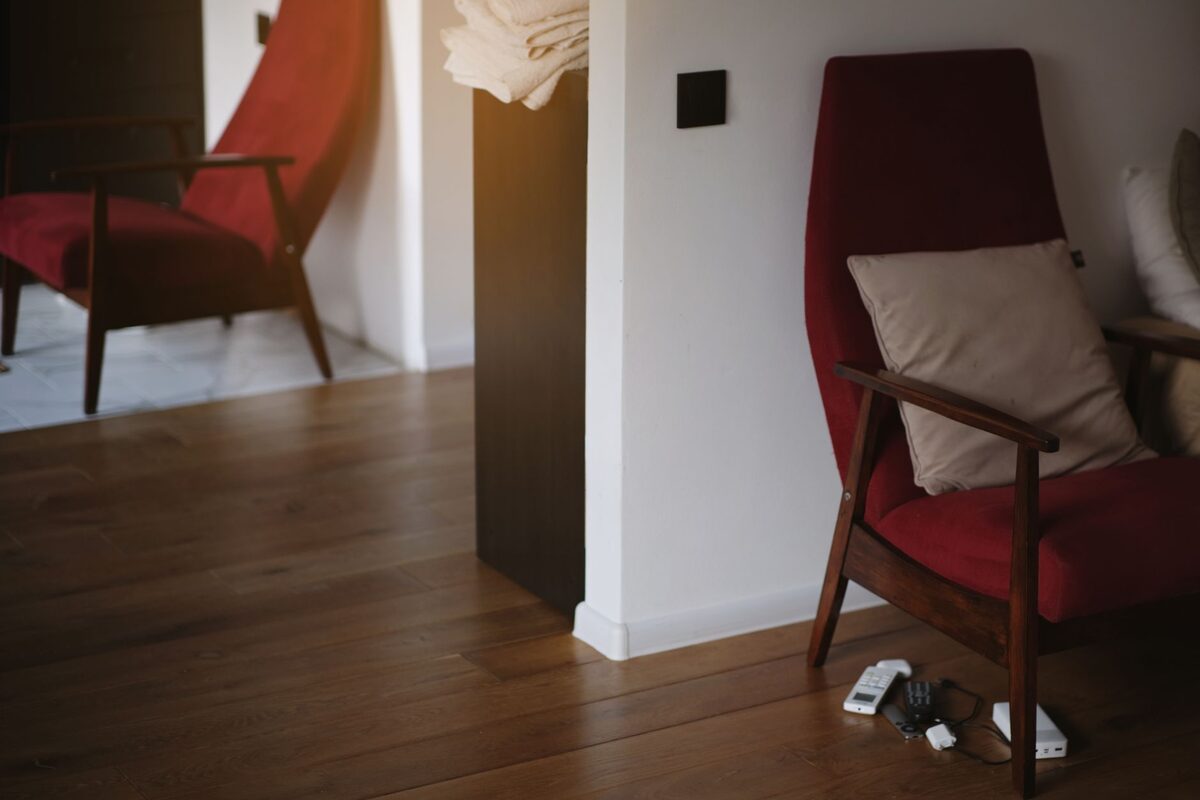
The $150 reading nook formula: One affordable accent chair ($60–$80 secondhand or from Amazon), one floor lamp with warm light ($25–$40), and a small jute rug ($20–$30). These three pieces together create a complete reading nook that looks put-together and functions perfectly. Spend anything you have left over on a throw blanket ($15–$25) and a pothos from a grocery store or garden center ($5–$10).
Shop Facebook Marketplace and thrift stores for the chair. Reading nook chairs don’t need to be new — they need to be comfortable, structurally sound, and clean. An accent chair from a thrift store or Marketplace in good condition typically runs $20–$60, compared to $150–$300 new. Solid wood frames hold up much better than particleboard, so check the legs and underside before buying secondhand. A quick clean and a new throw pillow turn a thrifted chair into something that looks completely intentional.
A torchiere floor lamp gives you the most light for the least money. Torchiere lamps — the style where the shade points upward — bounce light off the ceiling and create a warm ambient glow across the entire corner. They typically run $25–$50, come in black and silver finishes that work with any décor, and are widely available at Target, Amazon, and hardware stores. If you want something slightly more directional for actual reading, look for models with an adjustable reading arm on the side.
To see how these same principles apply across your entire apartment — not just the reading corner — our article on how to make a small bedroom look bigger has lighting and furniture tips that pair well with a reading nook setup in the bedroom specifically.
Brightech Sky LED Torchiere Floor Lamp — Super Bright, Dimmable, Warm Light for Bedroom & Living Room
- Built-in LED — no bulb changes, lasts 20+ years
- Dimmer switch gives you full control over brightness
- 3000K warm white light — easy on eyes for long reading sessions
- Slim design fits in any corner without dominating the space
* As an Amazon Associate, ApartmentNook earns from qualifying purchases at no extra cost to you.
Frequently Asked Questions About Reading Nooks for Small Apartments
How do you make a reading nook in a small apartment?
Start with three elements: a comfortable chair, a warm floor lamp positioned behind and to one side of the chair, and a small area rug to anchor the space. These three pieces together create a functional reading nook in any corner of your apartment. From there, add a side table for your book and drink, and layer in a throw blanket and one lumbar pillow for comfort. If you want to add storage, stagger two or three wall-mounted corner shelves above the chair for books and a small plant. The entire setup — chair, lamp, rug, side table, throw, pillow, and shelves — can be assembled for under $200 if you’re strategic about where you shop.
What is the best chair for a small reading nook?
For a small apartment reading nook, the best chairs have a footprint under 30 inches wide, slim tapered legs (which make the space feel more open), and a gently reclined back angle for posture support during long reading sessions. Mid-century modern accent chairs and barrel chairs in this size range are consistently the most versatile picks — they’re comfortable enough for 60-90 minute reading sessions, small enough to fit in a bedroom or living room corner, and styled well enough to look intentional in any apartment. Avoid oversized club chairs and papasan chairs with extra-wide bases if your space is very tight — they’ll overwhelm the room before they become the cozy feature you planned.
How do I make my reading nook cozy on a budget?
The three highest-impact moves for a budget reading nook are warm lighting, soft textiles, and a plant. A floor lamp in the $25–$40 range with a warm (2700–3000K) bulb does more for the coziness of a corner than any other single purchase. Add a chunky throw blanket ($20–$35) draped over the arm of the chair and a small trailing pothos ($5–$10) on a nearby shelf, and the corner will feel genuinely inviting at a total investment of $50–$85 beyond whatever chair you already have. If you’re starting from scratch, shop secondhand for the chair — Facebook Marketplace regularly has accent chairs for under $50 in good condition — and allocate the rest of your budget to lighting.
Can you make a reading nook in a studio apartment?
Yes — a studio apartment reading nook works particularly well because the nook itself helps zone the space. In a studio, every piece of furniture needs to do double duty, and a reading chair with a floor lamp and small shelves accomplishes this perfectly: it gives you a dedicated relaxation zone that’s visually distinct from your bed and desk without requiring any physical dividers or walls. The key in a studio is to keep the reading nook palette consistent with the rest of the apartment and to position the chair so you’re not staring directly at your bed when seated. Even a 45-degree angle away from the bed creates enough psychological separation to make the nook feel like a genuinely different zone.
What furniture do you need for a reading nook?
The essential reading nook furniture list for a small apartment is short: one comfortable chair (the focal point of the nook), one floor lamp for task and ambient lighting, and one side table or C-shaped table for your book, drink, and phone. Beyond these three pieces, everything else is layering — a rug to define the zone, shelves for book storage, a throw blanket and pillow for comfort, a small plant for life and atmosphere. You don’t need all of these at once. Start with the chair and lamp, use the space for a week, then identify what’s missing and add it deliberately. This iterative approach produces better reading nooks than buying everything at once, because you’ll discover what you actually use vs. what you thought you’d use.
Final Thoughts on Cozy Reading Nook Ideas for Small Apartments
The best cozy reading nook ideas for small apartments share one common thread: they’re built around function first, and beauty follows naturally from that. A chair you’ll actually sit in. A lamp that lights the page without straining your eyes. Shelves within arm’s reach when you finish a chapter and want to grab the next one. When those practical foundations are in place, the styling details — the trailing pothos, the chunky throw, the candle on the side table — make the corner feel like something you curated rather than something you accumulated.
Renter-friendly reading nooks have one massive advantage over permanent built-ins: they travel with you. When you move apartments, your reading nook moves too. The chair, the lamp, the shelves, the rug — all of it comes with you, and you get to set it up again in your next place. That kind of portable coziness is something no built-in window seat or permanent bookcase can offer, and it’s one of the things that makes apartment decorating genuinely rewarding even without the freedom of a permanent home.
Start small. Claim a corner. Add a lamp. Sit in it for a week and see how it feels to have a place in your apartment that’s just for reading. Then layer from there. For more small space decorating ideas that work alongside your reading nook, check out our guide on small apartment living room ideas — most of the zoning and lighting principles apply directly to any reading corner setup.