15 Genius Small Apartment Dining Area Ideas When You Have No Room
Small apartment dining area ideas work best when they start from the problem itself: you don’t have a dedicated dining room, and possibly no room for a traditional table and four chairs at all. That’s not a design failure — it’s a constraint that most urban renters share, and one that has some genuinely clever solutions once you stop trying to fit a standard dining setup into a space that was never built for it.
The mistake most people make is searching for a smaller version of what they already know: a regular dining table, just tinier. But in a studio or one-bedroom apartment where the living area, sleeping area, and kitchen all share the same square footage, a dedicated dining table — even a small one — often takes up more space than the situation warrants. The better question is: where can eating happen comfortably, and what furniture makes that possible without dominating the room the other 22 hours of the day?
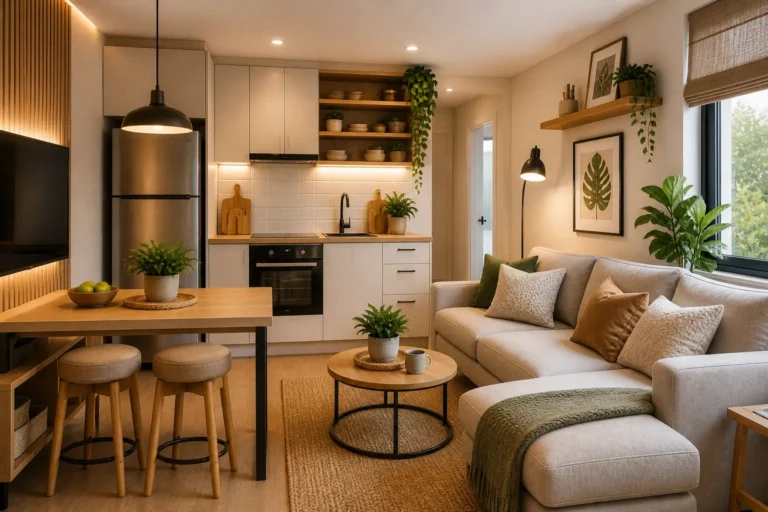
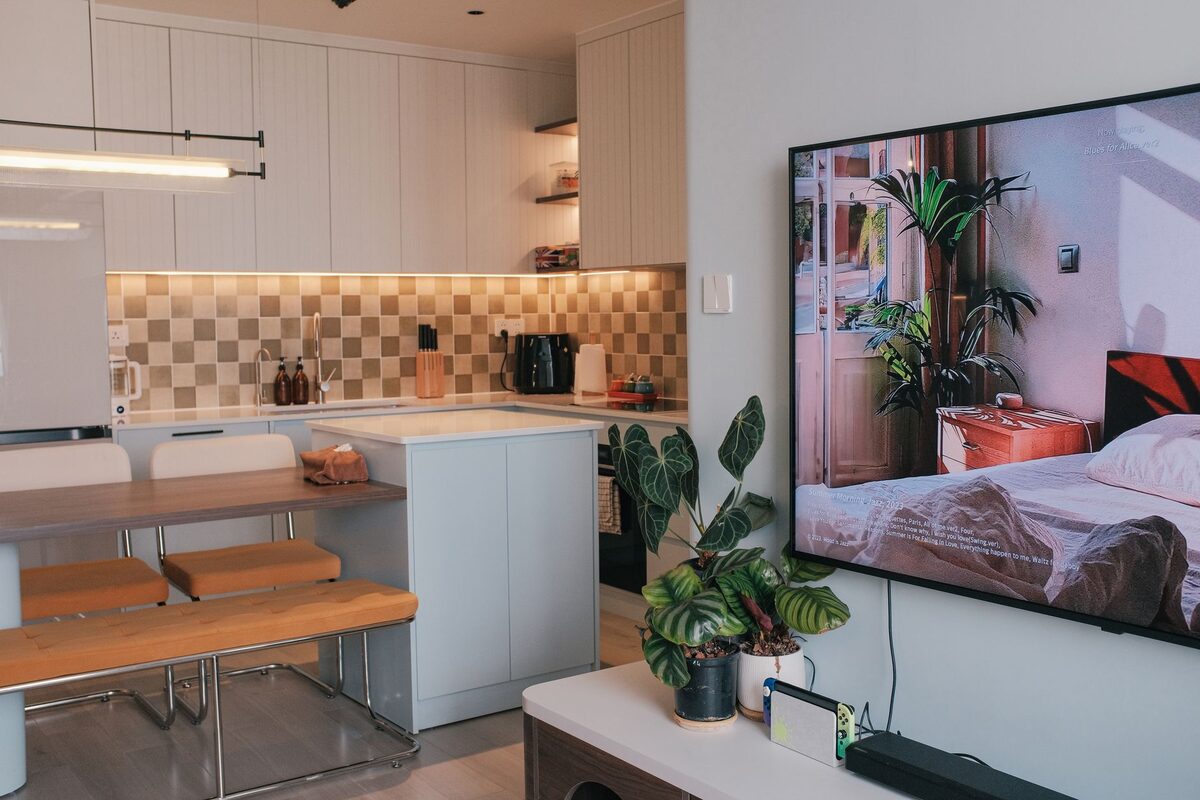
This guide covers 15 specific small apartment dining area ideas for spaces with no room to spare — from fold-down wall tables that disappear when you’re done, to breakfast bars that turn your existing counter into a dining zone, to corner nooks that create a restaurant-feel in 25 square feet. Every idea here works in an actual small apartment, not just on a design Pinterest board.
DINAZA Folding Dining Table with Drop Leaf + 2-Tier Storage Racks
- Dining table + built-in storage in one
- Drop-leaf design saves floor space
- Two storage shelves underneath
- Space-saving powerhouse for small apartments
* As an Amazon Associate, ApartmentNook earns from qualifying purchases at no extra cost to you.
Small Apartment Dining Furniture: What to Look For
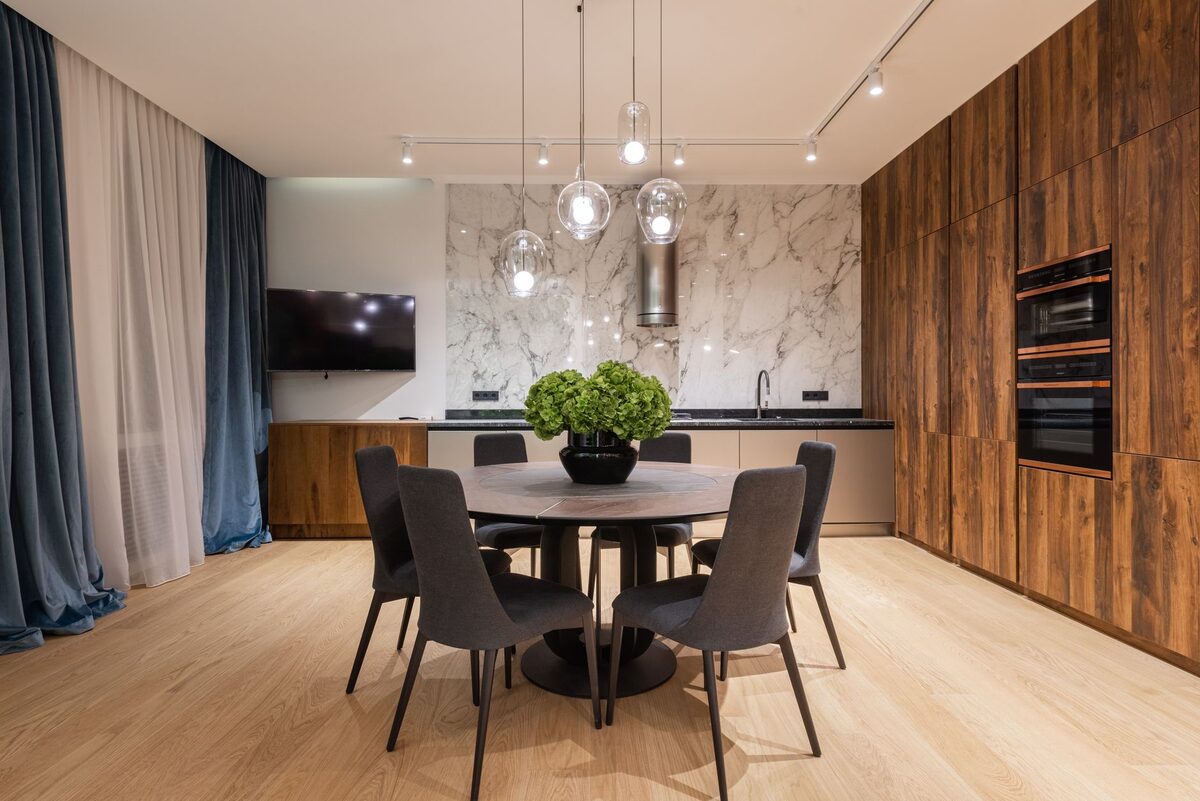
The furniture you choose for a small apartment dining area does more work than the furniture in any other room. It needs to function well as a dining surface, minimize floor footprint, ideally serve a second purpose, and look good in a space where it’s highly visible. Here’s what separates furniture that works from furniture that creates more problems than it solves.
Round tables over square: Round dining tables in the 28 to 36 inch range are consistently the best choice for small apartment dining areas. They eliminate corners, which means you can squeeze past them more easily in tight spaces. They also seat one extra person compared to a same-width square table — a 30-inch round table seats four in a pinch, while a 30-inch square table comfortably seats two. The rounded shape also softens the visual weight of the table in a small room.
Open-leg bases: A table with four slim tapered legs or a single center pedestal lets you see the floor beneath it, which makes the room feel less divided. A table with a solid base, a skirt around the bottom, or chunky legs visually cuts the room in half. The more floor you can see, the larger the room reads.
Stackable or folding chairs: Dining chairs that fold flat or stack can be stored out of the room entirely when not in use and brought out for meals. Four folding chairs hanging on a wall or stacked in a closet take up about 6 inches of wall space. Four chairs sitting around a table take up the same 6 feet of floor space 24 hours a day whether you’re eating at them or not. This is a significant difference in a small apartment.
Light-colored or transparent chairs: Clear acrylic chairs (often called “ghost chairs”) are a designer favorite for small dining areas because they take up visual space without taking up visual weight. You see through them to the floor and wall behind, which makes the dining area read as less space-consuming than it actually is. They also pair with nearly any table finish and any wall color, so they’re a flexible investment.
Multi-function tables: In a small apartment, a dining table that can also serve as a work-from-home desk, a craft table, or an extended kitchen counter earns its space more than a table that only serves food. A simple rectangular table at 30 inches high with a surface of 24 x 48 inches functions as a two-person dining table, a desk, and a workspace — and it costs far less than three separate pieces of furniture would.
How to Make a Small Apartment Dining Area Feel More Spacious
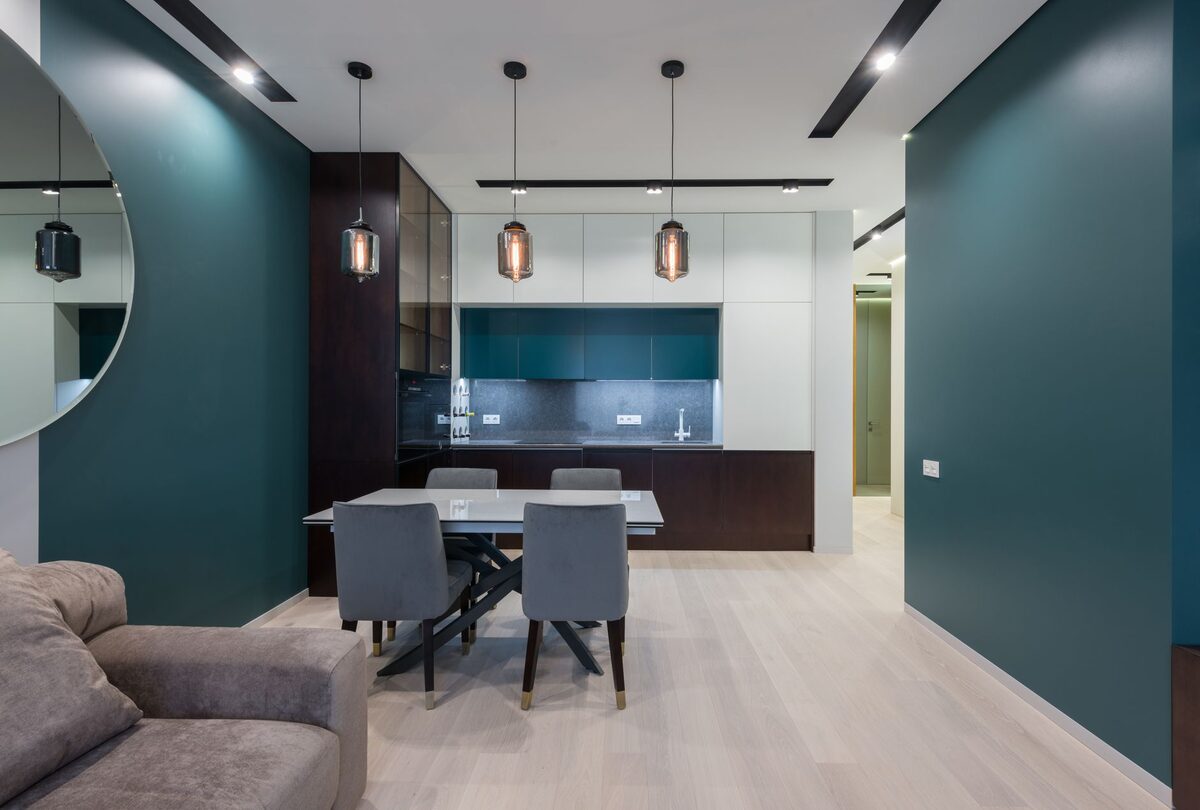
Once you have a dining solution in place, these design moves make the area read as larger and more purposeful than it would on its own. Most of them cost nothing or very little.
Add a rug underneath: A rug under the dining table defines the dining zone visually, even in a studio apartment where the dining area is technically in the same open space as the living area. A round rug under a round table, sized so all chairs rest on the rug when pulled out slightly, anchors the dining area as its own zone. Choose a rug at least 6 inches wider than the table on all sides so chairs stay on it when occupied.
Hang a pendant light: Overhead light directly above a dining table makes it feel like a real dining area in a way that a floor lamp or ambient lighting from another room can’t replicate. It also draws the eye upward, making the ceiling feel higher. Renter-friendly pendant options include plug-in pendants that use a ceiling hook and route the cord along the ceiling edge, and clip-on pendants that attach to nearby furniture or a curtain rod.
Use a mirror nearby: A large mirror on the wall beside or across from the dining area reflects light and creates the illusion of depth, making the dining zone feel less contained. A leaned floor mirror or a 24×36 inch wall mirror within 3 to 4 feet of the table makes a measurable visual difference.
Keep it styled but not cluttered: A small potted herb or succulent in the center of the table, a candle, and a simple napkin holder make the dining area look like it was designed rather than improvised. Three items maximum in the center of the table. Anything beyond that starts to eat into usable table surface and makes the area feel cluttered. For more small apartment living room ideas that extend to dining zones, see our guide on Small Apartment Living Room Ideas That Work in Any Size Space.
Choose consistent colors: A dining table in a tone that harmonizes with the surrounding furniture — rather than contrasting sharply with everything in the room — blends into the overall space rather than standing out as an addition. Warm wood tones, white, and black all work well with most apartment color palettes without calling attention to themselves.
Common Small Apartment Dining Area Mistakes to Avoid
Even with the right furniture, these common mistakes undermine what a small apartment dining area is trying to achieve.
Buying a table that’s too large for daily use. The instinct to buy the largest table that fits — “because what if we have guests” — results in a table that dominates the room 95% of the time to accommodate the 5% of occasions when extra seats are needed. A drop-leaf or extendable table solves this: compact for daily use, expanded for guests. Size your table for how you live, not for hypothetical dinner parties.
Choosing chairs that can’t move or store. Four non-folding, non-stackable dining chairs around a small apartment table are a commitment of floor space that most small apartments can’t absorb. At minimum, two chairs should fold or stack. Ideally all four do, so you can collapse the whole setup when you want your living room back.
Placing the dining area in the wrong location. A dining table positioned in the direct path of your daily movement through the apartment — between the kitchen and the couch, or in the narrow stretch between two rooms — will be a daily obstacle. Place the dining area in a zone that doesn’t disrupt the flow of the apartment: a corner, a wall, or an area that’s naturally a destination rather than a through-path.
Ignoring clearance requirements. A dining chair needs at least 36 inches of space behind it to pull out comfortably and for someone to walk past. If you don’t have that clearance behind every chair when it’s pulled out, the dining setup will feel cramped and frustrating in daily use. Measure before you buy.
Using the dining surface as additional counter space. A dining table that accumulates mail, chargers, dishes waiting to be put away, and random items becomes a clutter zone that stops feeling like a dining area and starts feeling like overflow storage. Keep the dining surface intentionally clear, or use a fruit bowl or tray in the center to define what belongs there and what doesn’t.
FAQ: Small Apartment Dining Area Ideas When You Have No Room
What do you do if you have no room for a dining table in a small apartment?
The most practical options for apartments with no room for a traditional dining table are fold-down wall tables, drop-leaf tables, and breakfast bar setups using your existing counter. A fold-down wall table takes up essentially no floor space when folded against the wall and gives you a full dining surface when extended. A breakfast bar adds stools to a counter or island you already have, requiring no new furniture beyond the seating. If you need something freestanding, a drop-leaf table can shrink to console width against a wall when not in use. Any of these three approaches works in apartments where a standard 36×60 inch dining table simply doesn’t fit.
How small can a dining table be for two people?
A 24×24 inch square table or a 24-inch round table is the absolute minimum for two people eating simultaneously — barely enough for two plates and two glasses with no center items. A more comfortable two-person dining table starts at 28 to 30 inches in diameter (round) or 24×36 inches (rectangular). This allows two place settings, a center candle or small plant, and a glass each without feeling like you’re eating at a desk. For four people at a very tight squeeze, a 36-inch round table or a 30×48 inch rectangle is the minimum. Under 36 inches in any dimension for four people starts feeling too crowded for a comfortable meal.
Can you create a dining nook in a studio apartment?
Yes — and corner dining nooks often work better in studio apartments than in larger homes because the studio’s open floor plan means the dining area is visible from everywhere, which incentivizes making it look designed rather than improvised. A corner of the studio, especially one near a window, is ideal for a small bistro table and two chairs or a corner bench with a table. The key is using a rug under the dining zone to visually define it as a separate area even within the open floor plan — this signals “this is the dining zone” in a way that placement alone doesn’t achieve.
How do you make a small dining area feel bigger?
The most effective moves for making a small dining area feel bigger: a round table with an open-leg base (let’s you see the floor), a mirror on the adjacent wall (doubles perceived depth), a pendant light above the table (draws the eye upward and makes ceilings feel higher), and transparent or light-colored chairs that don’t add visual weight. Also, keeping the table surface clear of clutter matters more than any furniture choice — a clean surface feels larger than it is, while a covered surface feels smaller than it is. Two of these moves together make a meaningful difference in how the dining area reads in a small apartment.
Is it okay to eat at the coffee table in a small apartment?
Eating at the coffee table is more than okay in a small apartment — when done with intention, it’s a perfectly valid dining setup. The difference between “eating on the couch while watching TV” and “a proper coffee table dining moment” is in the setup: a cleared coffee table, floor cushions or a low bench, real plates and glasses, and two minutes of intentional setup before the meal. A lift-top coffee table that raises to near-dining height makes this significantly more comfortable and is one of the most versatile pieces of furniture you can buy for a small apartment with no dining room. According to Japanese design traditions, low-table dining is a centuries-old practice that emphasizes intentionality and presence — which is a perspective worth considering when your apartment doesn’t have room for anything else.
Final Thoughts on Small Apartment Dining Area Ideas When You Have No Room
The best small apartment dining area ideas aren’t about finding a way to cram a dining room into a space that doesn’t have one. They’re about creating a dedicated moment for eating — a surface, a seat, a little bit of intention — in whatever space you do have. That might be a fold-down table beside the kitchen that takes three seconds to set up. It might be two stools at a counter you already own. It might be a corner bench and a bistro table that takes up 25 square feet but feels like a real dining nook every single time you sit there.
The solution that works is the one that fits your apartment layout, matches how many people you typically feed, and doesn’t get in your way the rest of the time. Start with the option that requires the least new furniture and the fewest changes to how your apartment currently flows. If the breakfast bar works with two stools and place mats, you don’t need to buy a fold-down table. If your corner nook idea fits the layout and you love it, build it out and enjoy it.
The goal is a space where sitting down to eat feels like a choice you made, not a thing that just happens wherever there’s surface area.