17 Small Living Room Ideas That Make Your Space Feel Twice as Big
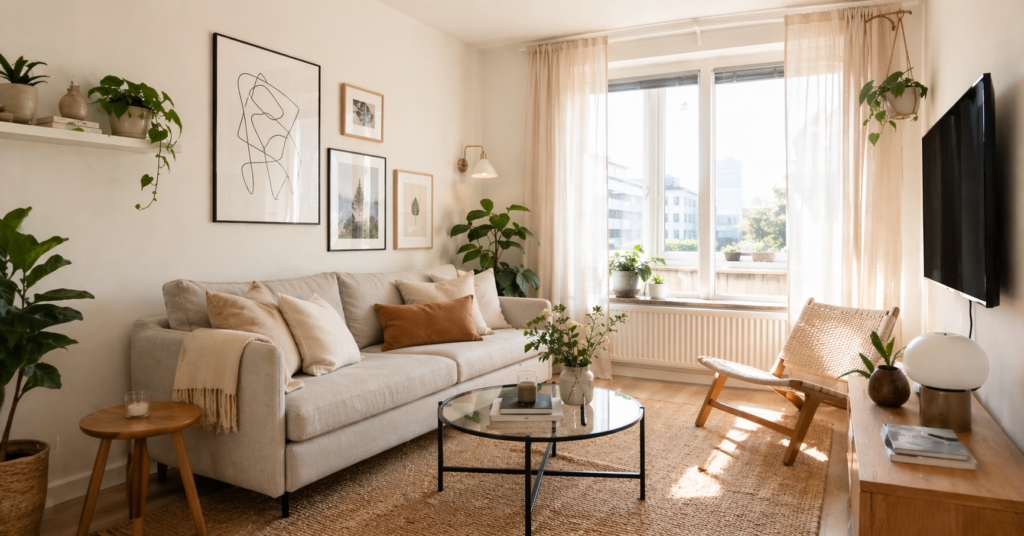
You love your apartment — but let’s be honest: your living room feels more like a hallway with a couch. If you’ve ever stood in the doorway wondering how on earth you’re supposed to fit a sofa, a coffee table, a TV unit, and some sort of aesthetic into 200 square feet, you’re not alone. Small living room ideas are among the most searched decorating topics for a reason: millions of us are trying to make the most of spaces that weren’t exactly designed with comfort in mind.
The good news? A small living room doesn’t have to feel cramped, chaotic, or boring. With the right design moves — furniture placement, color choices, lighting tricks, and a few clever hacks — you can transform even the tiniest space into something that feels open, intentional, and genuinely stylish. Here are 17 ideas to get you started.
1. Choose a light, neutral color palette
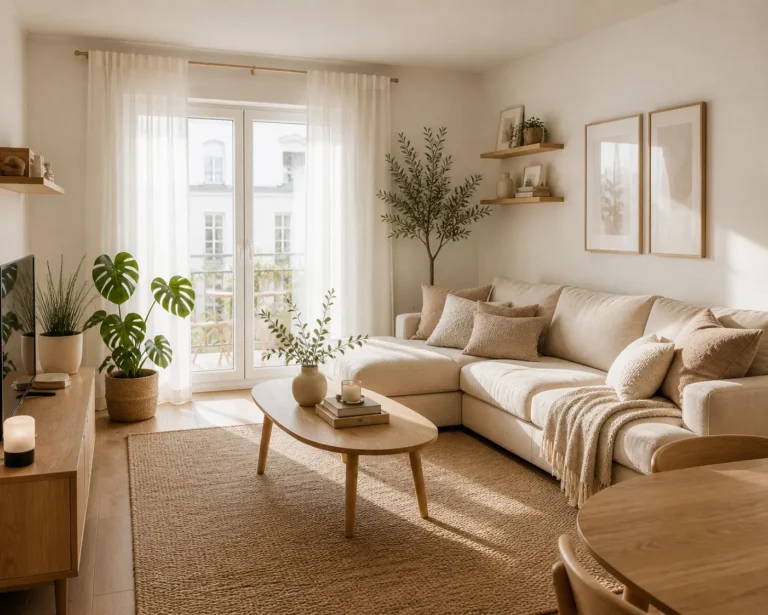
Light colors reflect natural light and push walls back visually, making any room feel bigger. Think soft whites, warm creams, pale grays, or blush tones for walls and large furniture pieces. A monochromatic palette — where walls, sofa, and curtains are in the same color family — creates a seamless, airy feel that tricks the eye into seeing more space.
Practical tip: Paint your ceiling the same color as your walls (or even slightly lighter) to blur the boundaries and add perceived height.
2. Use mirrors strategically
Mirrors are the oldest trick in the small-space playbook — and they work every single time. A large mirror on the wall opposite a window doubles the natural light and creates the illusion of a second room beyond the wall. Even a gallery wall of smaller mirrors can open up a tight corner beautifully.
Practical tip: Lean a full-length mirror against the wall instead of hanging it for a laid-back, studio-chic look that’s also easy to move around.
3. Invest in multi-functional furniture
In a small living room, every piece of furniture needs to pull double (or triple) duty. A storage ottoman replaces a coffee table and hides clutter. A daybed doubles as a sofa and guest bed. A console table behind your sofa can serve as a desk, a bar cart, or extra display space. Multi-functional furniture is the backbone of small living room ideas that actually work.
Practical tip: Look for sofas with built-in under-seat storage — perfect for blankets, books, or remote controls you want out of sight.
4. Float your furniture off the walls
It feels counterintuitive, but pushing all your furniture against the walls actually makes a room feel smaller. Floating a sofa a few inches from the wall creates a sense of depth and defines a proper seating zone. It signals intentional design rather than furniture that’s just been shoved into a corner.
Practical tip: If you have a sofa table or a narrow console, place it directly behind the floating sofa — it fills the gap while adding surface area for lamps or decor.
5. Go vertical with shelving
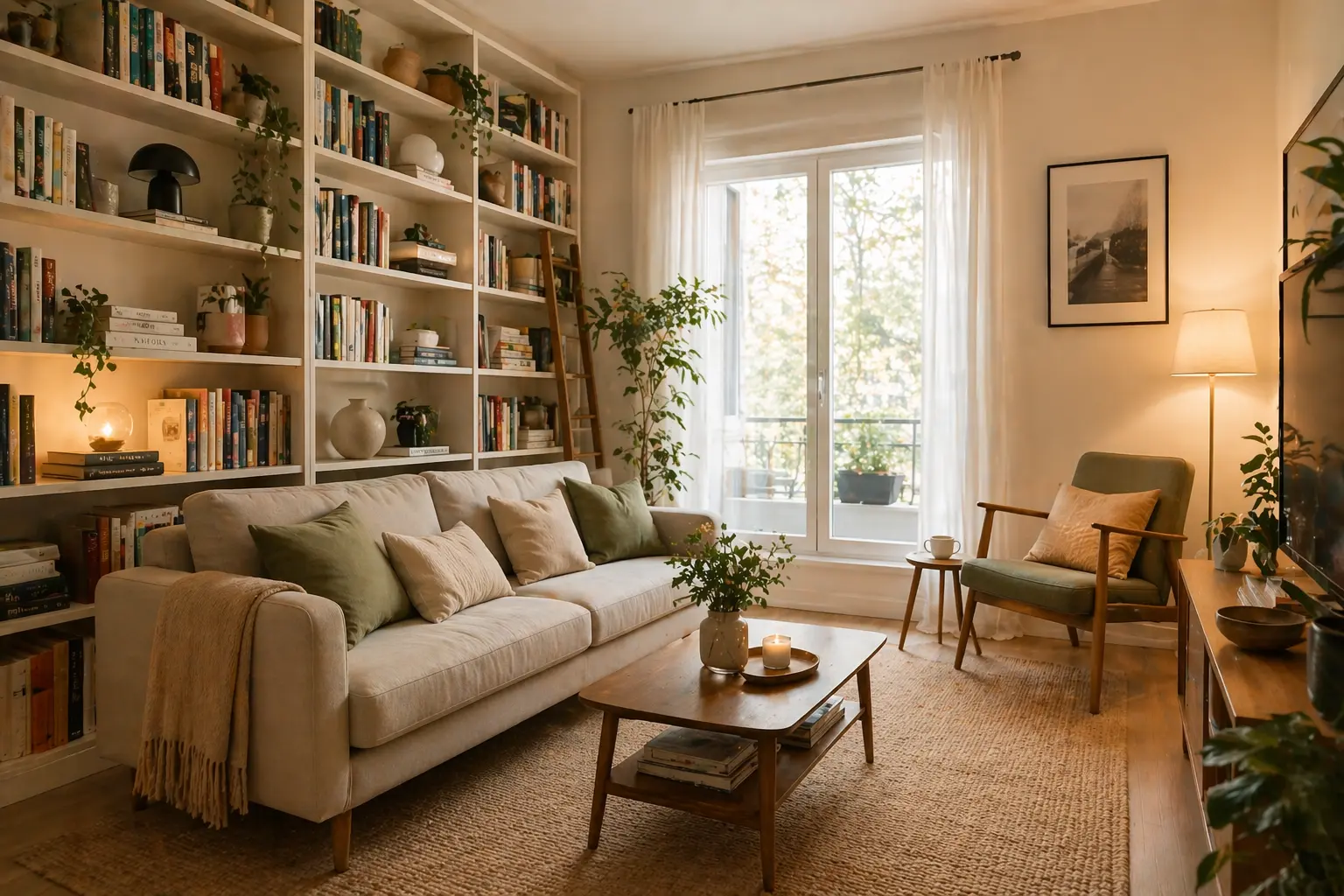
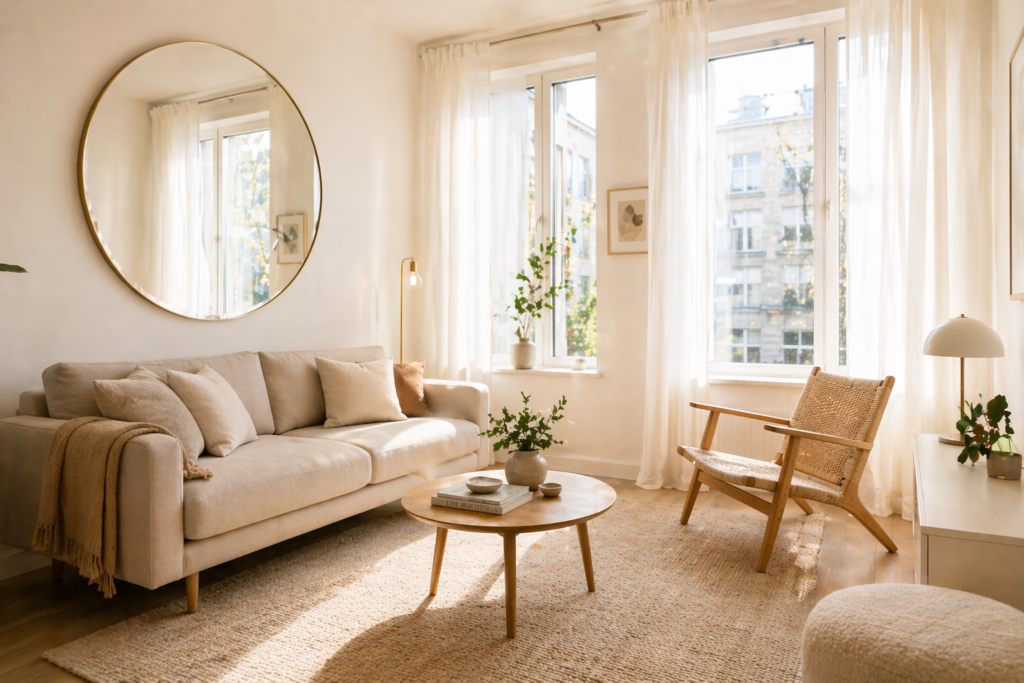
When floor space is limited, the solution is simple: look up. Tall bookshelves that reach the ceiling draw the eye upward and maximize every inch of wall space for storage. Open shelving keeps things feeling light, while closed cabinets hide clutter in rooms that tend toward messiness.
Practical tip: Style your top shelves with larger decorative objects (plants, baskets, art) and reserve lower, accessible shelves for books and items you use daily.
6. Choose furniture with legs
Sofas, chairs, and side tables with visible legs allow light to pass underneath them, creating a sense of airiness and visual space. Compare a blocky, skirted sofa to a mid-century modern couch on tapered legs — the legged version always reads as lighter and less space-consuming, even if the seat dimensions are identical.
Practical tip: The IKEA KALLAX and similar cube storage units are great exceptions — use them as low media consoles rather than towering bookcases to keep sightlines clear.
7. Use a large area rug (not a small one)
A tiny rug makes a room feel chopped up and small. A generously sized rug — ideally one large enough to sit under the front legs of all your seating — anchors the space and creates the visual impression of a larger, unified zone. This is one of those small living room ideas that’s almost universally underapplied.
Practical tip: As a general rule, your rug should extend at least 6–8 inches beyond your sofa on both sides. When in doubt, go bigger.
8. Maximize natural light
Natural light is the single most powerful tool in making a small space feel expansive. Keep windows clear of heavy, light-blocking curtains. Opt for sheer linen panels, Roman shades that stack neatly above the window frame, or nothing at all if privacy isn’t a concern. The more light floods in, the more generous the room feels.
Practical tip: Hang curtain rods close to the ceiling (not just above the window frame) and extend them wider than the window — this makes windows look bigger and draws in more light.
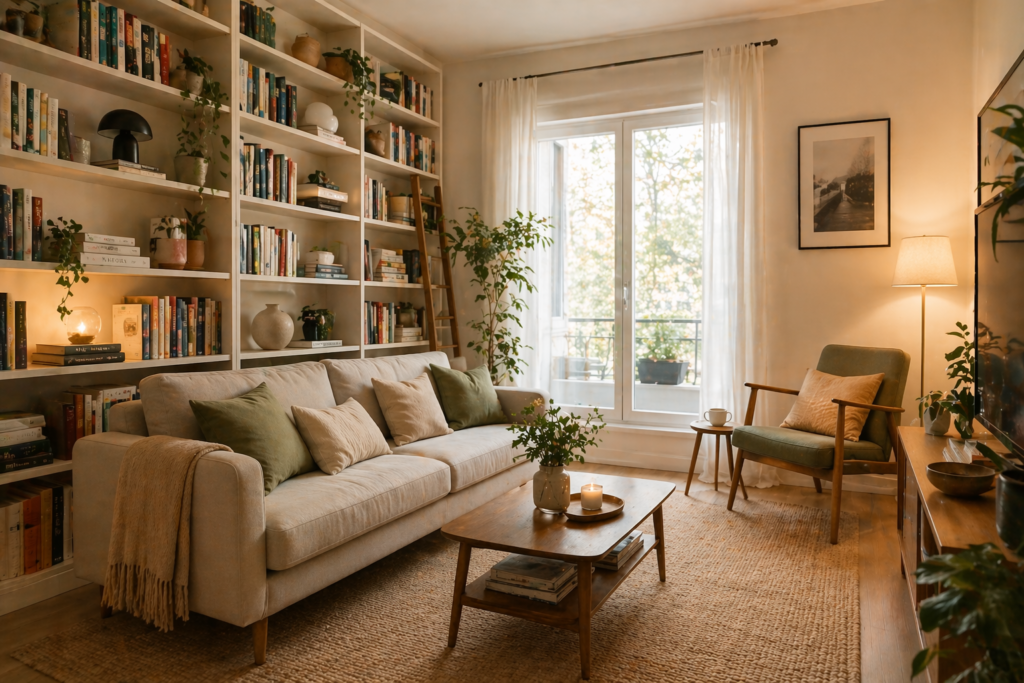
9. Create zones with lighting layers
Most apartments rely on a single overhead light — which flattens the room and highlights every cramped corner. Instead, layer your lighting with a mix of floor lamps, table lamps, and warm-toned bulbs to create pockets of coziness. Multiple light sources at different heights make a room feel deeper and more dynamic.
Practical tip: Swap harsh cool-white bulbs for warm white (2700K–3000K). The difference in perceived warmth and coziness is dramatic and costs almost nothing.→ LINK: best floor lamps for small apartments
10. Declutter ruthlessly — and display with intention
Clutter is the number one enemy of a small living room. Every surface that’s covered in random objects reads as chaotic and makes the room shrink. Instead of eliminating all decor, be intentional: choose fewer, larger pieces over many small ones. A single sculptural vase makes a statement; ten mismatched trinkets make a mess.
Practical tip: Try the “rule of three” — group objects in odd numbers of three, at varying heights and textures, for displays that feel curated rather than cluttered.
11. Hang art at the right height
Art hung too high or too low disrupts the visual flow of a room. The standard rule is to hang the center of a piece at eye level — roughly 57–60 inches from the floor. In a small living room, grouping art in a gallery wall rather than scattering individual frames across the room keeps the space feeling cohesive.
Practical tip: Before hanging anything, lay your frames on the floor and photograph the arrangement from above. It’s a free way to test layouts without putting holes in the wall.
12. Bring in plants (yes, really)
Plants add life, texture, and a sense of scale to small spaces without taking up much room. A tall fiddle leaf fig or a trailing pothos on a high shelf draws the eye upward and adds an organic softness that makes even sparse rooms feel lived-in and welcoming. → LINK: best low-maintenance plants for small apartments
Practical tip: Use plant stands to raise smaller plants off the floor — this creates visual layers and frees up precious surface space.
13. Embrace a low-profile media setup
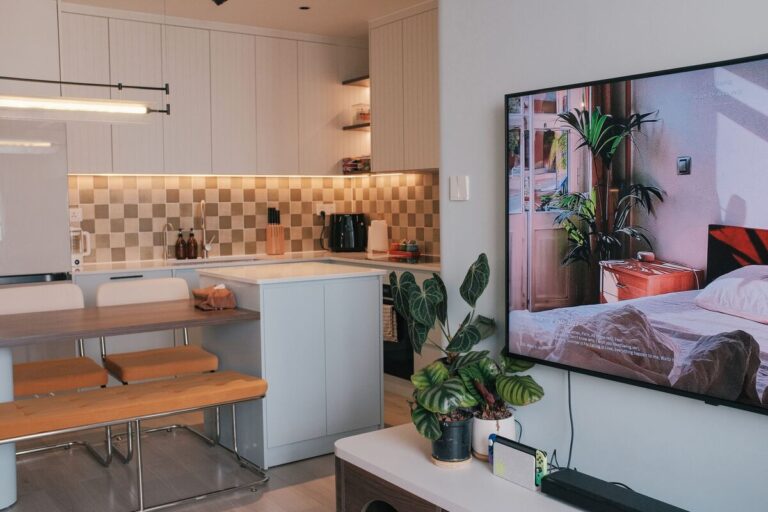
A wall-mounted TV and a sleek low-profile media console keep the visual weight of your entertainment setup minimal. Floating the TV eliminates the need for a bulky unit and opens up floor space. If cable management feels daunting, cord-hiding channels are inexpensive and easy to install.
Practical tip: Place your TV at or just slightly above eye level when seated — not as high as possible on the wall, which strains the neck and looks awkward.
14. Try a glass or acrylic coffee table
Transparent furniture is a small-space secret weapon. A glass or acrylic coffee table takes up the same physical space as a solid one — but because your eye passes right through it, it barely registers. The result is a seating area that feels open and uncluttered, even in a tight configuration.
Practical tip: Pair your transparent table with a textured rug to add visual interest underfoot — the rug shows through and becomes part of the composition.
15. Use curtains to define the space
Floor-to-ceiling curtains add drama, height, and softness to a small living room. They don’t have to cover windows — curtains can also serve as room dividers, hiding a cluttered corner or delineating a sleeping area in a studio. Choose a fabric in a tone close to your wall color to keep the look seamless.
Practical tip: In a studio apartment, a curtain rail on a curved track can create a semi-private bedroom alcove without the permanence of a wall.
16. Scale furniture to the room
An oversized sectional sofa might be your dream — but in a 12×14-foot living room, it’ll eat up every inch of walkable space. Scale your furniture to the actual dimensions of your room: a two-seater or apartment-sized sofa, a compact armchair, and a petite coffee table will always look more considered than pieces that were chosen for a larger room.
Practical tip: Before buying any sofa, tape out its dimensions on your floor with painter’s tape. Living with the footprint for a day or two reveals whether the scale actually works.
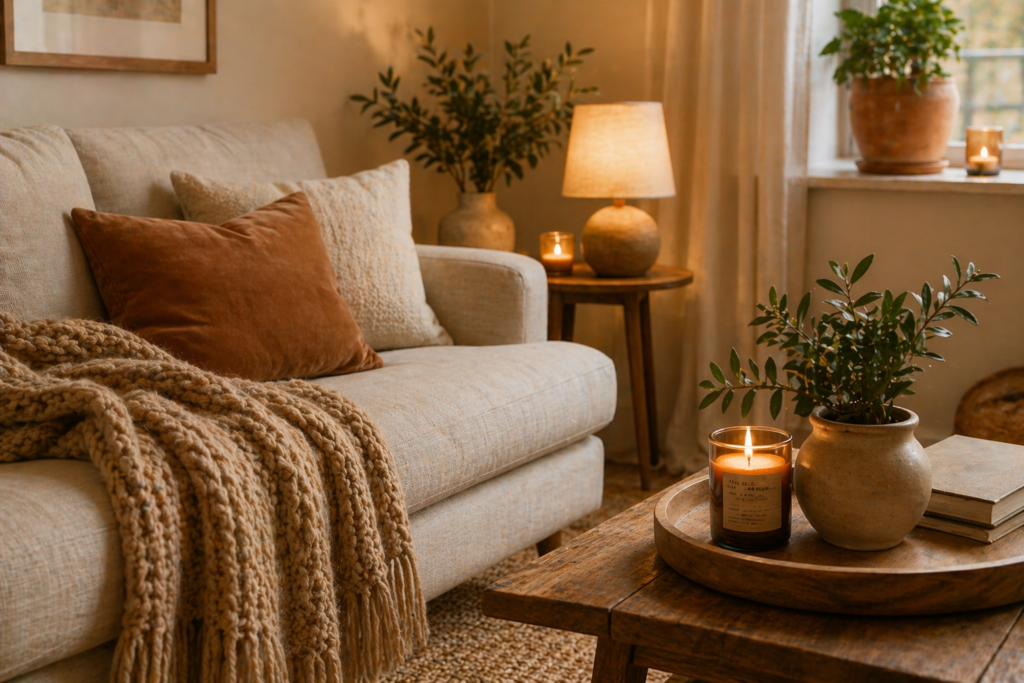
17. Add depth with texture and layering
When a room is small, the temptation is to keep everything uniform and minimal. But a completely flat, textureless space feels cold and forgettable. Layering textures — a chunky knit throw, a jute rug, linen cushions, a wooden tray — adds depth and warmth without adding visual clutter. The secret is to vary texture while keeping your color palette tight.
Practical tip: Stick to a palette of two or three neutral tones and let texture do the work of adding visual interest — rather than introducing lots of color, which can quickly feel overwhelming in a small room.
Your small living room has more potential than you think. The best transformations don’t require a renovation budget or a complete furniture overhaul — they come from being strategic about what you keep, how you arrange it, and how you use light, color, and scale to your advantage. Start with one or two of these small living room ideas, see how the space responds, and build from there. Small can be beautiful. Small can be intentional. Small can be completely, uniquely yours.
Found this helpful? Save this to Pinterest! Your future self will thank you when you’re scrolling for inspiration at 11pm before a weekend rearrange. 📌
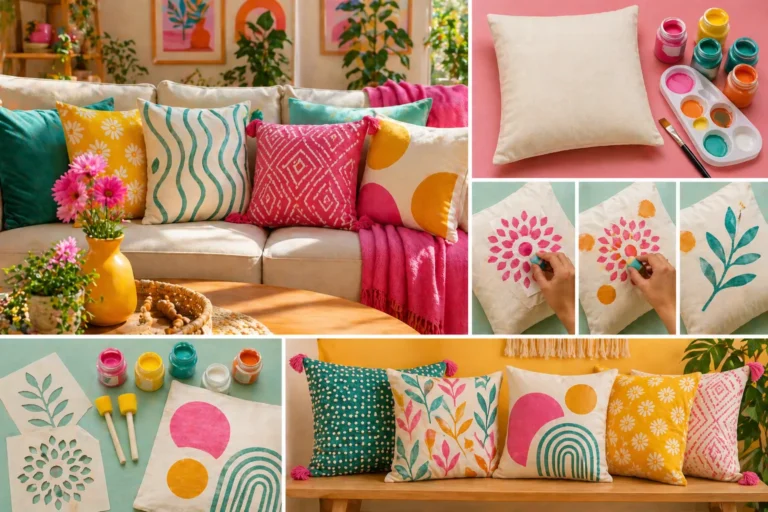
Looking for more inspiration? Don’t miss our guides on decorative pillow ideas for your living room and Scandinavian living room ideas — both packed with practical ideas for small spaces.
You Might Also Like
- 21 Cozy-Modern Scandinavian Living Room Ideas for Small Apartments
- 15 Decorative Pillow Ideas for Your Small Apartment Living Room (on a Budget)
- 23 Clever Tiny Kitchen and Living Room Combo Ideas That Actually Work

3 Comments