
15 Clever Small Apartment Entryway Ideas When You Have No Space
Small apartment entryway ideas don’t require a dedicated foyer to actually work — you just need the right layers and the confidence to claim whatever space sits in front of your door. Even three square feet between your door and your living room can become a functional, welcoming entry zone that stops clutter from spreading into the rest of your home. The trick is thinking vertically, keeping furniture shallow, and choosing pieces that do double duty. Whether you’re working with a narrow hallway strip or a door that opens directly into your living room, these 15 ideas will help you build an entry that feels intentional — without a single dropped key or mystery pile in sight.
Why Your Small Apartment Entryway Matters More Than You Think
Having no dedicated foyer is one of the most common pain points for renters, and it’s tempting to give up and let the area in front of your door become a pile of shoes, dropped bags, and forgotten umbrellas. But that pile has a sneaky ripple effect: it makes your whole apartment feel chaotic the moment you walk in. Defining even the smallest entryway — with a rug, a hook, and one surface — gives every item that comes through the door a home. That single act of organization contains clutter before it spreads. It also makes coming home feel like arriving somewhere on purpose, which matters more than you’d expect after a long day.
Define the Zone First
1. Lay Down a Rug to Claim the Space
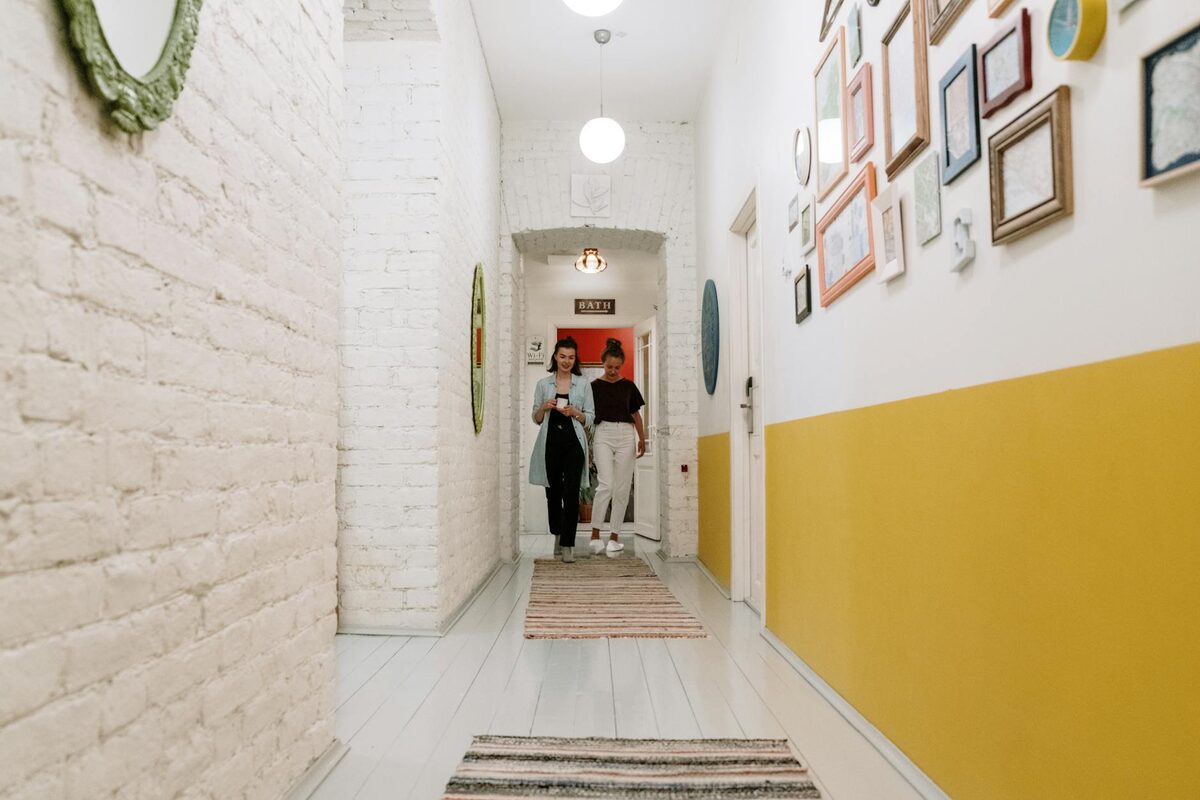
A rug is the single fastest way to make your small apartment entryway feel like a real space. In an apartment without a foyer, the rug does architectural work that walls would otherwise do — it signals this is the entry, not the living room. Choose a durable low-pile or flat-weave rug that handles foot traffic and is easy to shake out. A runner 20–24 inches wide works well in a narrow strip; a 2×3 or 3×5 area rug gives better definition in a slightly wider opening. Warm neutrals — natural jute, cream, or terracotta — connect to your decor without competing with it.
2. Create a Drop Zone with a Tray
Place a small ceramic dish, wooden tray, or woven catchall on your console table or nearest flat surface for keys, transit cards, and whatever else travels in and out with you daily. This one small piece of decor stops your keys from disappearing and keeps your surfaces from becoming a clutter magnet. If you don’t have a console yet, a tray on a bookshelf near the door works just as well — the goal is a single designated spot so you always know where to look.
Go Vertical: Storage That Doesn’t Eat Your Floor Space
3. Install Command Hooks for a Drill-Free Coat Rack
When floor space is nearly nonexistent, the wall is your best storage real estate. A row of 3–4 Command hooks holds bags, coats, scarves, and even a small mirror without taking up any floor space. The large Command utility hooks hold up to 7.5 lbs each — plenty for a tote, a rain jacket, and reusable shopping bags. For a cohesive look, space them evenly and choose one matching finish: matte black, brushed nickel, or warm brass. For more no-damage strategies, check out our guide to renter-friendly decor ideas that need zero drilling.
4. Hang a Pegboard for Flexible Organization
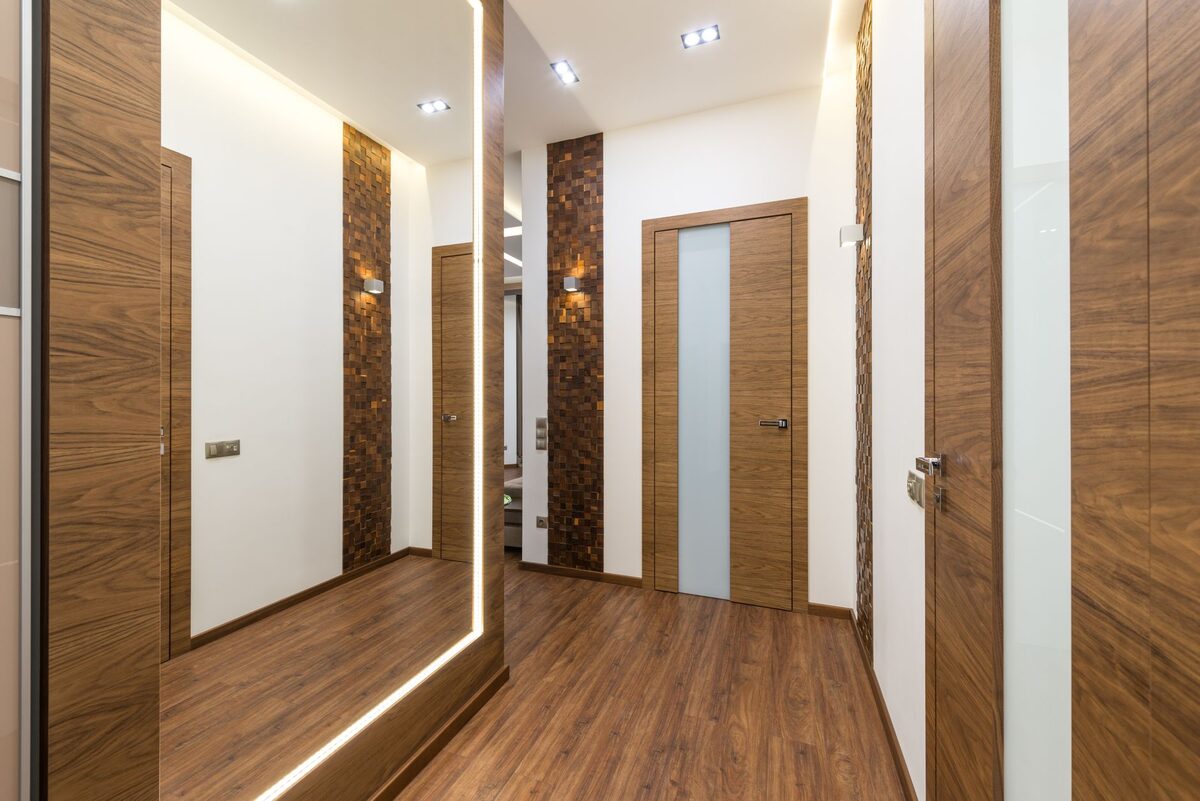
A pegboard panel — leaned against the wall or mounted — gives you total flexibility to customize hook placement as your storage needs change. Add hooks for keys and bags, small shelves for sunglasses and a plant, and a clip for mail. The IKEA SKADIS pegboard is under $20 and pairs with an entire ecosystem of affordable accessories. If you can’t mount it, lean it in a corner with a small frame stand — the result looks intentional and costs almost nothing.
5. Use the Back of Your Front Door
The back of your front door is prime real estate that most renters completely overlook. An over-door shoe organizer can hold shoes, but also umbrellas, cleaning supplies, sunglasses, and folded reusable bags — a full column of pockets for zero floor or wall footprint. Choose a canvas organizer in a neutral color rather than clear plastic; it disappears into the background while doing all the heavy lifting.
Choose the Right Slim Furniture for a Tiny Entryway
6. Pick a Slim Console Table (10–12 Inches Deep)
A slim console table is the backbone of most well-styled apartment entryways. Look for one no deeper than 10–12 inches — it creates an immediate sense of intention while giving you a surface for keys, mail, and everyday essentials without consuming floor space. A console with a lower shelf doubles your storage; use the shelf for a wicker basket that corrals shoes or a small bag. Some of the best value options come from IKEA’s narrow table range, where hall tables start under $50.
7. Add a Storage Bench for Shoes and Seating
If your entryway has even 18–20 inches of floor depth, a compact storage bench does three things at once: a place to sit while putting on shoes, hidden storage under the seat for seasonal items, and a visual anchor that defines the entry zone. A bench with a lift-top lid is the most functional version for small apartments. Pair it with two hooks above and a rug below and you have a fully functional mini-mudroom. For more ideas that make small spaces work harder, see our list of genius IKEA small space hacks.
8. Try a Floating Shelf with Hooks Underneath
A floating shelf installed at shoulder height (about 60–66 inches from the floor) gives you a landing surface for mail and small items while the hooks underneath replace a traditional coat rack. It’s the most space-efficient wall solution available: zero floor footprint, storage for both flat items and hanging items, and a sleek minimal look. Add a small trailing pothos on the shelf to make it feel designed rather than purely functional.
Style the Space to Make It Feel Bigger
9. Lean a Mirror Against the Wall
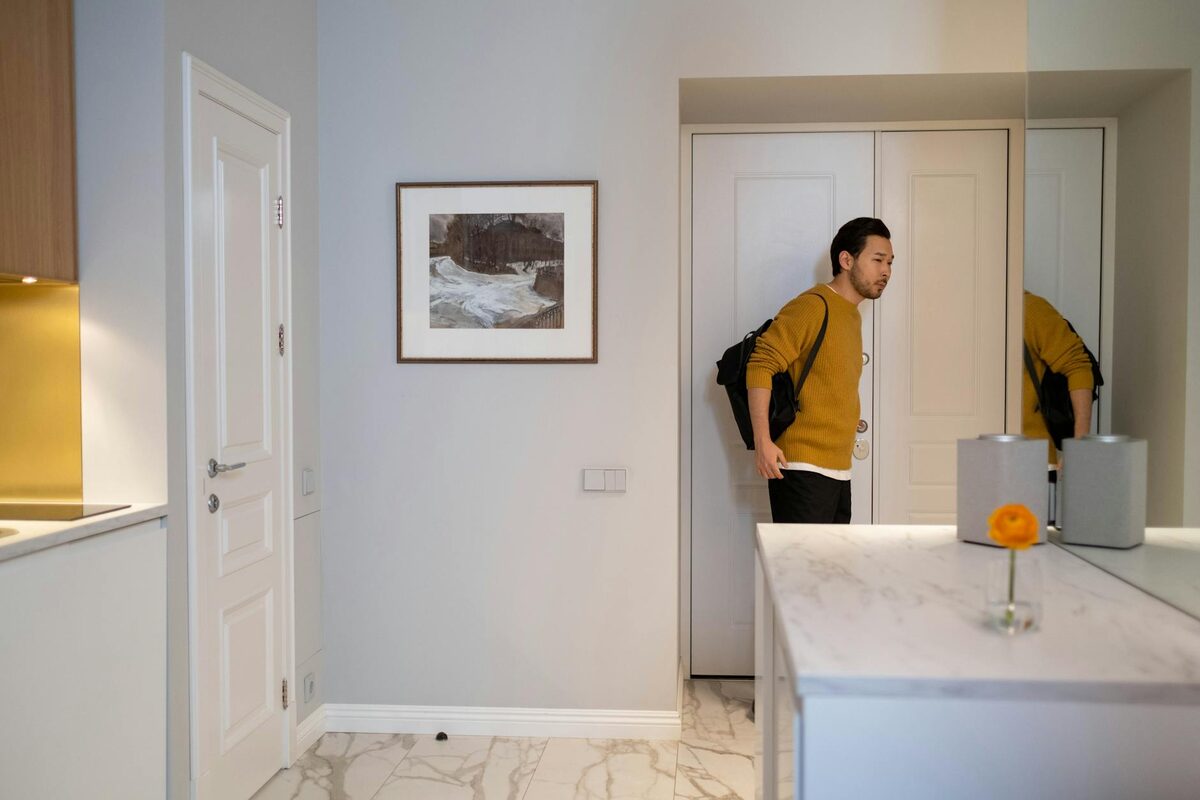
A mirror in a small apartment entryway is doing two jobs simultaneously: it makes the space feel physically larger by bouncing light around, and it gives you a quick outfit check before heading out. For renters, a leaned mirror is the most practical option — no drilling required, and you take it with you when you move. Look for a slim rectangular or arch mirror that fits against the wall without overwhelming the entry’s width. In a dark entry, a mirror opposite the main light source can double the apparent brightness more effectively than any new fixture.
10. Add One Small Plant
Even one small plant near your door makes the entry feel alive rather than transitional. A trailing pothos on a shelf, a snake plant on the console, or a eucalyptus stem in a bud vase on the key tray all work beautifully. Choose something low-light tolerant since most apartment entryways don’t get direct sun — pothos, ZZ plants, and snake plants are forgiving choices that look great year-round.
11. Layer in a Warm Accent Light
If your entry relies on a single overhead fixture, a small table lamp on the console or a battery-operated wall sconce warms the space immediately. Warm-toned bulbs (2700K) make the entry feel inviting rather than institutional. A plug-in or battery sconce requires no wiring and works in any rental, giving you that layered lighting effect that makes spaces feel designed rather than just lit.
Renter-Friendly Tricks That Need Zero Permanent Changes
12. The Complete Drill-Free Entryway Setup
Here’s the full rental-approved stack: a freestanding console table or slim bench, 3–4 Command hooks on the wall, an over-door organizer on the back of the front door, a leaned mirror beside the console, a low-pile rug underfoot, and a small tray on the console for keys. Nothing requires a screw, nothing voids your lease, and the whole thing goes up in under two hours. For hallway-specific ideas when your entry opens into a longer corridor, see our hallway decor ideas for narrow spaces.
13. Add a Peel-and-Stick Wallpaper Accent
Even a small strip of removable wallpaper on the wall behind your console can transform a blank, forgettable entry into a space with real personality. Choose a pattern that connects to the rest of your decor — a soft terracotta geometric, a botanical print, or a textured linen look — and apply it to just one panel or the wall section above the console. Peel-and-stick wallpaper comes off cleanly without damaging paint, making it a perfect no-commitment upgrade.
14. Use a Bookcase to Define the Entry in a Studio
In a studio apartment where the front door opens directly into your living space, a low bookcase placed perpendicular to the wall creates a visual entry zone without any actual walls. Position it 3–4 feet from the door to carve out just enough space for a small console, rug, and hooks. The bookcase provides storage on both sides and works as a room divider simultaneously — one of the most underused studio apartment tricks available.
15. Add a Scent Element for a Sensory Welcome
A candle, reed diffuser, or small potted herb like lavender placed in the entry creates a sensory signal that you’ve arrived home rather than just stepped inside. Scent is the fastest way to make a rented space feel personal. A reed diffuser in a warm woody or citrus scent costs about $15 and lasts for months — it works even in the tiniest entry with no shelf space because it sits right on the console tray beside your keys.
Frequently Asked Questions
How do you create an entryway when your apartment has no foyer?
Define the zone with a rug, add a vertical storage solution like Command hooks or an over-door organizer, and place one slim furniture piece — a console table or small bench — near the door. Even three feet of floor space is enough for a functional entry when you layer these elements deliberately rather than trying to fill the space.
What furniture works best in a tiny apartment entryway?
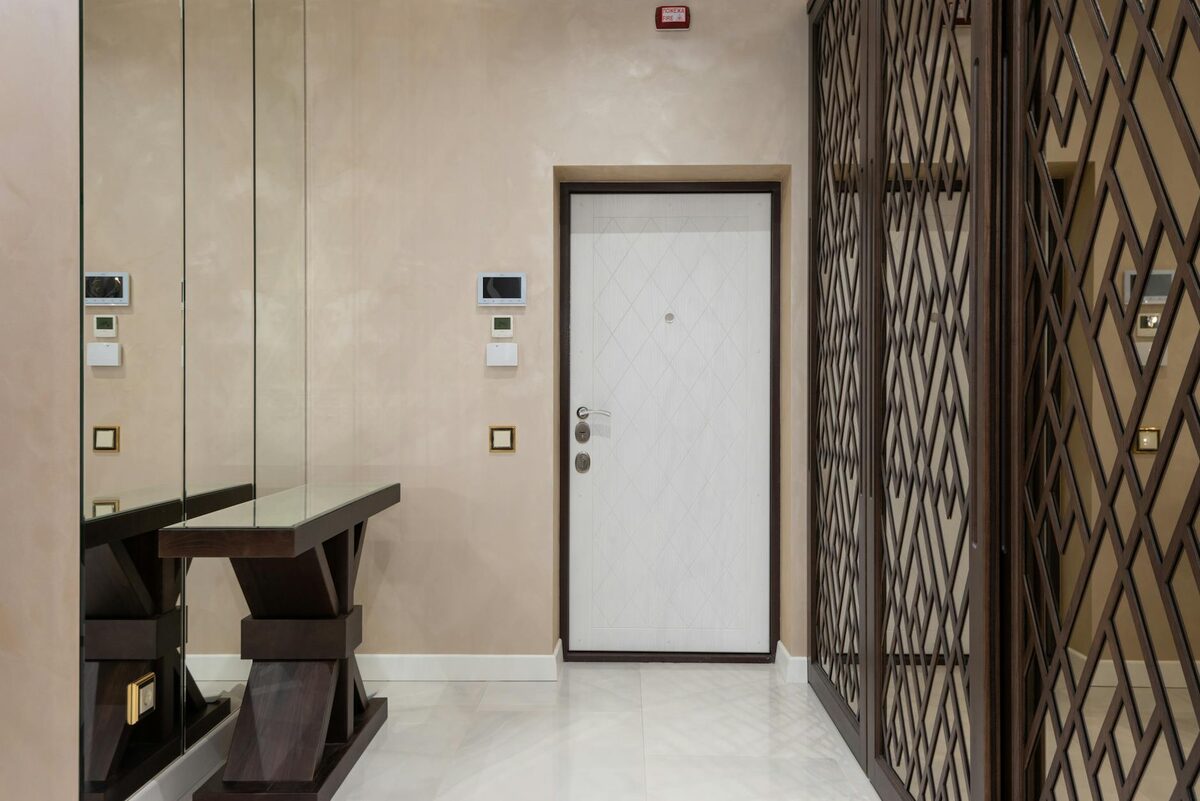
A slim console table no deeper than 12 inches is the most versatile choice — it creates a landing surface without blocking traffic. A storage bench works well in a slightly wider opening. Avoid chunky storage cabinets in very small entries; they crowd the path before you’ve even stepped inside.
How do I organize a small entryway without drilling?
Command hooks on the wall or door, an over-door organizer, a freestanding console table, and a leaned mirror are your core tools. Pair them with a small tray for keys and a basket on the console’s lower shelf for shoes, and you have a complete drill-free system that keeps everything in place.
What should I put in a small apartment entryway?
At minimum: one surface (console table or tray), one hook (for bags and coats), and one zone-defining element (rug). Each piece solves a specific problem — the surface stops keys from disappearing, the hook stops bags from landing on the floor, and the rug stops the entry from visually bleeding into the living room.
How do I make a tiny apartment entryway look bigger?
Use a mirror to reflect light and create depth. Keep furniture shallow and off the floor where possible — wall hooks instead of a standing shoe rack. Choose a rug in a light neutral rather than a dark color. Keep the surface clear: one small plant and a key tray is all you need. Less is genuinely more in a tiny entryway.
Final Thoughts on Small Apartment Entryway Ideas
Creating a small apartment entryway with no space is about making a deliberate claim on a few square feet and giving every item that enters your home a proper place to land. Start with the rug, add hooks, bring in a slim surface, and lean a mirror against the wall. Layer those four elements and you’ll have an entry that works beautifully — and one that makes you feel better every single time you walk through the door. The smaller the space, the more intentional you have to be, and that intentionality is exactly what makes a small apartment feel designed rather than just lived-in.
You Might Also Like
- 25 Renter-Friendly Decor Ideas That Need Zero Drilling
- 27 Genius IKEA Small Space Hacks You Will Wish You Tried Sooner
- 27 Designer Hallway Decor Ideas for Long Narrow Spaces
One Comment